Get Full Government Meeting Transcripts, Videos, & Alerts Forever!
Get email alerts on the Economic Development topic
No spam. Unsubscribe anytime.
Regional economic group says Auburn’s $5,000 investment yielded a 13:1 tax return; urges small high-quality space to attract firms
Summary
The Greater Sacramento Economic Council told Auburn council members the city’s modest investor contribution generated about $70,000 in tax revenue and recommended focusing on 5,000-square-foot “demisable” spaces, permitting speed and outdoor-recreation industry recruitment to capture more business relocations and expansions.
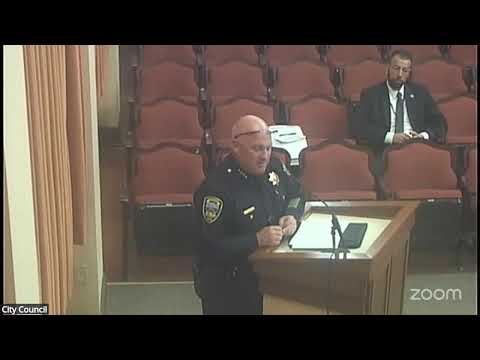
Charles Adrian, executive vice president of the Greater Sacramento Economic Council, told the Auburn City Council that the regional business-attraction organization has delivered measurable returns for small investor cities, including Auburn.
Adrian said Auburn’s roughly $5,000 annual investment in the council produced about $70,000 in tax revenue through regional relocations and expansions — an estimated return on investment of roughly $13 for every dollar invested. “We are the regional economic development organization here for the Greater Sacramento market, covering six counties,” Adrian said, describing the council’s role in marketing the region and helping companies with site selection, incentives and talent connections.
The council presented context on how regional marketing and coordinated services produce deal flow and recommended specific actions Auburn can take to capture more projects. The presentation emphasized market research completed through the council’s new Market Velocity program, which assessed municipal readiness and deal opportunities across investor communities.
Adrian highlighted three market realities relevant to Auburn: first, much inbound demand to the Auburn submarket seeks relatively small, high‑quality spaces — the average deal size in the Auburn submarket is about 5,000 square feet; second, permitting speed, incentives alignment and available amenities matter more than a single low price; and third, Auburn’s outdoor‑recreation assets give it a niche advantage the city can exploit in marketing and by enabling company storefronts or ‘point‑of‑sale’ locations to capture sales tax revenue.
Jonathan Wright, Auburn’s community and economic development director, told council members the city has already worked with the council on research cases and expects the Market Velocity assessment delivered to Auburn will help staff prioritize permitting and building types. Council members asked about industry targets; Adrian cited semiconductors, cleantech (including batteries and hydrogen), bioscience and outdoor‑recreation brands as active sectors in the regional pipeline.
Council members and staff discussed next steps: making permitting and incentive processes ready for smaller, high‑quality employers; identifying sites that can be demised to 5,000‑square‑foot tenants; and pursuing marketing ties to outdoor‑recreation businesses. Jonathan Wright will retain the full Market Velocity report and is the staff contact for follow‑up.
The presentation concluded with council members thanking the Greater Sacramento Economic Council for the report and noting the city’s interest in scaling economic development work into the coming year.