Get Full Government Meeting Transcripts, Videos, & Alerts Forever!
Get email alerts on the Rental Housing Ordinance topic
No spam. Unsubscribe anytime.
New Freedom council debates draft rental-occupancy ordinance after residents describe health, safety problems
Summary
Councilmembers and residents debated a draft rental-housing and occupancy ordinance after a public commenter described pest infestations, missing smoke detectors and other safety concerns; council agreed to have borough solicitors review the draft and bring clarifications back next month.
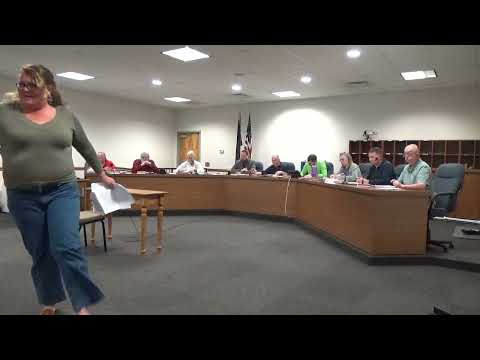
A public commenter described a long-running pest infestation, unsafe living conditions and a unit she called the “former Roach House,” and urged the New Freedom Borough Council to adopt a rental-occupancy ordinance requiring landlord registration and basic safety inspections.
The speaker, identified in the meeting as a resident, told the council that the complaint that prompted the petition involved repeated pest problems and a recent stovetop fire in a unit where she said there were no smoke detectors. “Living through that was absolute hell,” she said, and urged the council to adopt an ordinance that would require safety features such as smoke detectors, ventilation and inspection authority to protect tenants and neighboring properties.
Council discussion that followed focused on three questions: whether inspections should be automatic or complaint-triggered; whether the borough has legal authority to require entry for inspections; and the cost and staffing burden of inspecting rental units. Several council members said they support registration of multi-unit rental properties and inspections when tenants request help; others warned a broad warrantless-inspection power could raise Fourth Amendment concerns.
Councilmember Erica said the borough should inspect when a tenant requests help. “If they have a tenant complaint, I have no problem with you being invited into their home then,” she said. She and other members noted examples of properties with unsafe decks, blocked egress and missing smoke detectors that, in their view, present immediate safety risks and should be resolved.
Andrew, who described experience administering a rental-inspection program in another borough, said full, routine inspections of every rental unit on a fixed schedule create a significant workload. He described a previous program that required two‑year inspections for several hundred rental units and said that model required staff time and cost the municipality money. He said the draft presented to New Freedom was written to be narrower: it would require registration of rental properties and trigger inspections primarily in response to complaints.
Concerns about constitutionality and enforcement surfaced repeatedly. One council member pointed to a 2015 Pennsylvania Supreme Court decision and cautioned that a warrantless-search approach can be legally vulnerable. Solicitor-related issues — whether the borough can demand entry, how to treat tenant privacy, and what penalties a magistrate could apply — prompted multiple requests to have the borough’s solicitor examine the draft.
Council members agreed to have the borough solicitor review the draft ordinance for legal risk and return recommended edits. The council asked staff to forward proposed changes and clarifications to the solicitor and to place this item on the agenda for the next month so members can consider legal advice and a clearer set of options for registration, inspection timing and enforcement.
The discussion also touched on related enforcement tools used in neighboring boroughs such as Glenrock and Stewartstown, including licensing schemes that can lead to revocation of a landlord’s right to rent after repeated violations; some members said those models have “teeth,” while others warned they can be resource‑intensive and could prompt litigation. Council members requested clearer language to limit inspections to tenant complaints or unit turnover unless other legal standards are met.
The council did not vote to adopt the ordinance; instead members directed staff and the solicitor to review the draft and return with legal analysis and suggested revisions for a future meeting.