Get Full Government Meeting Transcripts, Videos, & Alerts Forever!
Get email alerts on the Tourism Funding topic
No spam. Unsubscribe anytime.
Mayor asks council to retain hotel-motel tax and create city tourism department amid review of Logan County bureau finances
Summary
Mayor Tracy Welch urged the Lincoln City Council to consider keeping hotel-motel tax revenue in the city and starting a city-run tourism department after a staff review found the Logan County Tourism Bureau's expenses closely matched its income and marketing results were questioned.
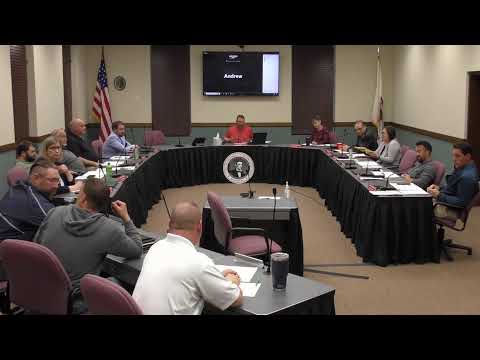
Mayor Tracy Welch asked the Lincoln City Council during the April 15 committee meeting to consider retaining the usual 95% share of the city's hotel-motel tax revenue for a city-run tourism department, citing a recent financial review of the Logan County Tourism Bureau and community feedback questioning the bureau's return on investment.
Welch said the review, prepared by Scott McCoy for the Logan County Tourism Bureau, showed about $221,000 in annual income for the bureau (city hotel-motel tax $169,000; a state grant of roughly $45,000; museum sales about $7,000) and approximately $205,000 in regular operating expenses, leaving little to spend on advertising. After the bureau's reported $68,000 for marketing and advertising is included, Welch said the bureau's statement of activity showed a net deficit of roughly $51,600.
"It's not a reflection of anyone in particular or the bureau," Welch said. "It's just the facts as they currently stand." She recommended hiring a consultant — referencing McCoy, a consultant with Route 66 experience — under a city-run model and relying on a small number of part-time staff to reduce payroll and rent costs. Welch said McCoy estimated consulting costs at about $45,000, plus roughly $15,000 for part-time support, which Welch said would produce a substantial savings compared with the bureau's payroll and rent of roughly $137,000.
Why it matters: Welch framed the proposal as a budget and effectiveness question — the city provides most of the bureau's funding, and she argued a leaner city-run model could free funds for direct tourism marketing and preserve CVB grant access through a restructured partnership with Logan County.
Council members and bureau representatives discussed grant rules, CVB certification requirements and transition logistics at length. Alderman McClellan and Alderman Sanders signaled support for exploring a city role; Alderman Parrott warned CVB status allows the bureau to apply for some state grants (the Route 66-related grant discussed in the meeting was cited as roughly $100,000) and that losing the bureau could jeopardize future grant opportunities. Sam and Steve, representing the bureau, said the bureau has been pursuing grant projects that include Route 66 assets (a wagon, mill, wayfinding signs and photo-op installations) and that some project costs such as shipping, installation and design still required resolution.
Molly Pickering, the bureau chair, clarified that some subgrants distributed to local event organizers were funded through city funds rather than state grant money and noted state grant rules place restrictions on how that grant money may be used. Scott McCoy explained the grant match mechanics: the state CVB grant requires a percentage match (30% in the current year, referenced as increasing to 40% next year), and matching funds are subject to the same reporting requirements as the state grant.
Discussion also covered practical transition details: existing depot space is largely unstaffed, the bureau's executive director had recently resigned and the bureau was operating with an interim director. Welch said a 30-day termination clause in the funding agreement would give time for a transition but argued acting sooner would protect planned Route 66 Centennial projects. Councilmembers asked for more information and several said they wanted further meetings with the bureau; Welches asked the council to place the item on the regular agenda for a formal decision the following week. The council approved placing item 18 on the regular agenda for next week.
The council and bureau representatives proposed a compromise option: the city would retain most hotel-motel revenue to operate a lean city tourism program and contribute a smaller annual amount (Welch suggested $25,000 as an example) back to a restructured Logan County Tourism Bureau if the county would also provide matching funds. That approach would aim to keep the bureau's CVB status (to preserve access to state grants) while shifting day-to-day tourism operations and larger advertising buys to a city-managed program.
What happens next: The council placed the item on the regular agenda for a vote next week. Welch said any change would require further negotiation on asset ownership (Route 66 installations, donated items and the wagon and mill) and on who would insure and manage those assets. Welch and bureau representatives said they expect a transition process rather than an immediate shutdown and acknowledged legal and grant-reporting details must be clarified before funds or responsibilities shift.
Ending: Council members who spoke emphasized a desire for more information and coordination with the Logan County Tourism Bureau and Logan County officials; several members asked for meetings to continue while the May 1 budget deadline approaches so budget decisions can reflect the council's direction.