Get Full Government Meeting Transcripts, Videos, & Alerts Forever!
Get email alerts on the Katherine Johnson Academy Transition topic
No spam. Unsubscribe anytime.
Board votes 6-1 to transition Katherine Johnson Academy into expanded districtwide virtual program
Summary
After hours of debate about identity, access and cost, the Green Bay Area Public School District Board voted to transition Katherine Johnson Academy from a standalone school into an expanded virtual program, beginning with the 2026–27 school year and using 2025–26 to reimagine programming.
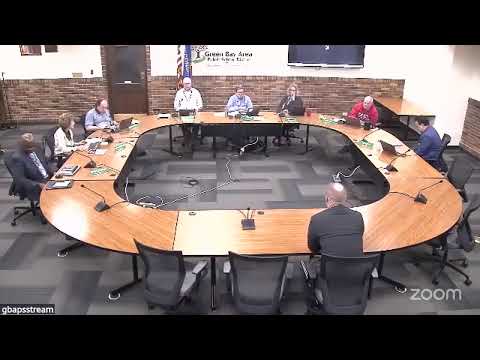
The Green Bay Area Public School District Board of Education on April 14 voted 6 to 1 to transition Katherine Johnson (KJ) Academy from a standalone K–8 school into an expanded districtwide virtual program beginning with the 2026–27 school year, using the 2025–26 school year to “reimagine” the program.
District staff described the plan as a step to allow KJ programming to serve more students across the district while keeping a year for planning and staff-led design. David Johnson, a district staff member addressing the board, said the proposal intentionally uses cautious language—“could” and “would”—because programmatic details would be developed by the KJ team during the 2025–26 reimagine year.
Supporters on the board said the change would expand access and allow the district to build a virtual program that could serve students who need flexible learning arrangements. Board member Lynn said transitioning the program could “serve hundreds more students” and emphasized the flexibility the model could offer for students combining virtual and in-person options. “It won’t be either virtual school or in person school. It can be a combination,” Lynn said.
Opponents raised concerns about preserving KJ’s identity and the risk that an expanded program could shift to largely asynchronous instruction. Board member Andrew, who pressed for limits and assurances, said the current school’s close-knit identity was critical to many families: “It is crushing to those for whom this is important,” he said, arguing the district could expand programming without removing the school.
In discussion, board members and staff also debated cost and operational differences between keeping KJ as a school versus converting it to a program. District staff told the board there is no definitive dollar figure yet for savings or costs tied specifically to the transition; the focus is on cost effectiveness over time and on developing virtual programming that could reduce repeat remediation by helping more students pass courses the first time.
An amendment to the original motion—striking the words “close as a school” and replacing them with “transition to a program”—was moved and approved by the board before the main motion was adopted. The full amended motion reads, in part, that KJ Academy will “transition to a program beginning with the 2026–27 school year, while using the 2025–26 school year to reimagine the school as a virtual program serving students across the district. KJ programming would commence in the fall of 2026, offering a full-time option to any students enrolled at the end of the 2025–26 school year in KJ Academy.”
The final vote on the amended motion was 6–1. Becker voted no; McCoy, Lyerly, Mills, Gerlach, Crossan and Lee voted yes. Board members clarified that the transition removes KJ from the district’s short-term list of budget-closure items and instead refocuses it as a cost-effectiveness initiative and program-growth effort.
District staff said homeschool families could still enroll in some KJ courses and that program staff would be district employees subject to standard staffing processes. Staff also said the reimagining year will develop whether some teachers are full-time virtual, part-time virtual and/or part-time in-person as the program expands.
The board instructed staff to proceed with the planning timeline described in the proposal and to return with more detailed programmatic, staffing and budget information during the reimagine year.
Votes and next steps: the board approved the amended motion 6–1; staff will use 2025–26 to develop the program model and return to the board with implementation details.