Get Full Government Meeting Transcripts, Videos, & Alerts Forever!
Get email alerts on the Legislative Oversight topic
No spam. Unsubscribe anytime.
Department on Aging warns federal delays, state shortfall are straining senior services
Summary
Officials from the South Carolina Department on Aging told the Legislative Oversight subcommittee that delayed federal payments and lower federal allocations this year have left local area agencies on aging struggling to provide meals and other services to older residents.
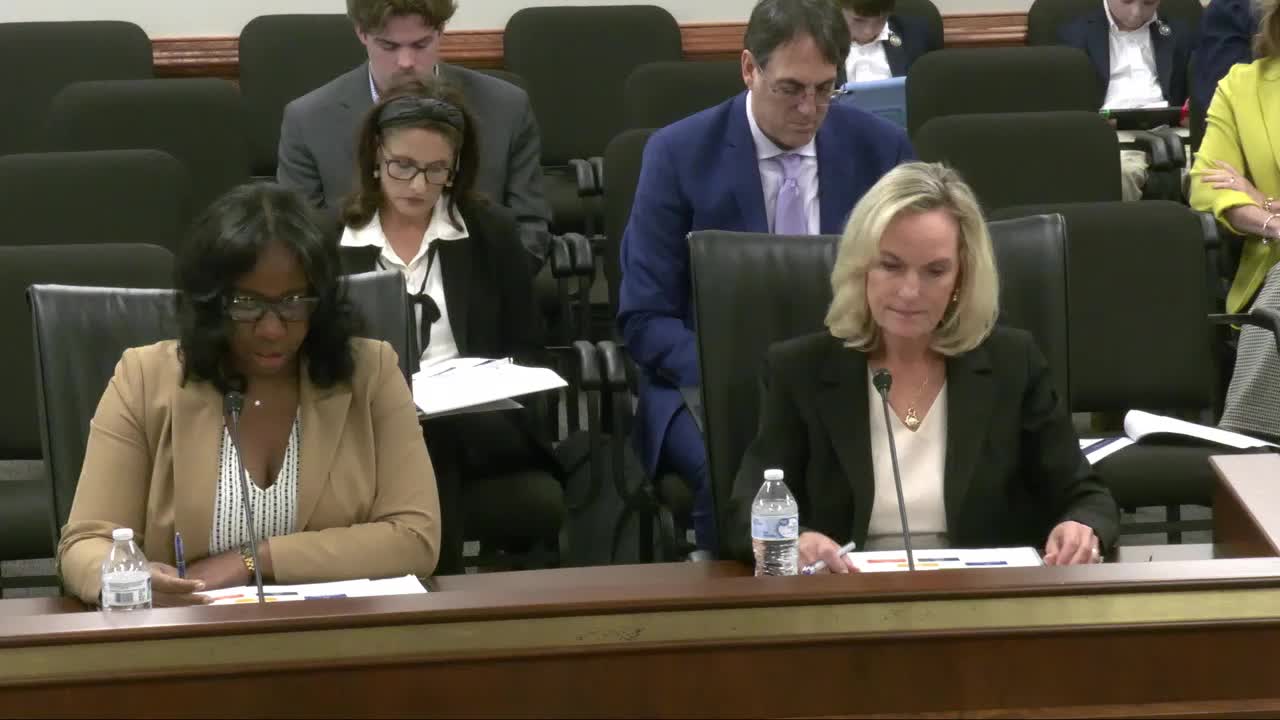
COLUMBIA — Officials from the South Carolina Department on Aging told the Legislative Oversight subcommittee at a reconvened hearing that delayed federal payments and lower federal allocations this year have left local area agencies on aging (AAA) struggling to provide meals and other services to older residents.
Connie (Department of Aging staff) outlined the funding flow for Older Americans Act dollars and said the state agency retains 5% for administration, the 10 AAAs retain 10% for their administration, and the remaining 90% is contracted for services. "In total this year between federal and state funds, we've allocated $56,000,000 to our aging network for services," Connie said.
Committee members pressed officials on unmet need and waiting lists. The department described a new, tiered waiting-list system that began July 1, 2024, designed to prioritize urgent cases. "If someone has a catastrophic accident or something happens and they are in need of services, they will be in that emergency level," Connie said, describing how urgent cases move to the head of the line. She added that seniors already receiving a service are not removed to make room for others: "They will not be taken off because they're getting food. No, sir."
Legislators repeatedly asked if the people who need services are being reached. Department staff acknowledged gaps, particularly in rural areas where providers and transportation are limited, and said the agency coordinates with non‑profits and the Office of Rural Health to fill service gaps. Lily Caudill, the department's legislative liaison, told lawmakers, "If you've gone to the local level or the regional level and you're not getting what you need, you call our office because we would then see what we can do to get them connected."
Officials said the department requested $19.8 million in state HCBS funding to cover shortfalls; Connie said the Senate Finance Committee provided $10 million in its budget recommendation and that the House provided $3 million in its version. "We worked on that request collaboratively with our aging network...that request this year is for 19,800,000.0," Connie said. The department characterized the federal funding issue as a delay rather than an outright cut: it has received roughly 46% of expected federal allotments so far this year compared with last year and reported about $12 million in federal funds held up compared with roughly $24 million received at the same point last year.
Committee members asked whether the state can require AAAs to return unspent federal funds for redistribution. Department staff said the Administration for Community Living (ACL) issues guidance on redistribution and that AAAs must be "willing to return" funds; the department said it sent letters asking AAAs to return unspent funds but that few AAAs were able or willing to do so. Connie said where AAAs do return funds, federal rules limit redistribution to the original grant category. "These are all separate grants...we are allowed some transfer authority, which we do conduct upfront each year," she said.
Lawmakers pressed the department about short‑term bridges for local providers facing imminent shortages. Department officials said local providers have been "extremely innovative" in seeking emergency grants and community support, and that AAAs are reviewing spending run rates and amending contracts to stretch existing dollars for the next 30 to 60 days. The department said some additional state HCBS funds would not be available until after July 1 and likely later in the summer.
Committee members also asked about outreach to seniors who do not use the internet or who are not connected to faith‑based or civic organizations. The department said each AAA is required to have an information and referral specialist whose role is community outreach and that the state office runs annual trainings and a faith‑based symposium to expand awareness. The department acknowledged outreach challenges and said it distributes notices of new grant opportunities to AAAs and COGs (Councils of Governments) and tries to meet with local boards and stakeholders in person.
The committee did not take any formal votes at the hearing. Members directed the department to provide follow‑up materials on federal guidance for fund redistribution and additional detail on county‑level service gaps. The department said it will continue to monitor spend rates, consult with AAAs about transfer authority with ACL, and pursue state HCBS funding to bridge the current gap.
Ending: Department officials said they will return to the committee with more data and that staff present at the hearing would review short‑term options for preserving service continuity while awaiting federal and state appropriations.