Get Full Government Meeting Transcripts, Videos, & Alerts Forever!
Get email alerts on the Disability Rights Supported Decision Making topic
No spam. Unsubscribe anytime.
Bill would let supporters assist people with supported decision-making agreements in court (SB 66)
Summary
Senate Bill 66 would permit supporters named in supported decision-making agreements to assist people in civil and criminal court proceedings; disability advocates backed the change but urged clarifications on attorney-client privilege and practical courtroom procedures.
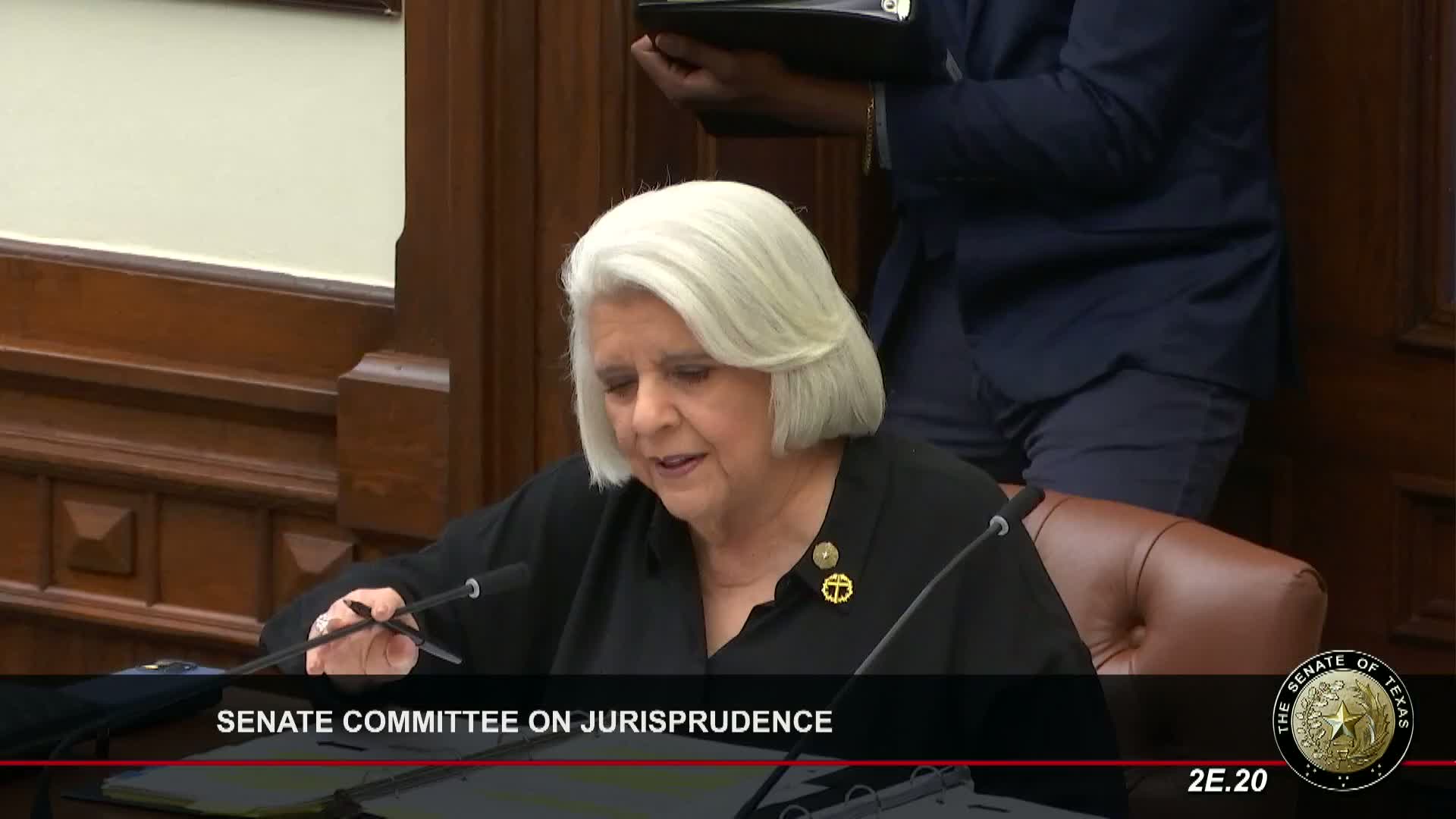
Senate Bill 66, presented to the Committee on Jurisprudence by the dean of the Senate, would allow persons who have entered supported decision-making agreements (SDMAs) to be assisted by their named supporters in criminal and civil court proceedings.
The dean said SDMAs, first authorized by the Texas Legislature in 2015, "allow persons with disabilities who are capable of making their own decisions to receive assistance from a trusted supporter" and that SB 66 would extend the benefits of SDMAs into courtrooms. "Senate Bill 66 would allow persons authorized to enter into a supportive decision making agreement to be assisted by their supporters during legal proceedings," the sponsor said, and would add a section to the agreement form where people could indicate whether they want supporters to assist in legal matters.
Jeff Miller of Disability Rights Texas testified in support and urged the committee to clarify how SDMA-supported participation would interact with attorney-client privilege and ensure supporters do not cross into practicing law. "We believe that adding those things to the bill itself makes it better, makes it easier, and will make it more successful for all people involved," Miller said.
The committee closed public testimony and left SB 66 pending; the sponsor and Disability Rights Texas said they will continue to work on draft language to address privilege, rules of conduct, and notice to courts.