Get Full Government Meeting Transcripts, Videos, & Alerts Forever!
Get email alerts on the Water And Energy topic
No spam. Unsubscribe anytime.
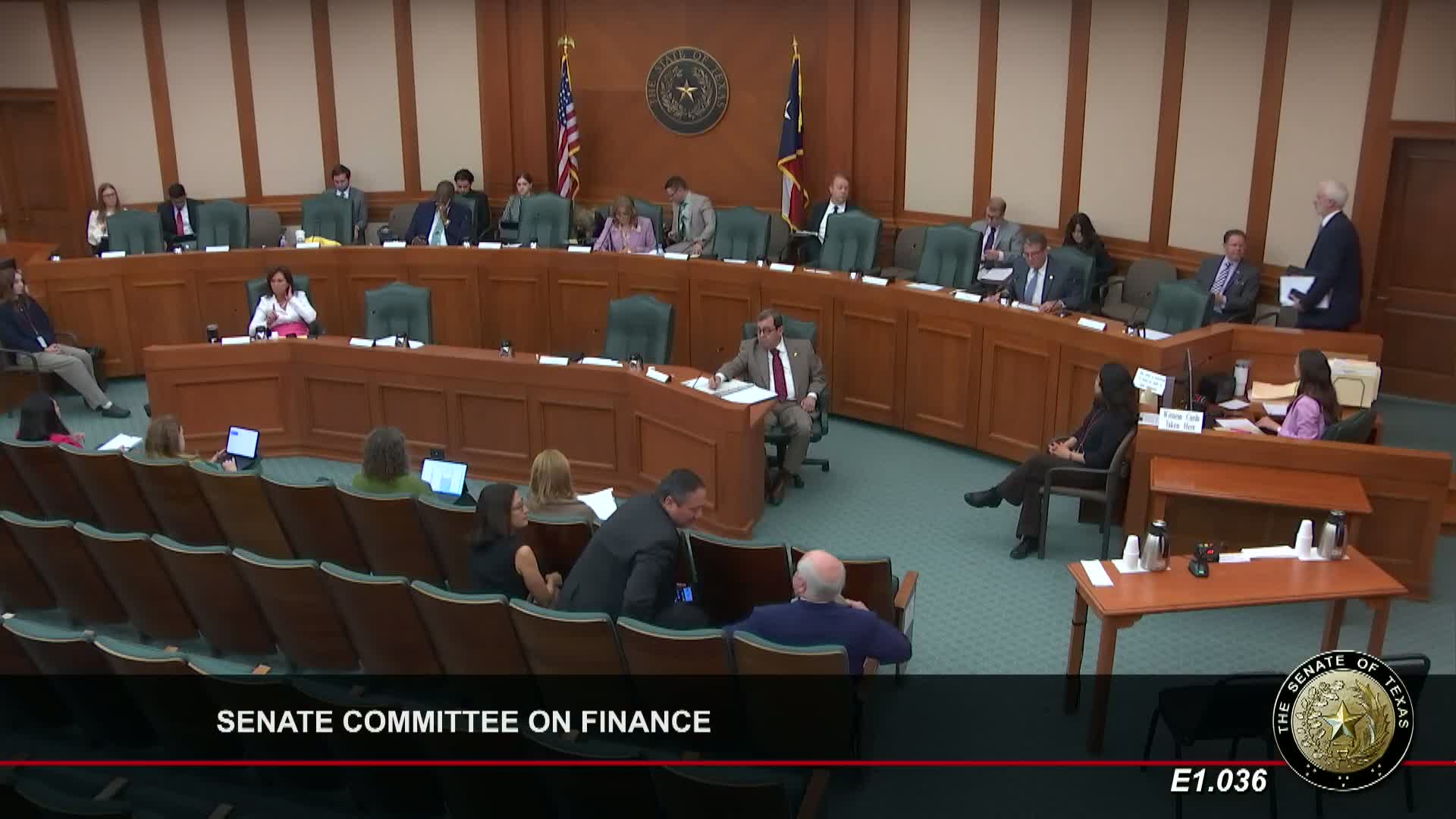
Committee hears bill expanding fracking water-use exemption to non-fresh sources; fiscal trade-offs discussed
Summary
Senate Bill 1211 would broaden a sales-tax exemption designed to encourage oil and gas companies to use nonfresh water in hydraulic fracturing, testimony to the Senate Committee on Finance said.
Senate Bill 1211, presented to the Committee on Finance, would broaden an existing sales-tax exemption intended to encourage oil and gas companies to substitute nonfresh water for freshwater in hydraulic fracturing. Sponsor testimony framed the bill as a conservation measure that updates a 2007 exemption to reflect new reuse opportunities.
"This legislation has conserved approximately 1,000,000,000,000 gallons of fresh water," Senator Perry said in opening remarks about the program's track record since the original exemption. Perry and other sponsors described the bill as extending the exemption to all nonfresh water sources, including recycled or produced water and brine, and said the language incorporates a divergent-use standard and allows output to be measured in gallons.
Philip Ashley, a resource witness from the Comptroller's office, discussed the fiscal note. The office estimated approximately $20 million in sales-tax savings to industry in FY2026 under the bill. Ashley also noted the agency's fiscal projection considered the sales-tax side and that any offsetting severance-tax revenue due to increased production would need separate analysis by revenue estimators.
Chad Duncan, an industry witness, told the committee that the exemption originated in 2007 and has helped conserve large volumes of freshwater; he said private industry investments in reuse technologies have driven higher rates of produced-water usage in recent years. "If you look at some public data from a couple of the top 5 producers," Duncan said, "Pioneer went from a 57% wastewater usage rate in 2020 up to a 74% rate in 2022." Duncan and other witnesses suggested increased production driven by reuse technologies could produce severance-tax revenue that offsets the sales-tax exclusion.
The committee received resource witness testimony and industry support but recorded no final committee vote on the bill during this meeting; public testimony was closed and the item was left pending. The record shows a committee substitute was filed during the hearing but no floor motion to report the bill was recorded in the transcript.
Ending: Committee members pressed the comptroller's office for clarity on fiscal estimates and potential offsets from increased production; the bill remains pending pending further fiscal analysis and committee action.