Get AI Briefings, Transcripts & Alerts on Local & National Government Meetings — Forever.
Bill would keep courts involved when foster children go missing; advocates press for stronger enforcement language (SB 2165)
Loading...
Summary
Senate Bill 2165 would bar courts from dismissing child welfare cases when a foster child is missing, keeping DFPS legal responsibility in place; witnesses including Texas CASA and a child-welfare attorney urged preserving deadlines and adding requirements to actively search and restore case timelines when a child is found.
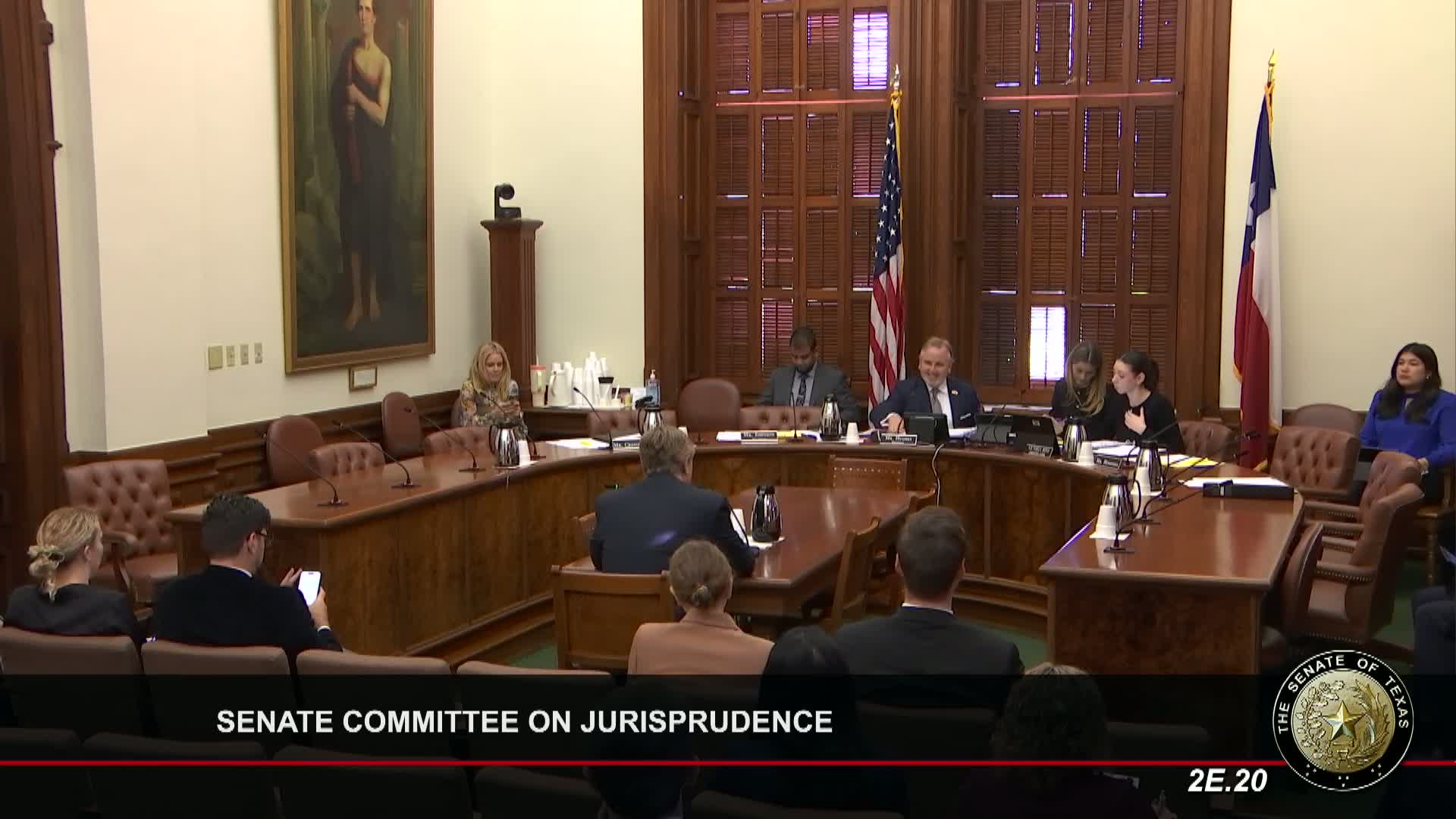
Senate Bill 2165, introduced by Senator Parker and considered by the Senate Committee on Jurisprudence, would prevent courts from dismissing suits affecting the parent-child relationship while a foster child is missing from a substitute care provider. The sponsor and witnesses told the committee the change is intended to keep courts and the Department of Family and Protective Services (DFPS) legally responsible for finding and providing services to missing foster youth.
Senator Parker said DFPS data showed "DFPS's legal responsibility was terminated... for 23 children on missing status in 2023 alone," and argued the practice removed oversight and support for vulnerable youth. "These children are in the care of the state, and the state should never stop seeking their safe return," he said.
Sarah Crockett, director of public policy for Texas CASA, testified in support and told the committee that dismissals leave young people "without any support," including losing access to education and training vouchers, tuition-and-fee waivers, and former foster-care Medicaid. Crockett noted many missing youth are older teens, "16, 17 years old," and said dismissing a case before age 18 can bar access to benefits designed to assist them when they age out of care.
Cecilia Wood, a board-certified attorney with long experience in child-welfare law, supported the bill but urged careful drafting to preserve jurisdictional deadlines and to give courts authority to order active searches. Wood suggested language to ensure that when a child is found, timelines for permanency would "kick back in" and a judge could only reset deadlines for short, specified periods before returning to court review.
Committee discussion closed public testimony and left SB 2165 pending. Senator Parker and committee members signaled willingness to work with stakeholders on drafting clarifications and possible amendments; Wood said she would share proposed language with the sponsor's office.