Get Full Government Meeting Transcripts, Videos, & Alerts Forever!
Get email alerts on the Port Governance topic
No spam. Unsubscribe anytime.
Panel advances bill to give ports more procurement flexibility; Corpus Christi raises tax and local control concerns
Summary
Senate Bill 2080 would update governance rules for navigation districts and ports, increase some procurement thresholds and exempt certain security discussions from being recorded; ports’ representatives supported the bill while Corpus Christi expressed concern that it could expand ports’ economic development authority and affect local tax bases.
Senator Alvarado presented Senate Bill 2080 and a committee substitute as legislation intended to modernize administrative rules governing navigation districts and port authorities. The sponsor said the bill would relieve certain record‑retention burdens, allow governing bodies to exempt security and cybersecurity discussions from recording, and permit governing boards to increase executive directors’ procurement authority (for some districts) — for example raising an executive director’s approval threshold from $100,000 to $500,000 where the governing body approves.
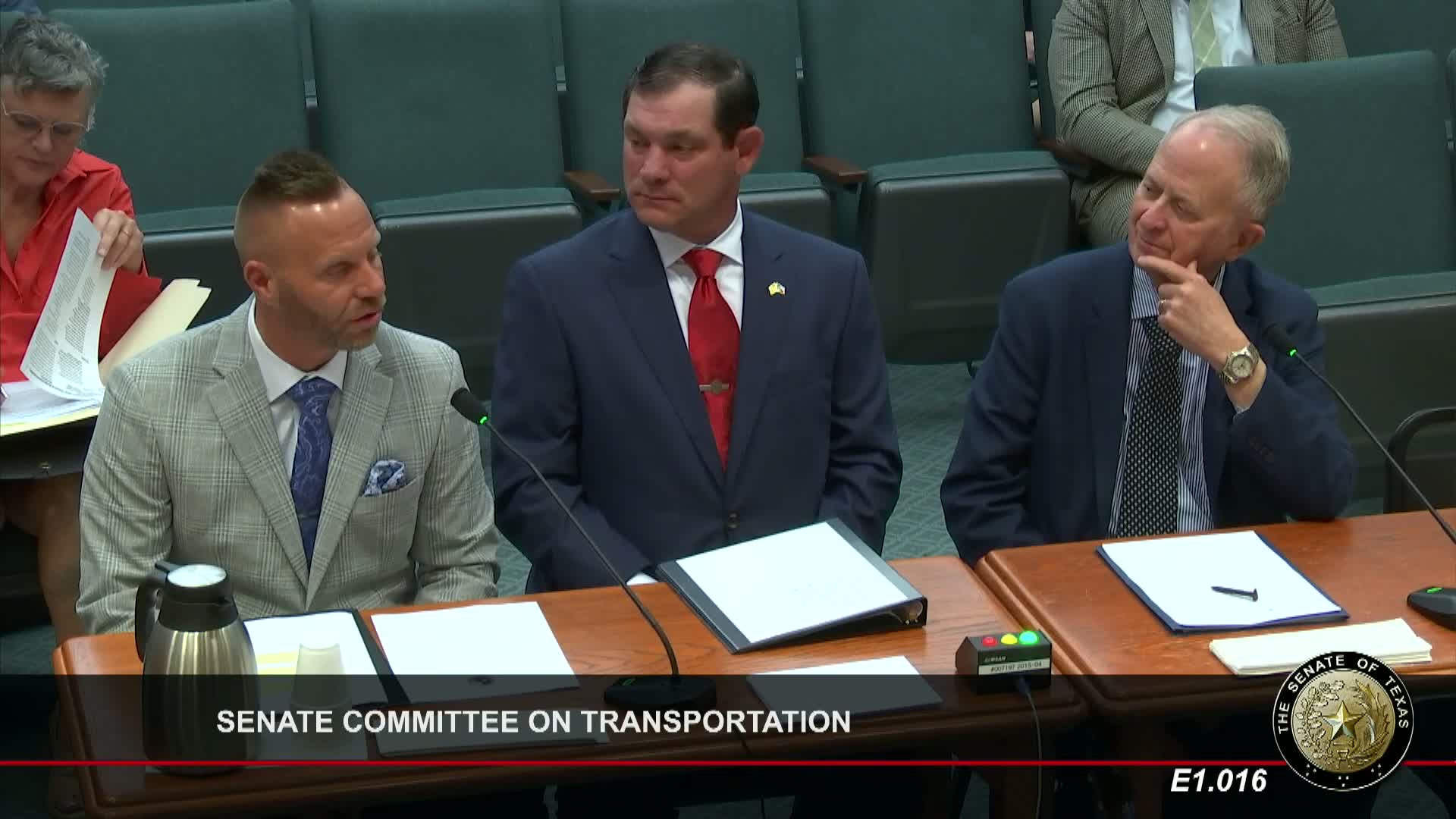
Supporters, including Cara Kenny of Port Houston speaking for the Texas Ports Association, told the committee the bill is aimed at improving ports’ operational flexibility and competitiveness. "We strongly support Senate Bill 2080," Kenny said, adding statewide economic statistics that the ports association provided in written testimony about the economic contribution of Texas ports.
The city of Corpus Christi opposed the bill as introduced. Ryan Skibarski, director of intergovernmental relations for Corpus Christi, said the city’s objection focused on language that could be read to expand navigation‑related commerce definitions and thereby broaden a port’s authority into unilateral economic‑development activities historically subject to local government planning and taxation. "Our city council ... oppose[s] legislation that would expand the authority of the port beyond their role and responsibility to maintain and promote navigable commerce," Skibarski said in testimony.
Anthony Brown, port attorney for the Port of Galveston, described the bill’s historical context and said Chapter 54 of the Transportation Code originated to facilitate Galveston’s purchase of a failing port in the 1930s and remains unique to the Port of Galveston. Brown said the bill’s revisions aim to make processes fairer and to align the port’s practices with other large U.S. ports. Galveston’s representatives and the Texas Ports Association urged the committee to adopt the committee substitute and work on any remaining local concerns as a floor amendment.
Senator Hinojosa and others raised concerns that the committee substitute’s language could be interpreted to expand local port authorities’ economic‑development powers in ways that reduce local tax revenue on leaseholds and that might bypass municipal zoning and coordination with school districts. Sponsor and committee members said they would seek a floor amendment to resolve the issue; at the hearing the committee adopted the committee substitute and later reported the bill favorably to the full Senate.
The committee invited additional port and city representatives to continue working with the sponsor on amendments; the bill was left pending for amendment during the legislative process but was voted out of committee for full Senate consideration.