Get AI Briefings, Transcripts & Alerts on Local & National Government Meetings — Forever.
Senate committee hears technical fix to Port of Brownsville overweight‑corridor language
Loading...
Summary
A bill to make wording consistent across statutes for three Port of Brownsville international bridges was explained to the Senate Transportation Committee; Port officials said the measure does not expand the authorized overweight corridor but clarifies that overweight permits apply in both directions on each bridge.
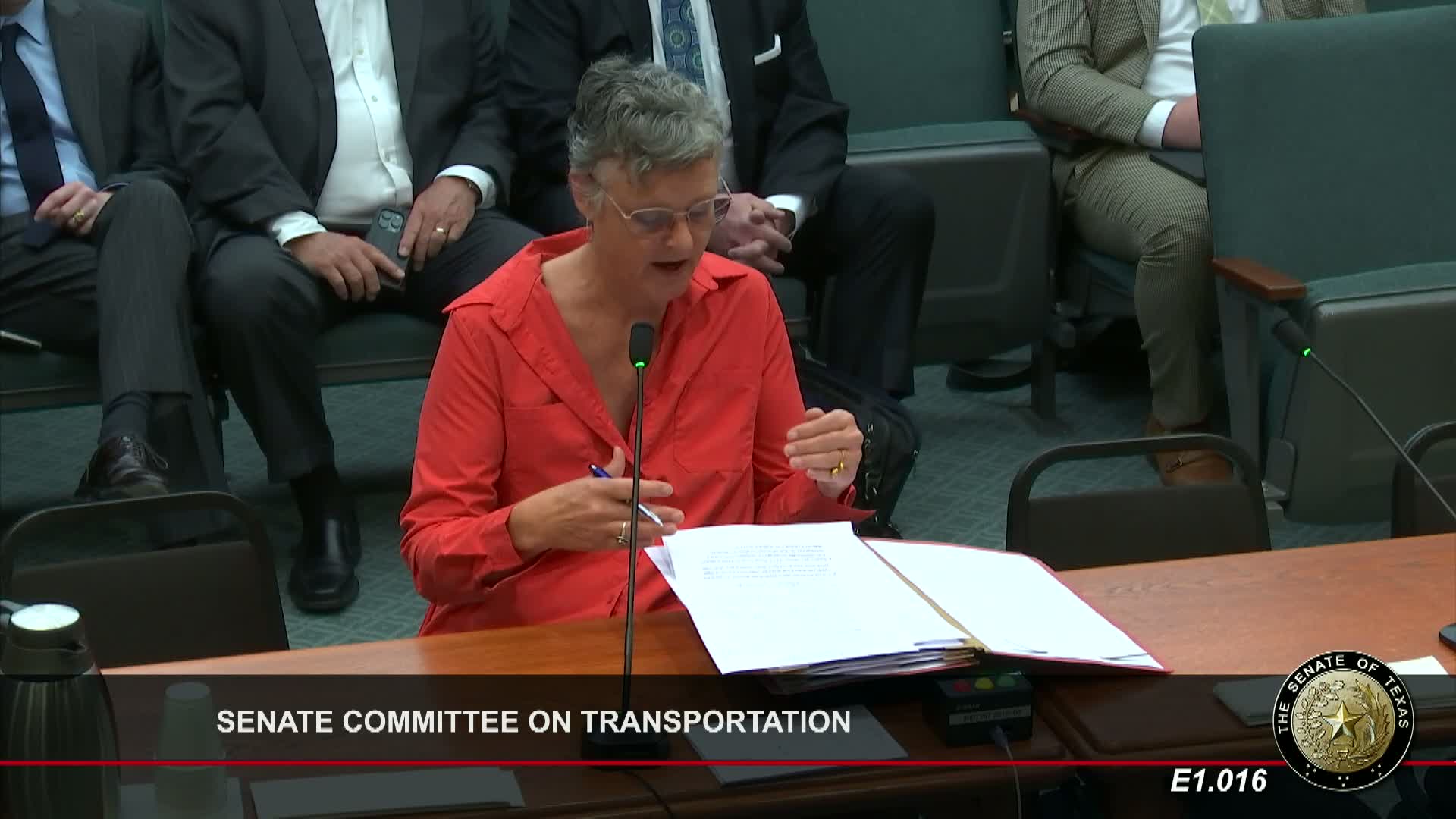
Senator Hannah Hinojosa on behalf of the author presented Senate Bill 2841 to the Senate Committee on Transportation, saying the bill corrects inconsistent wording in administrative and statutory language governing the Port of Brownsville’s overweight corridor and the three international bridges that serve it.
The bill, Hinojosa said, does not expand the existing overweight corridor but seeks “parity” in how the Gateway International Bridge, Veterans International Bridge and the Free Trade International Bridge are described so the same overweight traffic rules apply northbound and southbound. "This clarification is technical ... aimed at improving the operational efficiency of the Port of Brownsville and supporting its trade and commerce activities," she told the committee.
William Dietrich, port director and CEO of the Port of Brownsville, testified in favor. Dietrich told the committee the port is the only deepwater seaport on the U.S.–Mexico border and said the port supports trade that contributes to regional and state economies. He said the port has issued more than 937,000 overweight permits since the corridor’s creation, generating "more than $28.1 million in permit fees," and that about 85% of permit revenue is directed to the Texas Department of Transportation for corridor maintenance. Dietrich also described the port’s landholdings (about 40,000 acres) and listed commodities and activities that move through the port, including steel and ship recycling.
Dietrich thanked Senator Hinojosa and said the port supports SB 2841 because it removes an inconsistency between how the Texas Administrative Code references the bridges. He emphasized to the committee that the bill “does not seek to expand the existing corridor designation. Rather, it brings parity and uniformity to the use of the designated bridges.”
Chairman Nichols offered TxDOT as a resource and asked whether any members had questions. The committee did not take a vote during the hearing; the bill was left pending.
Because SB 2841 makes a technical drafting correction rather than changing where overweight permits may be issued, supporters characterized it as clarifying existing practice rather than creating new authority.