Get Full Government Meeting Transcripts, Videos, & Alerts Forever!
Get email alerts on the Surveillance Privacy topic
No spam. Unsubscribe anytime.
Senate OKs limits and safeguards on law-enforcement use of drones
Summary
Senate Bill 238 allows law enforcement agencies to operate unmanned aircraft systems for specified lawful police activities but adds statutory safeguards including the prohibition of collecting certain political, religious or associational information under ORS 181A.0250.
Senate Bill 238 A passed the Oregon Senate on April 16 after advancing from the Judiciary Committee. The measure clarifies permitted uses of unmanned aircraft systems by law enforcement while including several safeguards to protect civil liberties.
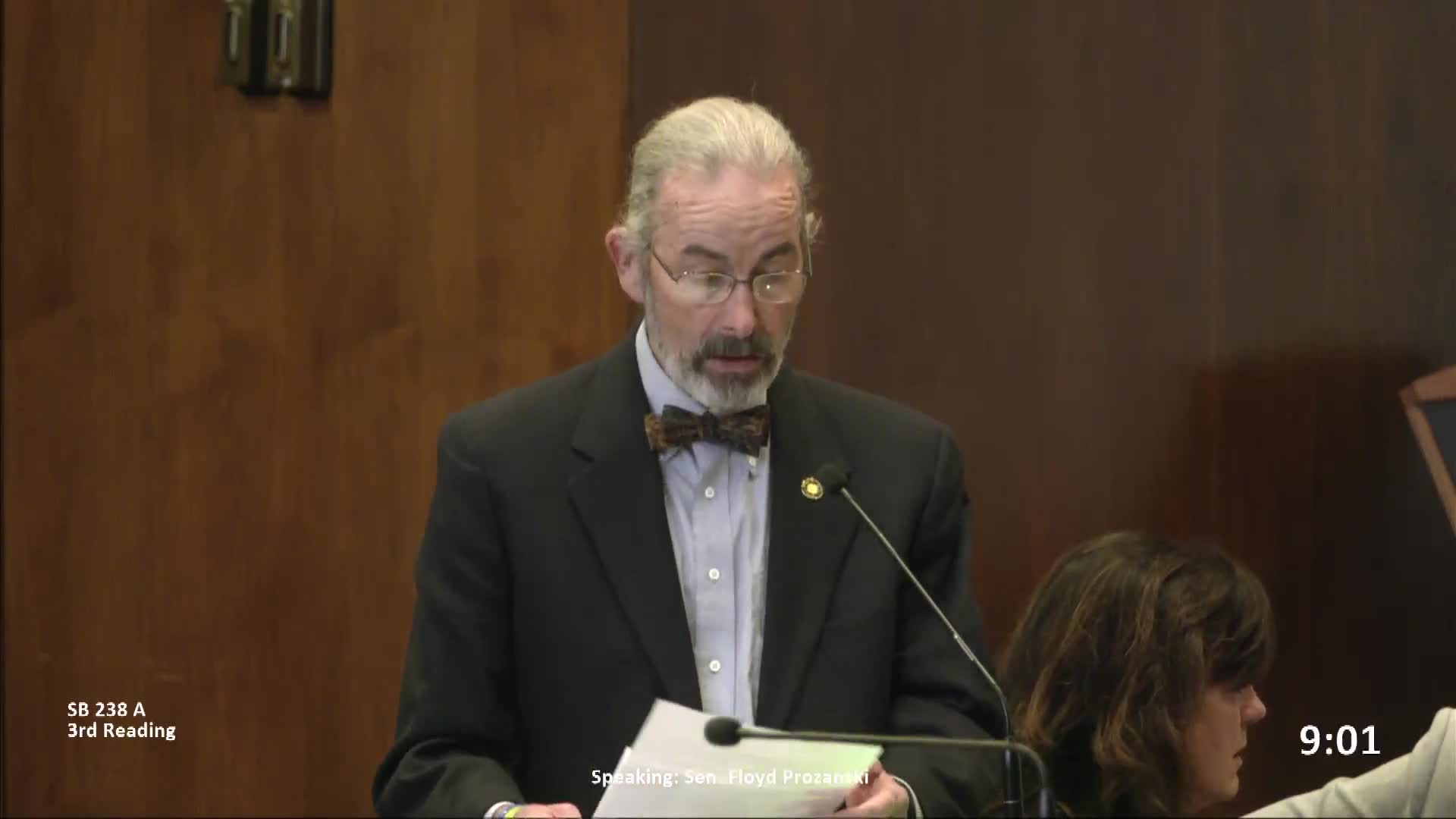
Sponsor Senator Pozzi (quoted on the floor as ‘‘Pozanski’’) told the Senate the bill lists eight declared permitted uses for unmanned aircraft systems and removes broad language that could have allowed unfettered use by agencies. The sponsor said the committee revised the bill to address concerns about overbroad language and added explicit safeguards.
‘‘We removed that from the bill. There are 8 declared uses that ... can in fact be, the use of a, unmanned aircraft system, meaning, i.e., a drone can be used for,’’ the sponsor explained on the floor.
A key safeguard added to the bill requires compliance with ORS 181A.0250. The sponsor read that statutory cross-reference on the floor: ‘‘Notwithstanding the provisions of this section, a law enforcement agency may not use an unmanned aircraft system to collect or maintain information in a manner prohibited by ORS 181A.0250.’’ The cited statute, she said, bars collection of information about political, religious or social views, associations, or activities unless the information directly relates to a criminal investigation and there are reasonable grounds to suspect involvement in criminal conduct.
The Judiciary Committee revised the measure in response to stakeholder concerns, the sponsor said, and included limits on non-police operational uses of the technology and controls on camera deployment when not in police use.
The clerk announced the bill had received a constitutional majority and declared Senate Bill 238 A passed on third reading. Supporters said the measure strikes a balance between operational needs of law enforcement and privacy protections; opponents raised civil-liberty concerns during committee hearings but did not prolong floor debate.
The bill will authorize law enforcement use of drones in narrowly defined circumstances while embedding statutory privacy restrictions and anti-collection language to guard against surveillance of political or associational activity absent reasonable judicial or investigatory cause.