Get Full Government Meeting Transcripts, Videos, & Alerts Forever!
Get email alerts on the Wage Act Amendment topic
No spam. Unsubscribe anytime.
Private and Nonprofit Colleges Seek Narrow Wage‑act Fix After Class‑action Suits
Summary
The Association of Independent Colleges and Universities of Massachusetts urged the committee to pass legislation (H.2164, S.1369) to clarify wage‑act exemptions for nonprofit colleges after class actions placed large treble damages at issue following a 2022 SJC ruling.
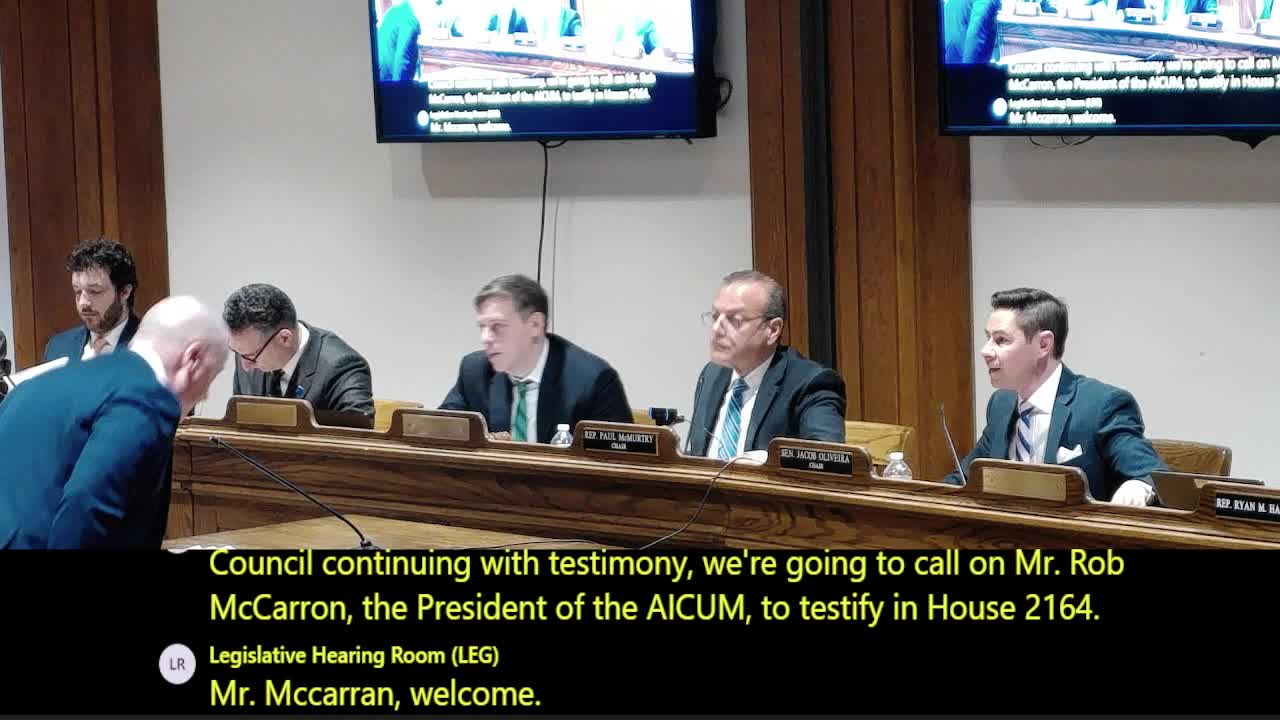
The Association of Independent Colleges and Universities of Massachusetts (AICUM) told the Joint Committee on Labor and Workforce Development on April 16 that House Bill 2164 and Senate Bill 1369 are needed to correct an unintended consequence in the Massachusetts Wage Act exposed by recent class‑action litigation.
Rob McCarron, president of AICUM, said four recent class suits target nonprofit colleges although employees were paid their regular wages on scheduled pay dates. McCarron said the Supreme Judicial Court’s 2022 decision in Reuter v. City of Malden exposed a statutory interpretation that allows automatic trebling of damages applied to underlying wages, dramatically increasing potential awards.
“Because of the SJC decision in the Reuters case, [trebling] greatly amplifies the potential damages in a way that does not align with the legislative intent of the statute,” McCarron said. He warned that the exposure could put “hundreds of millions of dollars and even billions of dollars” at issue and threaten institutions’ ability to serve students.
McCarron identified the four institutions named in the class suits as Amherst College, Boston University, Harvard University and Curry College. He said the suits allege technical inconsistencies in pay timing but do not claim employees were paid less than owed.
AICUM asked the committee to treat employees of nonprofit colleges consistently with statutory exemptions the Wage Act provides for other employment types and to preserve the statute’s force against genuinely unscrupulous employers.
Committee members asked follow‑up questions about the list of institutions and the practical effects of any statutory change. No committee votes were taken at the session.