Get Full Government Meeting Transcripts, Videos, & Alerts Forever!
Get email alerts on the Urban Renewal Tax Increment Financing topic
No spam. Unsubscribe anytime.
House Committee on Rules holds public hearing on bill to require voter approval of urban renewal plans
Summary
Supporters told the committee that tax increment financing diverts revenue from counties and school districts; city and development groups warned a statewide referral requirement would delay projects and remove a local home-rule option. No vote was taken.
The House Committee on Rules held a public hearing April 16 on House Bill 3499, which would require a municipality to refer an urban renewal plan or substantial plan amendment to voters at the next regular election at least 90 days after the governing body adopts an approving ordinance.
The bill pits county officials who say tax increment financing (TIF) diverts revenue from overlapping taxing districts against city and economic-development representatives who said TIF is one of the few local financing tools available for infrastructure, affordable housing and economic development.
Joel Benton, speaking on behalf of Jackson County, said the county supports the bill and described local impacts when cities establish urban renewal areas. “Urban renewal is a substantial burden on counties and other taxing districts when cities are able to create urban renewal districts and then divert that money away from counties and other districts including school districts, fire districts, library districts, and of course counties,” Benton said. He told the committee Jackson County has a fixed permanent rate limit of about $2 and in “some of our code areas” more than 15% of that $2 is diverted to urban renewal, a shift he said reduces the county’s ability to provide jail services, crisis mental health, and animal control.
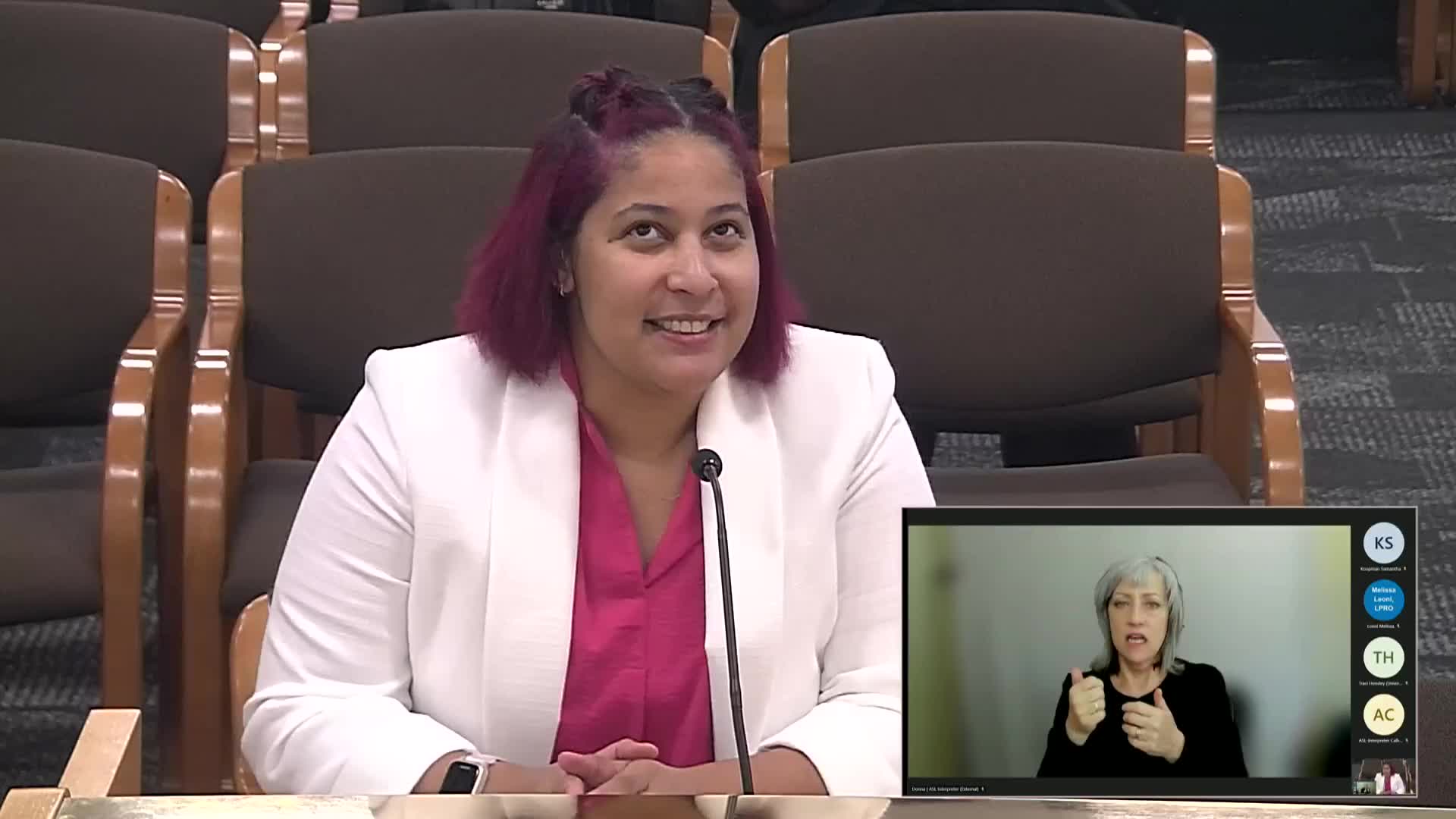
Tracy Hensley, who identified herself as the City Council president in Canby but said she was testifying as a taxpayer, said voters should have the final say. “I would like to have the opportunity for the voters to look at these urban renewal plans and vote on them with all the information before them,” Hensley said, adding that Clackamas County passed Measure 3-386 in 2011 to require voter approval of urban renewal in unincorporated areas and that the measure passed roughly 70% to 30%. Hensley also cited what she described as a district school shortfall “probably, like, last I heard a 6 to $7,000,000 shortfall this year and the potential of 50 to 60 jobs being lost district wide.”
Opposing the bill, Jenna Jones, representing the League of Oregon Cities, said cities have limited revenue tools and that TIF is one of the few flexible options available for long-term infrastructure and blight-remediation projects. Jones noted some cities’ charters already require voter approval for urban renewal and argued a statewide mandate would remove local choices and add cost and delay because ballot referrals are more expensive and restrictive for city staff. “Once you refer it to the ballot, city staff can't say anything other than factual information,” Jones told the committee, saying that prohibition on advocacy can make passage harder and the process longer.
Rocky Dahl, testifying for the Oregon Economic Development Association, described changes made in 2019 through House Bill 2174 (passed as part of an earlier update to urban renewal law) intended to increase transparency and intergovernmental consultation. Dahl listed reforms including required annual reporting by urban renewal agencies, higher thresholds for certain plan amendments, new public-notice requirements, and stronger consultation with affected taxing jurisdictions when plan scope changes involve public property.
Shabri Vickers, director of equity, policy and communications for Prosper Portland, described Portland’s “co‑creation” approach to TIF planning and urged the committee to reject a statewide voter-referral requirement. Vickers said TIF is used in 49 states and the District of Columbia and that in a TIF district the amount of property taxes to overlapping jurisdictions “remain constant for the duration of the TIF district.” She described Portland’s process as including a 90-day appeal period, five-year action plans developed with community leadership committees, a consultant-confer review with taxing jurisdictions, and a mailed notice to about 360,000 households; she also cited a historical leverage ratio, saying TIF plans “leverag[e] a 15 to 1 private investment.” Vickers warned a citywide referendum would allow residents outside a district to make decisions affecting the district and would add delay and cost to projects.
Committee members asked about statutory limits and local discretion. Members raised whether public buildings count as improvements that generate tax increment; Vickers said public buildings cannot be included in TIF plans “unless it's specifically noted and specified within a plan” and that discussions typically occur with the affected taxing jurisdiction. Rocky Dahl pointed lawmakers to the 2019 statutory updates for additional statutory sideboards that address reporting, thresholds and consultation.
The committee did not take a vote on House Bill 3499 at the hearing. Chair Bowman said the committee would not move forward with a scheduled work session on a separate bill, House Bill 3493, and closed the public hearing on House Bill 3499 before adjourning.
The hearing record includes testimony from county officials, city elected officials and economic development and urban renewal practitioners describing both the fiscal impacts of tax increment financing on overlapping taxing districts and the procedural and community-engagement practices cities use when forming urban renewal areas.