Get Full Government Meeting Transcripts, Videos, & Alerts Forever!
Get email alerts on the Defamation topic
No spam. Unsubscribe anytime.
Senate raises defamation standard for statements by people who say they were sexual-assault victims
Summary
Senate Bill 180 would require plaintiffs who sue for defamation over a claim that someone was a victim of sexual assault to show the speaker acted with malice; the measure also inserts the standard into Oregon's anti-SLAPP procedures.
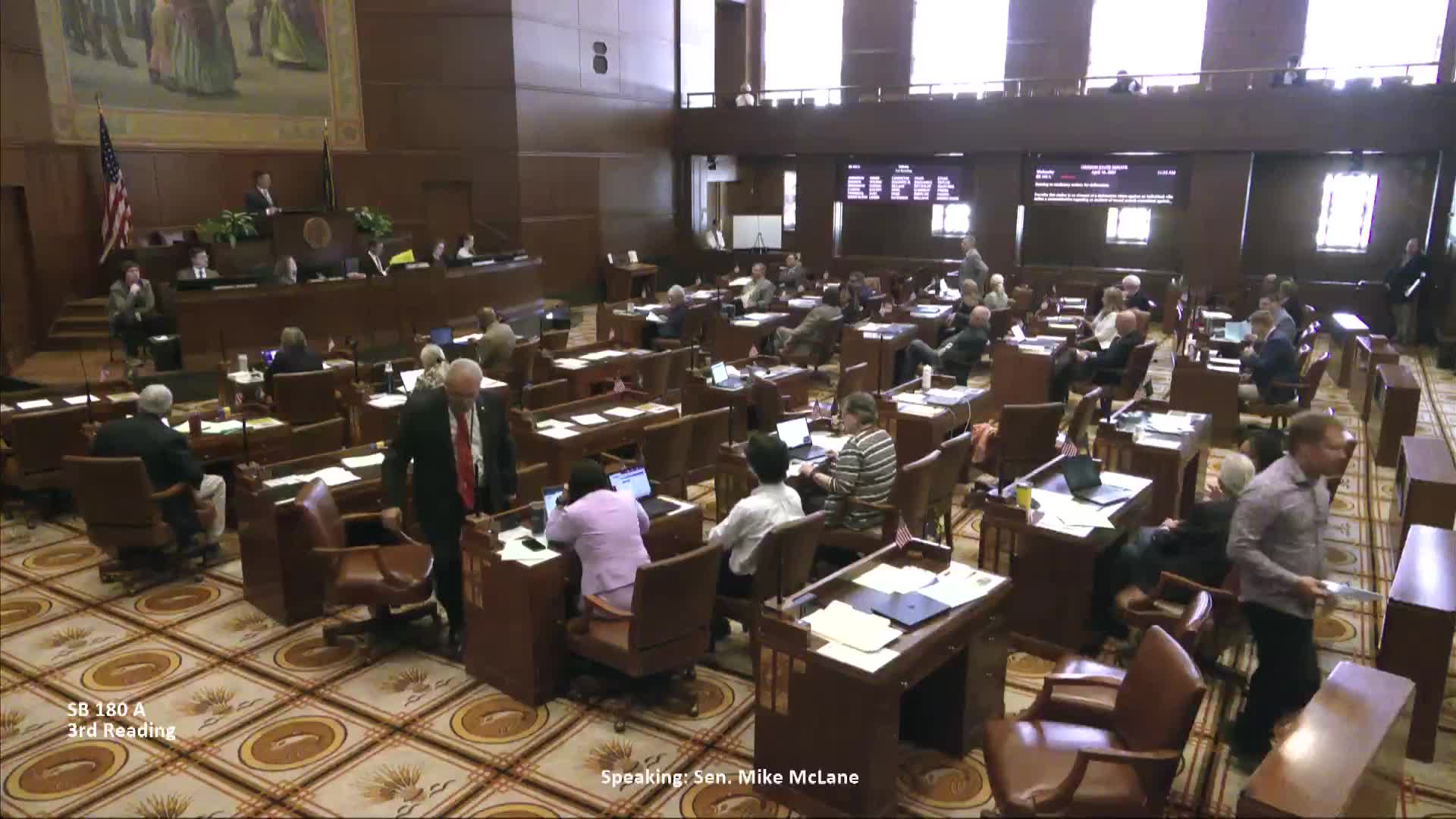
Senate Bill 180 A cleared the Oregon Senate on April 16 after the Judiciary Committee reported the measure unanimously to the floor. The bill raises the standard for defamation claims brought against people who communicate that they were victims of sexual assault.
Senator McLean, sponsor of the bill, described it as a response to testimony showing that defamation lawsuits chilled communications by sexual-assault survivors. Under the measure as explained on the floor, a plaintiff seeking damages for defamation against someone who said they were a victim would have to prove the communicator acted with malice — that is, the communicator knew the statement was false or acted with reckless disregard for its truth.
‘‘The policy change ... is that in Oregon, the chilling effect would be removed from the victims or folks who are communicating that they were a victim of sexual assault,’’ McLean said. He explained the measure elevates the required proof to the malice standard used for public-figure defamation claims and adds the new rule into Oregon's anti-SLAPP statute, creating an expedited review path for these suits.
McLean described the committee’s view that victims should not be deterred from private or informal communications — for example, conversations among friends or messages in private groups — by the threat of costly defamation litigation. The bill preserves the plaintiff’s ability to pursue remedy but raises the evidentiary burden for those defamation claims in this context.
No senators called for extended debate on the floor and there were no recorded floor amendments. The clerk announced the roll call and later declared Senate Bill 180 A passed with a constitutional majority.
Supporters said the bill aims to reduce the “chilling effect” on communication by survivors who are not making reports in a law-enforcement context. The bill also interacts with Oregon’s anti-SLAPP procedures to speed judicial consideration and limit discovery when appropriate.
Senate Bill 180 A now moves to the next steps in the legislative process following the Senate’s passage on third reading.