Get Full Government Meeting Transcripts, Videos, & Alerts Forever!
Get email alerts on the Municipal Governance topic
No spam. Unsubscribe anytime.
Mayor Ross outlines 2025 priorities: housing, infrastructure, public safety and parks
Summary
Mayor Catherine Ross delivered Snoqualmie’s 2025 State of the City, highlighting workforce gains, deployment of a new financial system (Munis), planned park and trail projects, water and sewer upgrades, and efforts to expand affordable and workforce housing.
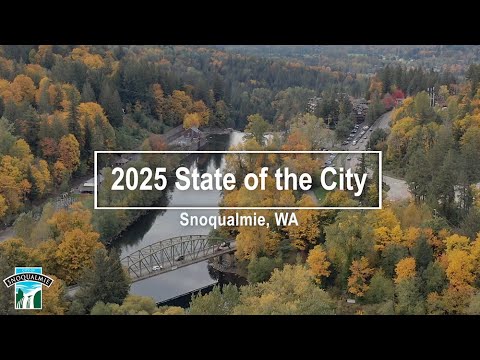
Mayor Catherine Ross delivered the City of Snoqualmie’s 2025 State of the City address, outlining plans focused on housing, infrastructure, public safety, parks and new citywide systems.
Ross said the city will “protect, preserve, and enhance Snoqualmie,” and reviewed department-by-department accomplishments from 2024 and initiatives planned for 2025, including Munis rollout, park and trail construction, water and sewer upgrades, and housing projects.
The address summarized work across multiple departments and why those items matter to residents: staffing and internal efficiencies affect service delivery, capital projects protect downtown infrastructure and riverfront parks, and housing and project-ready designs are intended to help secure outside grant funding.
City administration and human resources
City Administrator Mike Chambliss described internal reorganization and hiring that reduced vacancies and created entry-level positions. He credited the human resources team for filling most vacancies after an earlier period of substantial open positions and said the city will continue employee development and retention efforts. Chambliss said, “Probably our biggest change is our new business management software called Munis.” He and other speakers said Munis is expected to improve efficiency, project accounting, contract management and online services for residents when fully deployed.
Finance and budgets
Finance Director Drew Boutet said the City Council adopted a new biennial budget aligned to priorities such as public safety and infrastructure, and the department continues work on updated fees, a utility rate study and audits of business licenses and B&O tax filings. Boutet noted voter approval of a public-safety sales tax levy to help preserve police and fire services and said changes to collective bargaining agreements already reduced some overtime costs.
Public safety: fire and police
Snoqualmie Fire leadership reported reaccreditation and training milestones and said the department hired three firefighters in 2024 and plans to add three more in 2025 to address rising call volumes and reduce overtime. The department described expanded emergency management training, exercises with regional partners and plans to purchase a used wildland brush truck to address increasing wildland fire risk.
Captain Gary Hiracy, representing the police department, said patrol staffing reached full levels and credited that and proactive policing for crime reductions cited in the address. The department reported work on accreditation steps and negotiations for an interlocal agreement with the City of North Bend for continued police services.
Parks, public works and capital projects
Parks and Public Works Director Jeff Hamlin and staff reviewed park, trail, and infrastructure projects. Highlights included a new splash pad at Snoqualmie Community Park slated to open in warm weather, continued pursuit of state and county grants to fund a community center expansion that includes aquatic space, and the River Trail Project with initial installation planned between Kimball Creek and Northern Street. Sandy Cove bank stabilization phase 2 was described as a project to restore the riverbank to pre-2019 elevations to reduce erosion threats to the park and downtown infrastructure.
The city reported completion of a sewer replacement project on Fourth Avenue that upgraded a 40-year-old sewer serving about 75 homes, added sewer stub-outs to facilitate future connections for homes currently on septic, and created a new sidewalk; the presentation said about $500,000 of that project’s funding came from a state grant. Staff also described ongoing work on a water reclamation facility upgrade tied to supporting the Snoqualmie Scribe hotel and casino expansion and said a reclaimed water reservoir and pump station project—funded by a low-interest loan from the Washington State Department of Ecology—is expected to be completed in summer 2026.
Housing, land use and economic development
Interim Community Development Director Mona Davis reviewed the adopted comprehensive plan update called Snoqualmie 2044 and a recently approved request to reduce the city’s 20-year housing growth target from 1,500 to 719 units, a change approved by the King County Growth Management Planning Council that the presentation said reflects land capacity constraints and floodplain limits. Davis described efforts to create a traffic impact fee program, streamline permitting through a digital portal, and site identification and requests for qualifications for an affordable and workforce housing project on city-owned land.
Specific projects mentioned included: The Veil, a downtown mixed-use project under construction with 11 apartments and first-floor office space; Timber Trails, a new plat near Timber Ridge Elementary that will bring nearly 50 middle-housing units; a planned redevelopment of the former mill site with mixed-use retail and housing including a stated target that 22% of units be designated affordable; continued work by the Northwest Railway Museum on a roundhouse project; and a proposed Snoqualmie Valley Health building for imaging, surgery and outpatient services near the hospital campus, including a developer-proposed traffic signal at SE 90th and Snoqualmie Parkway to mitigate impacts.
Communications, IT and records
Communications staff described growth in social media engagement and a relaunch of Citizens Academy and events; IT staff said 2024 upgrades included improved phone and AV systems and a citywide VPN, with planned network modernization and migration to cloud voice-over-IP. The city clerk’s office discussed record management improvements and a content management system that allowed the city to cancel prior public-record software, yielding an annual savings cited in the address.
What was not decided
The address was a State of the City presentation and did not include formal council votes or motions. Several items described—grant applications, interlocal agreement negotiations, funding gaps for the community center and final implementation of some projects—were identified as ongoing efforts dependent on future approvals and funding.
Closing
Ross closed by thanking city staff and residents and reaffirming the three guiding principles of protecting, preserving and enhancing Snoqualmie as the city pursues the listed projects and operational improvements.