Get Full Government Meeting Transcripts, Videos, & Alerts Forever!
Get email alerts on the Municipal Procedures topic
No spam. Unsubscribe anytime.
Matthews town attorney proposes narrower recusal rules, clarifies emergency‑meeting and public‑hearing speaker policies
Summary
Town Attorney Daniel Peterson presented redlines to the Board of Commissioners’ rules of procedure that would change how recusals are handled, clarify what constitutes an emergency meeting and set options for speakers when public hearings carry over to another meeting.
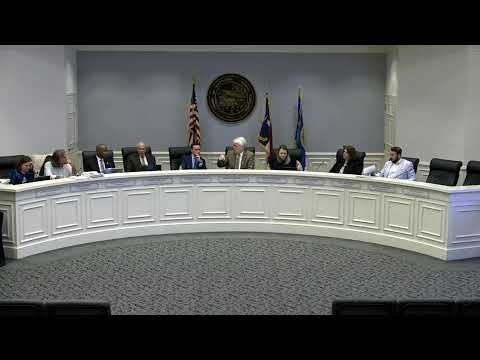
Town Attorney Daniel Peterson on April 14 presented a tracked‑change draft of the board’s rules of procedure that narrows grounds for recusal, clarifies emergency‑meeting language and offers two options for handling speaker time when public hearings are continued.
Peterson told commissioners he changed earlier draft language that would have required “a motion and a second every time somebody wants to recuse,” and instead proposed a system in which a member may state a recusal and the board may allow discussion and a vote on whether to require recusal. “Rather than stop the business of the meeting, when there is a recusal that everybody knows about, is okay with, and is ready to proceed with the actual agenda item,” Peterson said, “it would be a good idea for the town attorney to weigh in in public.”
Peterson said the narrower threshold he proposes would make a direct financial impact the primary automatic ground for recusal, with a limited set of other official‑conduct and zoning‑related recusals remaining subject to further framework development. He told the board he had received background material from Commissioner Tufano on the Dodd‑Frank Act but said that information was advisory and not required to adopt the procedural rule.
On public hearings, Peterson presented two options if a hearing carries to another meeting: (1) speakers who already used their time would not be entitled to a second allotment when the hearing reconvenes, or (2) speakers would receive the same single‑time allotment at each session. He described the options as a staff recommendation and said staff could return with a formal motion if the board prefers. Commissioner comments ranged from support for a hybrid approach to requests to locate any existing 1‑time‑speaker rule in the town’s records; Peterson said he had not found a codified one‑time speaker rule in the current documents.
Peterson also proposed a minor wording change from “excusal” to “recusal” and urged the town attorney to be available in open session to advise the board if a member’s involuntary recusal was being proposed by others. He told the board the language is intended to reflect existing practice while preserving the board’s ability to vote if an objection is raised.
The proposed rule changes will be brought back for further discussion; Peterson said he is still developing a fuller framework that would clarify associational conflicts and other marginal cases.
Ending: The board discussed but did not vote on the rule package at this meeting; staff will return with refined language and options for a future agenda.