Get Full Government Meeting Transcripts, Videos, & Alerts Forever!
Get email alerts on the Microreactor Factory Proposal topic
No spam. Unsubscribe anytime.
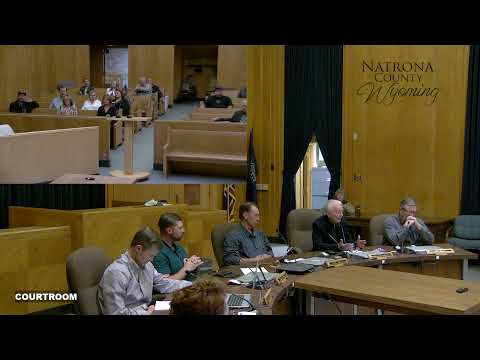
Company Says Microreactor Factory Near Bar Nunn Could Bring High‑paying Jobs; Commissioners, Residents Seek More Details
Summary
Representatives for Radiant described plans for a modular “microreactor” factory north of Bar Nunn and answered questions about jobs, safety, licensing and a possible Wyoming Business Council infrastructure grant. Commissioners and many residents called for more public outreach and legal guarantees about spent fuel and local control.
Representatives for Radiant told the Natrona County Board of County Commissioners and members of the public that the company plans to site a microreactor manufacturing facility just north of Bar Nunn and that prototype testing is scheduled at Idaho National Laboratory in the first half of next year.
The company’s representative, Matt Wilson, said the site plan calls for an approximately $200 million facility built primarily with local contractors that would take about 18 months to construct. He said the company expects the factory to employ about 75 people on day one and to peak at roughly 250 jobs after four to five years.
Wilson told commissioners the company aims to have a working prototype tested and fueled at Idaho National Laboratory in the first half of 2026, and to begin commercial manufacturing by about 2028 if licensing and approvals proceed as planned. He said each microreactor produces about 1 megawatt of power and would run for roughly five years before returning to the factory for refueling.
Why it matters: county officials and residents said the proposal could mean local jobs and new industry for Natrona County, but they repeatedly asked for clear, public answers about safety, spent‑fuel handling, regulatory authority and what a proposed $25 million state or local infrastructure grant would actually pay for.
Key technical and safety points discussed
- Radiant said the microreactors use a high‑temperature gas design cooled with helium, not water; the company described the units as small (about 1 megawatt) and said that a single unit’s radiation at ground level would be indistinguishable from normal background within roughly 100 feet of the reactor housing. Matt Wilson said, “This is a very, very low amount of radioactive material in each one and highly insulated.”
- On spent fuel lifecycle and storage, Wilson said Radiant would manage the full lifecycle at its factory site, including returning used cores for refueling and placing them in certified spent‑fuel canisters. He described industry testing requirements for canisters and cited demonstrations such as train‑impact scenarios as part of licensing tests. “We will have the ability to manage the spent fuel at our factory location,” Wilson said.
- Wilson said Radiant has financial assurance requirements to meet Nuclear Regulatory Commission licensing and added that the Department of Energy provides additional assurances in extreme contingencies. He told commissioners the company must demonstrate “financial assurance” as part of licensing applications but did not provide specific dollar amounts.
Regulatory, ownership and grant questions
- Multiple speakers, including state Representative Bill Aleman and members of the public, raised legal and ownership concerns. Aleman cited state constitutional language and recent bills (HB 16 and SF 186) that failed in the Legislature and warned against giving state or local government credit or subsidies without further review. He said the Wyoming Constitution prohibits loans or donations of public credit for certain private projects and urged caution.
- Commissioners and members of the public repeatedly asked how a possible $25 million infrastructure grant from the Wyoming Business Council (advanced by Advanced Casper) would be structured. Representative Aleman and others said their understanding was that any Business Council money would be for public infrastructure (utilities/roads) rather than a direct payment to the company; Radiant’s representative confirmed Advanced Casper would submit the application and said Radiant would participate in the process.
- Several speakers asked about who would control or own spent fuel if a company failed. Wilson said the federal Department of Energy holds ultimate jurisdiction over permanent repositories and that Radiant would retain responsibility for spent fuel management under licensing; he did not commit to a specific contingency cost to the county or state if a private company became insolvent.
Public response and next steps
- Public comment at the meeting included a mix of support and concern. Representative Bill Aleman said he liked parts of the project but called for a slower, more transparent process; he said many Bar Nunn residents oppose storage of nuclear waste in their neighborhood. Other residents and local business leaders said the manufacturing jobs could benefit Casper and Natrona County.
- Radiant said it has a letter of intent to purchase roughly 30 acres near Bar Nunn but has not closed on the land. The company said it has multiple investors committed and previously raised tens of millions in capital; company speakers described raised capital moving toward the high hundreds of millions in recent investor rounds.
- Commissioners asked Radiant to provide additional technical briefings and said they want the company to return with nuclear engineers and more documentation. Radiant said it has already held a town hall in Bar Nunn and pledged to continue community outreach.
What the transcript shows (discussion versus decision)
- The session included extensive discussion and public comment but no formal county decision on siting, permitting or a grant application. Commissioners asked for more public briefings and documentation; the company said it will continue outreach and pursue required federal and state licenses.
Ending
Radiant’s representatives said prototype testing and licensing milestones will determine timing. County officials said they will continue to request technical briefings and public outreach; residents asked for legal guarantees about spent fuel, ownership and local control before supporting any infrastructure grant or local approvals.