Get Full Government Meeting Transcripts, Videos, & Alerts Forever!
Get email alerts on the Public Safety 911 topic
No spam. Unsubscribe anytime.
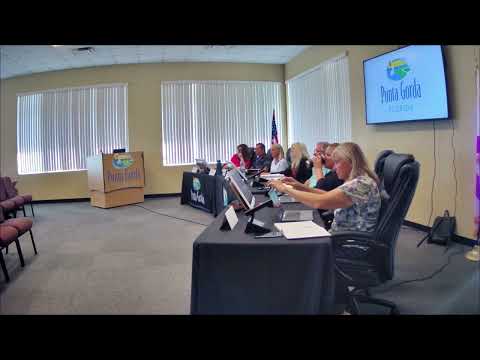
Punta Gorda officials and residents spar over county takeover of 911 dispatch
Summary
At a Punta Gorda City pre‑agenda meeting, residents and city officials discussed a proposed Florida law and the possibility of the Charlotte County sheriff assuming 911 dispatch duties; city chiefs warned of potential costs and response‑time impacts, and recommended technical alignment of CAD systems as a mitigation.
City officials, public safety leaders and residents pressed the Punta Gorda City Council on whether the Charlotte County sheriff should assume county‑wide 911 dispatch responsibilities, and what that would mean for response times, staffing and city costs.
The debate intensified after resident Keith Henderson, who identified his background in emergency dispatch, criticized the sheriff's push to absorb municipal dispatch centers and called it “a power grab.” Henderson said council members had signed an ethics pledge on Nov. 20, 2024, and added that the sheriff’s “exploitation of the tragedy of Marjorie Stone and Douglas is shameful.”
Why it matters: Council members and public safety chiefs said the issue could change how the city handles emergency calls and could affect day‑to‑day dispatch coordination with police, fire and school resource officers. Council members sought clarity on whether consolidation would save money, slow responses or require the city to buy new software to share a common computer‑aided dispatch (CAD) system.
City public safety leaders told the council that panic buttons in schools transmit immediately to both dispatch centers when used. “If somebody hits a panic button, it goes right into their Arctic center, which is a real time intelligence center. It goes to both dispatch centers,” Chief Smith said during the meeting, arguing that joint monitoring is already in place in many incidents.
Officials discussed call volumes and cost estimates the county has cited for consolidation. Council heard that Punta Gorda receives about 10,000 emergency (911) calls annually and roughly 40,000 nonemergency calls. The county previously cited potential savings of about $1.2 million, which city staff said would shrink after required record‑keeping staff are retained, producing an estimated net reduction nearer to $900,000 in some scenarios. City staff warned that if only 911 calls were transferred while the city retained its dispatchers, the savings could be negligible and the city would still need to invest in CAD compatibility.
Council members pressed staff on technical options. One council member said the simplest remedy would be shared CAD: “If we have the same CAD system that the county has, that solves everything,” a council member said. Staff replied existing IT budgets include funds to upgrade the city’s CAD and that county and city IT teams are in talks about interoperability.
Officials also discussed response‑time tradeoffs. City fire and EMS leaders said local dispatchers can get ALS‑equipped fire units en route within roughly 30–40 seconds after a call is received; they cautioned that handing some functions to an external center could add seconds that matter on life‑threatening calls.
No formal action was taken at the pre‑agenda meeting. Council members asked staff to continue technical discussions with county IT and to return with documentation about costs, timelines and how a shared CAD would affect local dispatch protocols and staffing.
Ending: Council members said the issue will remain on the near‑term agenda for additional review and directed staff to seek more detailed cost, timeline and interoperability information before any formal decision.