Get Full Government Meeting Transcripts, Videos, & Alerts Forever!
Get email alerts on the Legacy Businesses topic
No spam. Unsubscribe anytime.
Atlanta launches Atlanta Local Legacy program to support businesses operating 30+ years
Summary
Speakers at a launch event at Pittsburgh Yards described Atlanta Local Legacy as a new city program offering grants, technical assistance and marketing support for businesses that have operated in Atlanta for 30 years or longer.
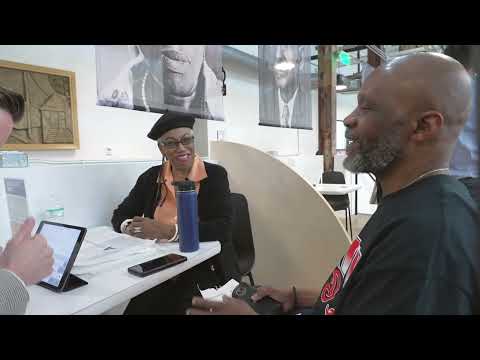
Atlanta Local Legacy, a program intended to recognize and support businesses that have operated in the city for 30 years or longer, was introduced at a launch event at Pittsburgh Yards.
Speakers at the event said the program will combine grant funding, technical assistance and marketing support to help long‑running neighborhood businesses adapt to current economic and digital demands. "We're here at Pittsburgh Yards to celebrate the launch of Atlanta Local Legacy, which is Atlanta's very first legacy business program," Speaker 3, a launch speaker, said. "It's a program intended to celebrate and to uplift businesses that have been operating in the city of Atlanta for 30 years or longer. A few different parts of the program, there are grant opportunities ... but there's also, technical assistance, and there's also marketing. ... So it's the creation of a directory, of a web app, and ways for folks to spend money in Atlanta Lexi business in ways that didn't exist beforehand."
Speakers said the program aims both to preserve local heritage and to stimulate economic activity. "These businesses preserve our local heritage, they foster community identity, and they drive economic activity through both job creation and investments right in our communities," Speaker 2, a launch speaker, said. "For me, a legacy isn't just about longevity. It's about the lives you've touched, the stories you've become a part of, and the traditions you've helped keep alive." The remarks framed legacy businesses as contributors to neighborhood identity as well as local economies.
Presenters also described the operational pressures long‑running small businesses face. "We try to, reuse things that we can't convert into other things, but it's really the food cost, the paper good product cost, and a lot of people don't don't realize that that impacts the, our bottom line," Speaker 2 said, describing cost pressures that constrain small operations. The speakers said the program's grants could help cover equipment and technology upgrades for businesses that lack digital platforms.
Organizers noted the program has been in development for several years. "I'm thankful that something that, we've been working on for the last 3 years got to be made the reality today," Speaker 3 said, adding that city leadership and partners contributed to launching the initiative.
No formal vote or ordinance was recorded in the provided transcript excerpts. Details about grant sizes, funding sources, eligibility verification beyond the "30 years or longer" criterion, program rollout timelines, or which city office will administer the grants were not specified in the transcript.
The event concluded with speakers expressing hope the program will serve as a model beyond Atlanta. "I look forward to ensuring that this program not only gets off the ground in a amazing and meaningful way, but we can have a program that really sets the standard across the country," Speaker 3 said.