Get Full Government Meeting Transcripts, Videos, & Alerts Forever!
Get email alerts on the Indo Pacific Security topic
No spam. Unsubscribe anytime.
Panelists: China’s regional ambitions reshape Indo-Pacific strategy; Taiwan’s deterrence and alliances in focus
Summary
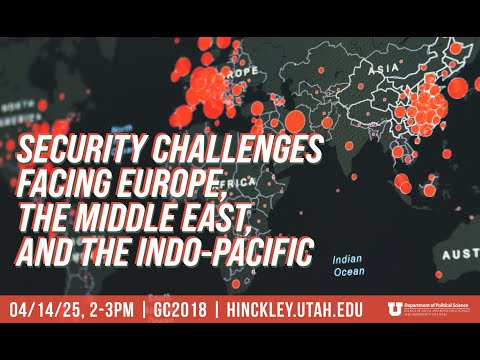
At the Hinckley Forum, panelists discussed China’s ambitions in the Indo-Pacific, maritime disputes in the South China Sea, and uncertainty over U.S. security guarantees to Taiwan under different U.S. administrations.
Panelists at the University of Utah’s Hinckley Forum said China’s expanding maritime and strategic footprint is reshaping Indo-Pacific security and prompting allies to reassess deterrence, investment and partnership strategies.
Ken Holland, chief of party, USAID (and adjunct professor at the University of Utah), framed the Indo-Pacific challenge around China’s status as a “revisionist” power that aims to supplant U.S. influence in the region. Holland outlined several indicators of Chinese ambition cited by analysts: the nine‑dash line claims in the South China Sea, militarization of disputed features, incursions into other states’ exclusive economic zones, and expansion of overseas logistics and port access.
Holland contrasted recent U.S. positions on Taiwan: he said President Joe Biden explicitly stated on record that the United States would come to Taiwan’s defense in the event of a Chinese invasion, while President Donald Trump made no comparable commitment and has emphasized burden-sharing and unilateral options. “President Biden was the first U.S. president to explicitly state that if China invaded Taiwan, the United States would come to Taiwan's defense,” Holland said; he added that Trump had “made no commitment whatsoever” to defend Taiwan.
Panelists noted allied responses. Taiwan and other regional partners seek to strengthen deterrence by building defensive resilience and making potential conquest more costly, a strategy sometimes compared to the “porcupine” approach discussed for Ukraine. Panelists also said major U.S. allies in the Indo-Pacific—Australia, Japan, South Korea and India—face a strategic tension: close economic ties with China combined with shared security concerns that drive cooperation with the United States.
Audience questions touched on China’s economic investments (the Belt and Road/China–Pakistan Economic Corridor), potential trilateral cooperation among Asian states, and whether middle powers will shift alignment if U.S. commitments change. Panelists emphasized uncertainty: economic interdependence complicates strategic choices, and states are balancing commercial ties with long-term security concerns.
No formal actions were taken at the forum; the discussion was framed as expert analysis and audience Q&A.