Get Full Government Meeting Transcripts, Videos, & Alerts Forever!
Get email alerts on the Land Use Data Centers topic
No spam. Unsubscribe anytime.
Pennington County commissioners deny temporary zoning ordinance for data centers after extended discussion
Summary
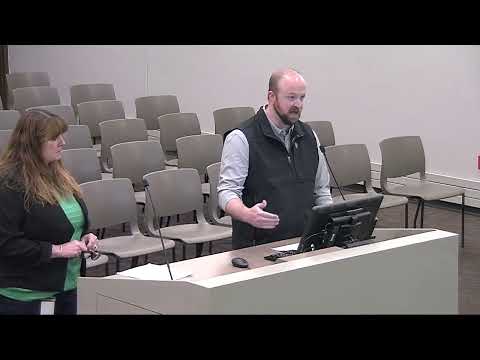
After a multi-hour debate with developers, utilities and county staff, the Pennington County Board of Commissioners voted 4-1 to deny Ordinance No. 797, a proposed temporary zoning control aimed at pausing new data-center approvals while county staff crafts permanent rules.
The Pennington County Board of Commissioners voted 4-1 on April 15 to deny Ordinance No. 797, a proposed temporary zoning ordinance that would have paused data-center applications in county zoning districts while staff wrote permanent rules.
Planning Director Brittney Molitor told commissioners the pause was intended to “allow for some thoughtful planning,” to give staff time to incorporate utility-provider comments and ensure large facilities would come before the Board rather than only the Planning Commission. “We do have an ordinance that we're trying to work through,” Molitor said, adding that the county lacked an existing ordinance with standards for siting and utilities.
The proposal drew extensive comment from county staff, water and utility providers, business groups and economic development representatives. Jason Tennyson, assistant planning director, said he had contacted planners in Cheyenne, Wyoming, and other communities for lessons learned. “They are on the cutting edge of data centers down there,” Tennyson said.
Rusty Schmidt of the Rapid Valley Sanitary District told the board that water demands for large facilities can be high but that modern designs and high recovery rates can make development feasible. “The water demand is astronomical with them,” Schmidt said, describing how a 50-megawatt facility could use on the order of hundreds of gallons per minute and noting that high-recovery closed-loop systems can greatly reduce new water needs.
Garth Wadsworth of Elevate Rapid City urged caution about adopting a short pause. “Site selectors for these data-center projects have a long list of communities,” he said, warning that a pause could cause companies to drop Pennington County from consideration. He also praised planning staff for rapid progress on draft language.
Commission debate reflected those competing concerns. Supporters of a pause cited the need for clear county standards because existing rules treat data centers as conditional uses that would be decided only by the Planning Commission. Molitor said that lack of county-level review “is a concern…because of the size of these type of centers and the utilities that are needed.” Opponents worried the moratorium language and a six-month pause could deter projects before staff finished rulemaking.
A motion to adopt a temporary ordinance failed for lack of a second. Later in the meeting a separate motion to deny Ordinance No. 797 passed 4-1. The transcript does not record individual yes/no votes by name for that final tally.
The planning department said it expects to advertise and bring a permanent ordinance through the Planning Commission and then to the Board for approval; staff estimated advertising for Planning Commission consideration within a few weeks. Molitor and Tennyson said they had already collected comments from utilities and other providers and planned to route draft language to the state's attorney for review.
Why it matters: counties have limited direct authority over utilities, but siting rules affect water, sewer, transport and county-level land-use outcomes. Commissioners said they want standards that protect community infrastructure while remaining visible to prospective investors.
What’s next: Staff will continue drafting ordinance language and consult utilities and other jurisdictions; the Board indicated it expects that work to move quickly and that it can rescind any future temporary pause early if permanent rules are adopted.