Get Full Government Meeting Transcripts, Videos, & Alerts Forever!
Get email alerts on the Board Procedure Public Comments topic
No spam. Unsubscribe anytime.
Temecula Valley Unified board defeats request to reorder public comment, approves agenda and moves to closed session with no closed-session public speakers
Summary
At its April 15 meeting the Temecula Valley Unified Governing Board rejected a motion to move public comments earlier on the agenda by a 3-2 vote, then approved the agenda 5-0 and entered closed session; no members of the public spoke during the closed-session public comment period.
The Temecula Valley Unified Governing Board on April 15, 2025 rejected a motion to move the public-comment period earlier in the meeting and then approved the agenda before adjourning into closed session.
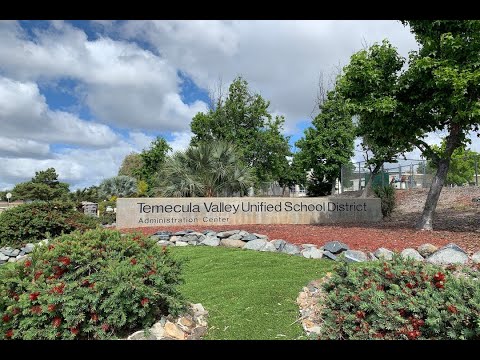
Veil Barham, presiding officer of the Governing Board of Education, called the regular meeting to order at 4 p.m. at the District Office Conference Center. Board member Anderson attended the meeting via teleconference and the board said the teleconference location would be open to the public.
During the agenda review, Board member Wiersma moved to place Item Q (public comments) before Item L (union association comments). The motion was seconded by Dr. Komrovsky. Board member Anderson raised a procedural objection, saying, “Only someone that voted in the majority can reconsider a vote on moving this,” and referencing parliamentary procedure. A roll call vote followed. The roll as read recorded: Schwartz — no; Wiersma — yes; Kamrowski — yes; Barham — no; Anderson — no. The motion was defeated, 3-2.
A subsequent motion "to approve" (as recorded on the meeting audio) then passed unanimously, 5-0; the audio does not specify the motion maker or the precise item approved, but the motion immediately followed the agenda-change discussion and clerk roll call.
After that vote, the board announced it would meet in closed session to consider items listed under section E of the agenda, citing Government Code provisions for closed sessions. The board opened a closed-session public-comment period, noting that speakers were limited to three minutes each with a maximum of 30 minutes per agenda item. No one requested to speak during the closed-session public-comment period; the board then recessed into closed session.
No formal actions or votes on agenda items beyond those described were recorded in the available transcript excerpt.