Get Full Government Meeting Transcripts, Videos, & Alerts Forever!
Get email alerts on the Zoning Tree Preservation topic
No spam. Unsubscribe anytime.
Stow City planning staff seek Urban Forestry Commission input on draft tree preservation, landscape standards
Summary
Planning Director Zach Hown presented the first draft of Zoning Code Chapter 8 at the Urban Forestry Commission meeting April 14 and asked commissioners to review sections on tree preservation (11.08.05) and landscape standards (11.08.06); staff said adoption is roughly eight months away and will return for additional feedback.
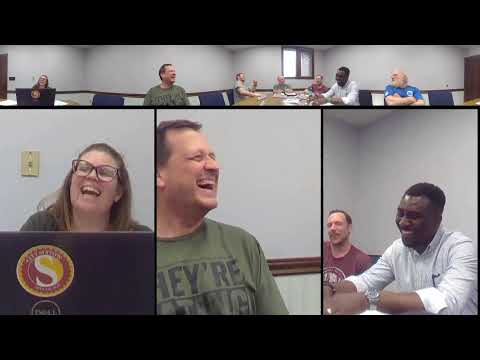
At the Stow City Urban Forestry Commission meeting on April 14, Planning Director Zach Hown and Deputy Planning Director Sarah presented the first draft of Zoning Code Chapter 8, which contains community open-space provisions, tree preservation rules and landscape standards, and asked the commission for written comments and a future review session.
Hown told the commission the draft is the first delivery of chapter 8 and that the most relevant portions for the commission are section 11.08.05 (tree preservation and removal) and section 11.08.06 (landscape standards). He said the rewrite is part of a larger zoning-code update and that the city is “probably 8 months out from adopting anything.” Commissioners were asked to redline the draft, email comments, or prepare questions for a follow-up review at a steering-committee meeting expected in mid-May.
Why it matters: The chapter would set procedural and technical expectations for preserving mature trees, qualifying removals, and minimum plantings on new development or redevelopment. Commissioners flagged several specifics that could affect implementation, including how the code would reference a city species list, handling of nonnative invasive plants, drought-tolerant plant requirements for small parcels, and exemptions for wetlands or flood-prone basins.
Key details from the discussion: - Scope and timing: Hown said the draft will route through the project’s steering committee and return to the commission for more detailed review; adoption was described as about eight months away. - Species list: The draft references a city tree species list. Commissioners noted Stow maintains a recommended species list and a street-tree inventory in the master plan and suggested either referencing the master plan or keeping the code language general so updates do not require a code amendment. - Invasive species: Commissioners recommended the draft rely on an official “nonnative invasive species” list rather than enumerating species in the code. Planning staff pointed to an administrative code from the state Department of Agriculture that was discussed as a candidate reference (transcript cited “administrative code 9015-30-01” and “Department of Ag, section 901.5”). - Preservation thresholds and measurements: The draft sets size thresholds for preserved trees; commissioners discussed “12 inches” standards and referenced larger-caliper trees present in the inventory. A separate reference in the draft to caliper measurements was discussed (transcript reference: “Caliper in Nashville? For us. 4 and a half feet.”). The transcript did not record a clear, final numeric standard to adopt. - Drought-tolerant requirement: Under landscape standards, the draft includes a provision that parcels under one-half acre must have a minimum of 50% drought-tolerant native plant material. Commissioners probed applicability and exceptions for sites with wetlands, basins, or other hydrologic constraints. - Exemptions and review: Commissioners asked how the code would treat sites where preservation cannot be practicably designed into a project; planning staff said such determinations would be reviewed by the city arborist or planning director (defined in the draft as the planning director or their designee). The commission discussed adding explicit exemptions for regulated wetlands, frequently flooded basins and other sites where the required plantings would be infeasible. - Parking-lot and stormwater: The landscape standards separate perimeter screening from interior parking-island requirements; a rain-garden option is present in the draft. Commissioners asked whether parking-lot plantings should also be credited for stormwater control or limited to screening and aesthetic functions; staff said the perimeter planting area language is primarily for screening but that the draft includes an optional rain-garden approach.
What comes next: Staff asked commissioners to review the draft and return comments by email or at the next commission meeting; Hown indicated staff will bring the draft back after the steering-committee review (mid-May). Planning staff said final compliance determinations would be made by the city arborist or planning director/designee.
Quote: “So over the last, about last year, we even started the zoning code update. This is the first draft of chapter 8,” Planning Director Zach Hown said while introducing the document to the commission.
Ending: Commissioners agreed to review the materials and provide written comments; staff will schedule another presentation to the commission after steering-committee review. No formal action on amendments or adoption was taken at the April 14 meeting.