Get Full Government Meeting Transcripts, Videos, & Alerts Forever!
Get email alerts on the Property Assessments topic
No spam. Unsubscribe anytime.
Whitfield County residents press commissioners over large property revaluations; board urges appeals, says it will set millage later
Summary
Residents and commissioners discussed a countywide revaluation that produced large assessment increases. Commissioners said they do not set property valuations, encouraged appeals through the assessor's office and said the board will set the millage rate later this summer with an intent to roll it back.
Whitfield County residents and commissioners spent much of the April 14 meeting debating a countywide property revaluation that produced steep assessment increases and prompted dozens of public comments.
Commissioners said the county does not set property valuations and urged homeowners to use the appeals process administered by the local board of assessors. The board confirmed it will set the 2024 millage rate later this summer and said it intends to roll the rate back "as neutral as possible," repeating that the county’s share of a typical property tax bill is about 30 percent while the Whitfield County Board of Education accounts for roughly 70 percent.
Why it matters: Large reassessments can sharply raise tax bills and affect homeowners’ ability to pay. Dozens of residents told the commission the increases were unaffordable for fixed‑income households and retirees; several said they planned to appeal their new values.
At the meeting commissioners described the revaluation as a state‑driven process, saying state law requires periodic reevaluations and directs how assessors calculate sales ratios. County officials said they tried to intervene on timing and amounts but were restricted by the Georgia Department of Revenue and state rules that govern the assessor’s work.
Residents urged clear remedies and more oversight. Daryl Long, of 4310 Troy Lane, told commissioners, "The appraiser sets the price of your home. You gentlemen set the millage rate on your home." Julia Harnois of 203 Van Buren Drive asked whether the board had voted to delay revaluations; a county official replied the commissioners do not vote on valuations and that the board attempted — unsuccessfully, and then was told by state officials not to — negotiate timing with the assessors.
Several residents described individual hardships from reassessments. Virginia (no last name given) said her assessed value rose from $349,000 to $731,000 and asked how she could pay the taxes at age 82. Tammy McClain, a longtime teacher, said her December 2024 tax payment was about $2,000 higher than the prior year and questioned why the school system continued asking for money while sitting on large reserves. William Morgan (3330 Mount Pleasant) urged everyone to file appeals and to attend and pressure elected school board members, saying, "You need to appeal your taxes. Everybody in this room and everybody in this county needs to go appeal their taxes."
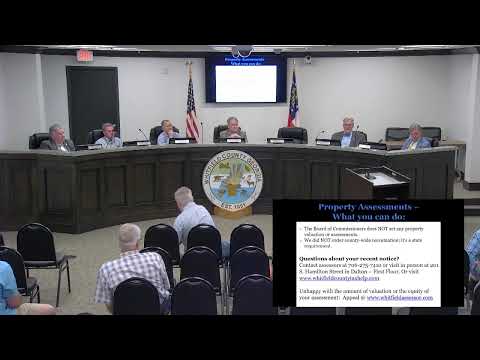
County staff pointed residents to the assessor’s office and online resources. At a later public comment the board displayed the assessor’s web address and encouraged attendees to file appeals in person or electronically through the Whitfield County assessor’s website.
What the board can and cannot do: Commissioners repeatedly stressed their limited authority over valuations. They said the board will determine millage rates and that their current plan is to try to roll back the county portion of the millage for the 2024 tax year. The board also noted that any changes involving assessor structure (for example, making the chief assessor an elected post) would require state legislative action.
What residents can do: Commissioners and multiple public speakers urged residents to (1) review their assessment notices, (2) file appeals with the board of assessors (the county posted the assessor website during the meeting), and (3) attend school board meetings and contact state legislators about structural or statutory changes.
The discussion spanned the agenda and public comment periods; the board took no formal action on valuations at the meeting but recorded broad direction that staff continue outreach about appeals and that commissioners will set the millage rate at a later date.