Get Full Government Meeting Transcripts, Videos, & Alerts Forever!
Get email alerts on the Infrastructure Water Pipelines topic
No spam. Unsubscribe anytime.
Residents press council for answers on Haines pipeline route, franchise access
Summary
Residents raised safety and outreach concerns about the proposed Haines reclaimed-water pipelines, telling the Seal Beach City Council the project routing and bridge impacts have not been adequately explained.
Residents raised safety and outreach concerns about the proposed Haines reclaimed-water pipelines, telling the Seal Beach City Council the project routing and bridge impacts have not been adequately explained.
The issue matters to College Park East and West residents because the proposed route would place new pipeline infrastructure across an older bridge that speakers said already carries other pipelines and has shown signs of leaking.
Multiple residents recounted technical details from a wastewater project study and asked why Long Beach and the Los Angeles Department of Water and Power (DWP) selected a route through College Park neighborhoods rather than alternatives. A resident who identified himself as James pointed to a figure in the project study and said, “2.766 MGD. You read right by that,” noting that two parallel pipelines would total about 5.5 million gallons per day. James summarized his calculation for councilmembers, saying that doubled flow equated, in his view, to “46,000,000 pounds per day” crossing the bridge and used that comparison to stress perceived risk to the structure.
Ken Sy of College Park West said the bridge already carries other pipeline infrastructure, including an oil pipeline, and that a water pipeline near the bridge “has been leaking for the last 10 days.” He urged city staff and Long Beach to provide more proactive outreach and more detailed engineering information about dynamic loads from moving liquid — which his engineer son described as “liquid dynamic stress.”
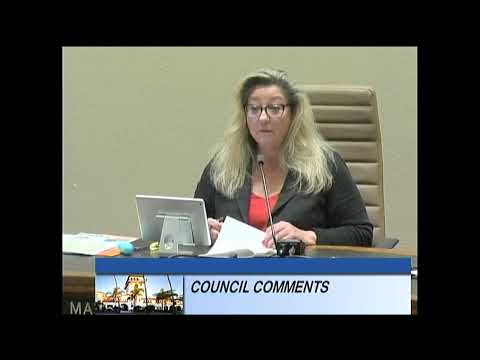
Councilman Long told the chamber the project cannot move forward without administrative approvals from Long Beach and DWP. “Without that franchise access agreement, the project there is no Haines pipeline project to be built,” Councilman Long said, adding that there has been no request for a franchise access agreement since the January public meeting. Council members also noted that Long Beach has not contacted the city since late January about further project steps.
Discussion only; no formal council action was taken on the Haines pipeline during the April 14 meeting. Multiple residents urged the council to press for clearer routing information, structural assessments, and active engagement from project owners. Ken Sy asked the city to pursue contingency plans for neighborhood egress in an emergency, saying additional evacuation options would reduce local anxieties regardless of the pipeline outcome.
City staff separately announced that the city is still working through a water and sewer rate analysis and will hold an additional study session for public feedback; the staff presentation did not link that rate study directly to the Haines pipeline approvals.
Public-comment speakers framed their concerns as engineering, procedural and outreach failures rather than as a formal request for a council decision. Council members responded with procedural clarifications about the franchise access agreement and the timeline: the city will not be able to act on pipeline construction until Long Beach or DWP submits the required franchise access request.
Next steps mentioned at the meeting included requests from residents for a dedicated city-led meeting with Long Beach and DWP representatives, and the council’s public reminders that no franchise access agreement or formal application had been filed since January, which the council said halts any immediate project advancement.