Get Full Government Meeting Transcripts, Videos, & Alerts Forever!
Get email alerts on the Environment Lecture Wilderness Yosemite topic
No spam. Unsubscribe anytime.
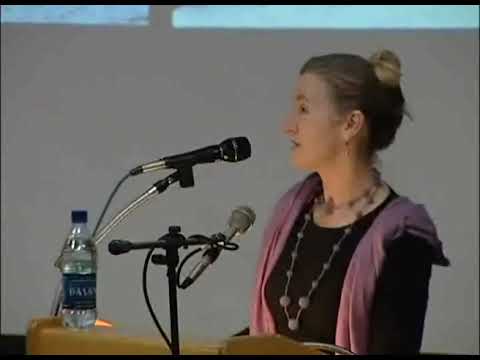
Rebecca Solnit urges 'radical slowness' and a redefinition of wilderness in Missoula lecture
Summary
Writer Rebecca Solnit told a packed Wilderness Lecture Series audience in Missoula that the idea of wilderness has shifted from a notion of untouched land to an actively managed landscape shaped by people, and argued that slow, persistent activism has produced many of the environmental gains of recent decades.
Rebecca Solnit, a writer, historian and activist from San Francisco, delivered the closing lecture of the Wilderness Lecture Series in Missoula, saying the meaning of “wilderness” has changed and urging what she called "radical slowness" in environmental thinking and activism.
Solnit told the audience she and photographers Mark Clatt and Byron Wolfe rephotographed historic Yosemite images to track how both landscape and public meaning have changed over decades, producing what she called a lesson in paying attention to slow shifts in culture and ecology. "Wildness is not wilderness. That is, if wilderness is a kind of place, wildness is a state of being or a state of mind," Solnit said.
She framed the argument with two interlocking strands: a photographic project that retraced Edward Muybridge's and other photographers' 19th- and 20th-century views of Yosemite, and an activist history she developed in the essay and later book Hope in the Dark. The photography work—which included rephotographing Ansel Adams' Clearing Winter Storm during a 7,000-acre controlled burn on Oct. 6, 2002—showed how vegetation, fire regimes and park infrastructure have altered the valley's appearance. Solnit said fire suppression, not simply climate trends, had encouraged denser forests in places that were once open meadows.
Solnit tied those ecological observations to the valley's human history. She recounted the Mariposa Battalion's 1851 campaign and the renaming of a lake after an Ahwahneechee leader, which she said helped erase indigenous place-names and land-management histories from popular accounts of Yosemite. She described research begun in 1991 that found descendants of the valley's original inhabitants—including a forester named Jay Johnson who lived in the valley until his retirement and was evicted in 1996—showing, she said, that indigenous presence persisted even when official narratives treated it as past.
The author argued that the modern environmental imagination is shifting: park brochures and signage she observed had been updated to acknowledge Miwok place names and present-day descendants, and interpretive exhibits had become bilingual in places. Solnit called that a symbolic step forward even where legal recognition and land restitution remain unresolved.
She linked those changes in public meaning to broader shifts in environmental politics. Solnit described anti-nuclear and conservation victories—including campaigns that stopped the MX missile program and defeated proposed dumps in Ward Valley and Sierra Blanca—as examples of victories whose effects are visible mostly in what did not happen. She cited the Mono Lake campaign and the Mono Lake Committee’s multi-decade work to restore lake water levels as an instance of a long legal and organizing win.
Solnit also discussed how changing demographics and global connections have altered who visits parks and what they see. She described rephotography sessions in Wawona and Glacier Point where visitors from diverse backgrounds—she named examples including children and families from Latino and South Asian communities—appeared to claim Yosemite as part of a broader, less exclusively Romantic tradition of landscape.
Throughout, Solnit emphasized patient, persistent organizing as a form of agency. Recounting how an essay she first posted online grew into the book Hope in the Dark, she said the point of hope is not certainty but the refusal to accept inevitability: "Despair presumes that it knows what will happen next," she said. In the audience question-and-answer period she was asked whether activists could afford to wait for change on issues such as nuclear proliferation; Solnit responded, "No. I don't think people can wait," and urged strategies that combine long-term organizing with immediate action.
The lecture included audience discussion of nuclear policy, indigenous resurgence, and how to center indigenous voices in environmental decision-making. Solnit named movements and outcomes she said illustrated shifting power—from the Zapatista uprising that followed NAFTA to the creation of Nunavut in 1999—and argued these were part of a widening set of voices reshaping policy and land rights. She closed by urging slow, sustained attention to place-based history and persistent civic engagement as means to produce long-term environmental and social change.