Get Full Government Meeting Transcripts, Videos, & Alerts Forever!
Get email alerts on the Voting Rights topic
No spam. Unsubscribe anytime.
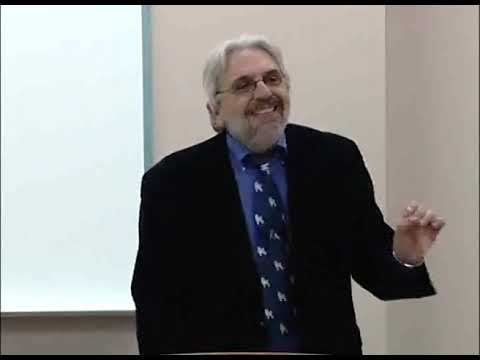
Historian Stephen Lawson: Voting Rights Act boosted Black registration and representation but limits remain
Summary
At a University of Montana Martin Luther King Day lecture, historian Stephen Lawson reviewed four decades of the Voting Rights Act, citing dramatic gains in Southern Black voter registration and elected officials while warning of persistent barriers including vote dilution, redistricting battles and felon disfranchisement.
Stephen Lawson, a historian and visiting professor, told a University of Montana audience that the Voting Rights Act of 1965 produced “remarkable increases” in Black voter registration and in the number of Black elected officials, while stressing that the law has not solved deeper economic and social disparities.
Lawson delivered the lecture as part of the university’s Martin Luther King Day events. He reviewed how the law’s special provisions — including federal supervision and the use of federal registrars in some Southern jurisdictions — helped raise registration among eligible Black adults in the seven originally covered states from a small minority in 1964 to roughly 60 percent within four years after passage, calling Mississippi “the model” of that transformation.
The lecture examined why the right to vote mattered and what it did not automatically achieve. Lawson emphasized that the Voting Rights Act recognized the collective nature of Southern disfranchisement and used coverage formulas and remedies intended to address patterns of discrimination rather than isolated incidents. He argued that registration gains were followed by a second fight over the power of Black ballots: practices such as at‑large elections and targeted redistricting that diluted minority voting power.
Lawson cited specific numbers from his talk: in 1964 Black registration was 6.7 percent in Mississippi and rose to about 60 percent by 1968; other Southern states had higher pre‑Act registration rates (Tennessee 69 percent, Florida 63 percent, Texas 58 percent). He also noted that, overall, about 43 percent of adult Southern Blacks had been registered before 1965 and that the Voting Rights Act’s special provisions applied to a subset of states where registration and turnout lagged most severely.
Turning to litigation and the courts, Lawson discussed how the Supreme Court extended the Act’s reach beyond registration to protect the value of minority ballots, allowing challenges to electoral systems that diluted minority power. He singled out Shaw v. Reno and subsequent cases that limited race‑based districting when race was the “dominant and controlling” factor, and he noted the legal tension between creating majority‑minority districts to secure representation and concerns that such districts could concentrate minority voters and reduce broader influence.
Lawson described the Act’s reauthorizations — he recounted renewals in 1970, 1975, 1982 and most recently in 2006 — and observed that Congress in 2006 did not substantially revise technical aspects of the law despite active public debate. He also noted how section 2 has been used to challenge redistricting and at‑large election schemes nationwide, including litigation brought by civil‑liberties groups in Montana.
Addressing local relevance, Lawson said Montana’s Black population is very small (he cited a February census figure of about 0.3 percent) but that the Act can matter where language minorities or American Indian populations meet coverage criteria. He identified Bighorn and Rosebud counties as examples that were covered under language‑minority provisions added in the 1975 renewal and said the law requires language assistance where needed, though he declined to assess local implementation quality.
Lawson closed by stressing limits and ongoing threats: economic inequality, high incarceration rates among African American men and modern measures such as felon disfranchisement and some voter‑ID proposals. He urged renewed grassroots organizing, saying the franchise’s power comes from “the purposeful collective action of an engaged electorate.”
The lecture ended with a brief question‑and‑answer period during which audience members raised concerns about poll workers and machine reliability, tribal voting and prospects for a Black or female president. The event was sponsored by the university’s Martin Luther King Day Committee and was followed by announcements about a documentary screening on Emmett Till.