Get Full Government Meeting Transcripts, Videos, & Alerts Forever!
Get email alerts on the Bps Budget Closures Reinvestments topic
No spam. Unsubscribe anytime.
BPS outlines FY26 budget priorities, says closures will be followed by reinvestment
Summary
Boston Public Schools officials told the City Council on April 15 that the FY26 spending plan increases school-directed funding while relying on a set of school closures and reconfigurations to create capacity and reinvest resources into programming and facilities.
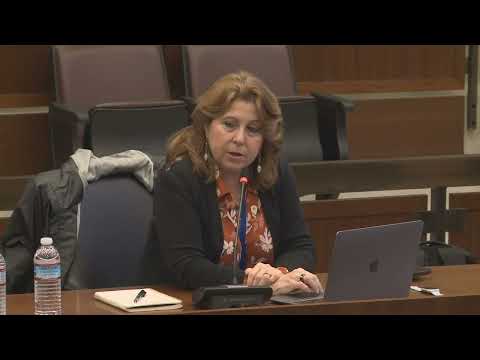
Boston Public Schools officials presented the district’s FY26 spending plan to the Boston City Council Committee on Ways and Means on April 15, saying the proposal increases overall spending while returning savings from closures and reconfigurations into classrooms.
The administration said the FY26 budget shows a $53.4 million increase over FY25, including $22.0 million in new investments and $21.0 million in identified cost savings. BPS said planned reductions in central-office spending and efficiencies in operations will allow about $43.0 million to be reinvested “back into our schools.” Superintendent Skipper said the district had also identified $5.0 million in additional central-office reductions to direct toward schools.
Why it matters: BPS officials said the district’s top priority is maintaining and strengthening student-facing services even as it reduces the number of school sites and reconfigures grade bands. Closing and merging under-enrolled or under-resourced schools is, officials said, intended to create higher‑quality “student seats” with broader program offerings and more efficient use of staff and facilities.
BPS described the district’s long‑term facilities approach as data-driven. Capital planning staff said they use three primary metrics — a building experience score, utilization, and a continuum-of-services measure — plus neighborhood walk zones and choice data to guide decisions. Sarah King, deputy chief for capital planning, said those metrics and the racial equity planning tool were public and available on the district website.
Officials said the school committee approved a recent round of actions on March 20 that included four school closures and two mergers effective at the end of the 2026 school year. The administration characterized the financial effect of that set of proposals as an expected one‑time future savings “between $10 million and $20 million,” with the exact amount to be determined during transitions; those savings are not reflected in the FY26 baseline because BPS said it will keep impacted staff in place during the transition.
Public comment and council questions emphasized transition planning. Cheryl Buckman, a South Boston parent and Devers alumna, told the committee she and other Devers families want a transparent transition process that preserves community input, tracks students’ placements, retains some Devers staff where possible and establishes trauma‑informed supports. BPS officials said they expected local transition teams and family liaisons to be a central part of placement planning and to prioritize placing students in high‑quality seats close to home when feasible.
BPS chief financial officer David Bloom told councilors that mergers tend to increase economies of scale and enable schools to offer services that two smaller sites could not provide individually — for example additional arts and physical‑education staff and expanded library and course offerings. Bloom said transportation and operating fewer sites provide some savings, but that the primary intent of mergers is programmatic scale rather than immediate large budget cuts.
BPS officials said they will continue community engagement and report back on implementation timelines and student‑placement plans. The administration also reiterated that detailed metrics, the long‑term facilities plan, and the racial equity planning tool are published on the district’s website for public review.
The committee did not take any formal votes during the hearing; the school committee vote referenced above was recorded by BPS as taking place on March 20.