Get Full Government Meeting Transcripts, Videos, & Alerts Forever!
Get email alerts on the Climate Change topic
No spam. Unsubscribe anytime.
Missoula panel: scientists report shrinking snowpack, activists and city leaders outline local and national responses
Summary
At a public Missoula forum, climatologist Dr. Steve Running presented local data showing a strong decline in March snow and falling snowpack; environmental advocates urged rapid, large-scale emissions cuts while a local nonprofit and the mayor described conservation and incremental municipal actions.
Dr. Steve Running, an internationally recognized climatologist and professor of ecology, told a Missoula audience that regional temperature and snowfall records point to substantial change and local impacts. "By 2080 it won't snow in Missoula at all," Running said, summarizing an extrapolation of 50-year trends showing large March warming and falling snowfall.
The panel combined four perspectives: Running presented regional climate data; David Murrow, executive director of globalwarmingsolution.org, urged an aggressive, federally led emissions-reduction program; Melissa Parrott of Homeward described local sustainable building and resident-level strategies; and Mayor John Engen described incremental municipal policies and civic outreach.
Why this matters: Running said a roughly 5°F rise in March temperatures across five Montana cities and a steep decline in snowfall in Missoula are already changing the seasonal water balance, pushing spring snowmelt earlier, lowering summer streamflows and contributing to longer, more intense wildfire seasons. Those changes affect water supply, fisheries and recreation, and complicate municipal planning and emergency response.
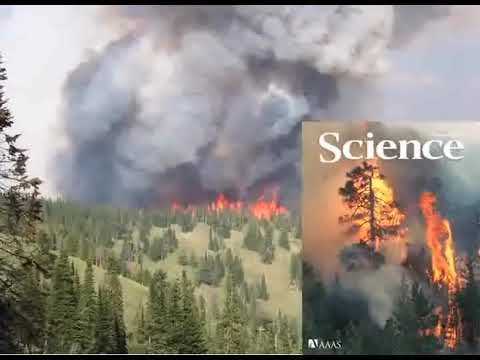
Running said his team reviewed 50-year temperature records and found a particularly strong March warming signal across the state, and that snowfall and snowpack have trended downward in that same period. He linked earlier snowmelt to lower summer river flows and to more frequent closures of fishing seasons. He also cited recent national wildfire data and a paper in Science that show the Northern Rocky Mountains had among the largest accelerations in acreage burned.
"We are already on the middle of [this trend]," Running said, noting that a single snowy winter does not nullify a long-term decline. He described a Missoula-specific extrapolation that, if the trend continues unchanged, would leave the valley with little or no snow by about 2080.
David Murrow framed those scientific findings as the basis for immediate, large-scale policy action. Murrow described his organization's goal of an 80% cut in greenhouse gas emissions from 1990 levels within 15 years and said that international, binding agreements plus U.S. federal leadership are necessary. "The stakes don't get any higher," Murrow said, adding that rapid reductions would allow natural systems to reabsorb more carbon once emissions fall.
Melissa Parrott, representing Homeward, a Missoula nonprofit that develops affordable housing, outlined on-the-ground measures her organization uses to reduce emissions and resource use in building projects: passive solar design, photovoltaics and solar hot water, low‑VOC materials, locally milled and sustainably harvested lumber, use of fly ash in concrete mixes, and on-site waste diversion. Parrott said construction consumes more than 40% of the world's energy and that well‑designed buildings and on-site waste management can divert a large share of construction debris from landfills. "The most important principle we can apply when discussing solutions to global warming is conservation," she said.
Mayor John Engen described municipal steps and a practical, incremental approach: purchasing hybrid vehicles for city fleets, including hybrid pickup trucks for public works, discussing sustainability when reviewing subdivisions, and encouraging alternatives to single-occupant car trips. "We can all make a difference. Together, we can all make a difference," Engen said, urging residents to adopt conservation practices while acknowledging limits on what local governments can accomplish without state or federal policy and funding.
Audience questions ranged from the technical limits of the Earth system (whether reductions could reverse trends) to practical local proposals such as restoring passenger rail service and investing in on-demand mass transit. Panelists warned of uncertainties in precisely when thresholds might be crossed but reiterated that multiple lines of evidence indicate a new climate trajectory beginning decades ago and that risks rise if emissions continue.
Panelists and audience members also discussed the interaction between peak oil and climate policy: Running and others said oil supply limits alone will not prevent large additional CO2 emissions because of the size of coal reserves, and that a rapid transition away from fossil fuels addresses both energy security and climate risks.
The forum did not include formal votes or binding municipal decisions. Panelists repeatedly called for stronger federal leadership and international cooperation, while local speakers highlighted conservation, building‑practice changes and transit options as steps Missoula can take now.
The forum closed after audience questions with a reminder from the mayor that many individual and municipal actions, while incremental, can add up over time.