Get email alerts on the Public Safety Personnel topic
No spam. Unsubscribe anytime.
Spokane County sheriff asks board to tie sheriff pay to undersheriff to avoid future compression
Summary
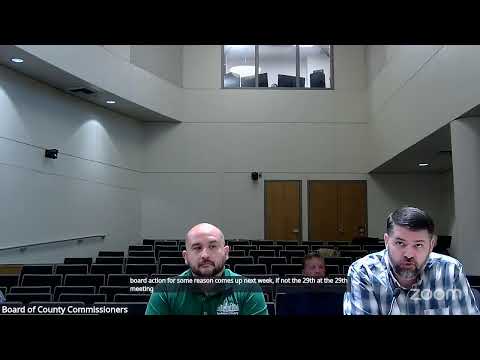
Sheriff (Spokane County) asked the Board of County Commissioners on April 15 to change how the sheriff’s salary is set so it does not repeatedly fall below the pay of deputies and command staff.
Sheriff (Spokane County) asked the Board of County Commissioners on April 15 to change how the sheriff’s salary is set so it does not repeatedly fall below the pay of deputies and command staff.
"I am here today to talk to you about the idea of tying my salary to that of my undersheriff's and asking you to set my salary 5.6% above that of the undersheriff's," the Sheriff told the board, explaining that recent contract settlements for deputies and command staff have pushed many of his direct reports to, or above, his current pay.
The sheriff told commissioners he plans to retire 1 undersheriff and not replace that inspector-level position; converting it to a deputy position would, he said, produce roughly $65,000 in net county savings across 2025–27.
Why it matters: Commissioners and the sheriff said pay compression — when subordinates earn as much or more than an elected executive — has recurred in Spokane County and elsewhere. The sheriff argued that tying his salary to his top command would reduce the need for repeated ad hoc adjustments.
Board discussion focused on benchmarking alternatives. Commissioner Kearns said a central concern is basing the sheriff’s pay on collective-bargaining outcomes for deputies, asking, “My concern is basing this off of something that essentially starts at bargaining at your deputies level.” Commissioner French and others noted the county has moved the sheriff’s pay previously by pegging it to the prosecuting attorney's salary and that other formulas are possible.
Staff and commissioners suggested compromise approaches: set the sheriff’s pay a fixed percentage above the undersheriff for a multiyear window (commissioners discussed 4 years) and then refer the matter to the county salary review process for a longer-term decision. County staff said the salary review commission’s schedule and membership vary and that any formula would require ongoing monitoring.
The sheriff said the proposed 5.6% step includes an education stipend historically built into the pay grade and that removing that stipend would reduce the percentage (to about 5.14%) cited elsewhere in county grade calculations.
What the board took away: Commissioners asked staff to draft concrete options that would (a) preserve a professional pay hierarchy in the sheriff’s office, (b) avoid sudden budget impacts, and (c) make the approach auditable through either the salary review commission or a periodic review before the board. No formal vote was taken during the meeting.
The sheriff’s office also presented the plan to convert an inspector position to a deputy position; county staff confirmed that change would be recorded in the budget and would generate the estimated savings. The board signaled support for developing a multi-year, budget-neutral approach for the sheriff’s salary and a path to sending a recommendation to the salary review commission in 2028 if the board prefers an external review.
Looking ahead: County staff will return to the board with specific draft language and budget effects to implement the direction discussed and to show how any change would interact with upcoming contract cycles and salary-review timelines.
AI generated
The text on this page is AI generated. Summaries, highlights, analysis, and video transcripts are all produced from the original source material.
AI can make mistakes, so if you spot one, and we will fix it for everyone.
Note: the source content is unaltered by us. Any content source we link to, be it a video, an audio recording, or a document, is presented exactly as its publisher released it. That publisher is usually a government body, sometimes an individual official or another organisation.