Get Full Government Meeting Transcripts, Videos, & Alerts Forever!
Get email alerts on the County Budget topic
No spam. Unsubscribe anytime.
Benton County supervisors agree to 2.5% cuts after $6 million revenue shortfall
Summary
Supervisors discussed a roughly $6 million projected shortfall and asked departments to trim non-wage service spending by 2.5% this fiscal year, with revised numbers due ahead of the budget hearing.
The Benton County Board of Supervisors said the county faces roughly a $6,000,000 shortfall in available revenue and directed departments to reduce service spending by 2.5% for the current fiscal year.
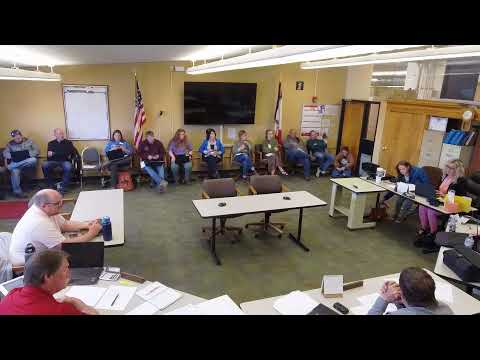
Supervisors held the discussion during a regular meeting in which several department heads described where cuts would fall and asked for clarity about timing. “We're about $6,000,000 short from the revenue coming in compared to what we could actually spend,” Supervisor Tippett said.
The board framed the 2.5% figure as a shared, across-the-board reduction that would not affect wages or benefits. Auditor/finance work discussed configuration and timing: supervisors asked departments to submit adjusted spending-authority figures “possibly before next week's public hearing,” so the reductions can be reflected in the maximum-levy hearing materials.
Department leaders pressed for detail on what services would be trimmed and whether the reductions would be reversed later if revenues recover. Sheriff Dave and other department heads described line-item constraints — for some offices, utilities, food for inmates and fixed obligations limit where cuts can be made. “If you guys have some ideas, you can go through this line by line and show me,” the sheriff said during the discussion.
Supervisors said the phased approach is intended to avoid a larger single-year cut next fiscal year; they estimated doing smaller reductions now could reduce the risk of a deeper 8–12% cut later. The board also discussed maintaining a fund-balance reserve target of roughly 25–30% to ensure cash flow if tax collections are delayed.
Officials noted several revenue and cost uncertainties that increase pressure on the budget: changes to state property tax credits and homestead reimbursements; unknowns around the county’s role in the regional mental-health transition; and extraordinary costs such as juvenile placements and medical-examiner bills that have already required amendments this year.
Supervisors asked departments not to rush discretionary spending at fiscal year-end and to prepare line-item adjustments for the upcoming public hearing so the board can present concrete numbers to taxpayers.
The discussion concluded with supervisors directing staff to prepare the adjusted spending-authority figures for the next budget hearing rather than a formal roll-call vote recorded in the transcript.