Get Full Government Meeting Transcripts, Videos, & Alerts Forever!
Get email alerts on the Charter Review topic
No spam. Unsubscribe anytime.
Fall River City charter panel agrees to attach state statutes, clarifies vacancy and enforcement language
Summary
The Fall River City Charter Review Committee on April 14 voted to submit an updated charter report, including an outline of Chapter 43 of the Massachusetts General Laws, when the charter is presented to the City Council, and ratified prior meeting minutes.
The Fall River City Charter Review Committee on April 14 voted to submit an updated charter report, including an outline of Chapter 43 of the Massachusetts General Laws, when the charter is presented to the City Council, and ratified prior meeting minutes. The committee also reviewed drafted changes to vacancy procedures in Section 3‑8 and discussed enforcement language in Section 9‑14, including creation of a three‑member grievance committee that would issue public reports but could not impose penalties.
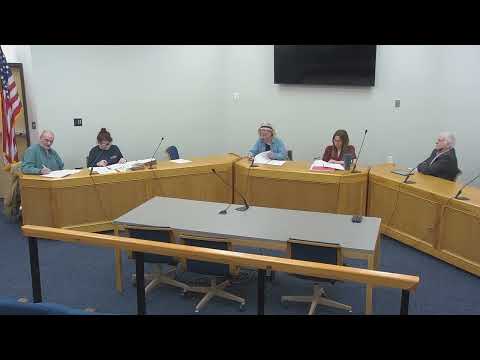
The committee chair, Rena Brown, opened the session in the hearing room at 1 Government Center and moved the meeting into a discussion and review of the charter report draft. The panel voted unanimously to include the updated charter report and an outline of Chapter 43 with the version presented to the council. Rena Brown read the enforcement-language draft into the record while explaining how complaints would be handled.
Nut graf: The committee’s decisions aim to make the charter’s limits and remedies clearer to city officials and residents — particularly how mayoral vacancies are filled and how alleged charter violations are reported and documented. The committee emphasized that the grievance committee would produce public reports but, following legal advice, could not levy penalties; enforcement beyond that remains with the mayor, the City Council, or the courts.
Most important actions and why they matter
- Inclusion of state law materials: Committee members voted that the updated charter report transmitted to the City Council should include an outline of Chapter 43 of the Massachusetts General Laws and other referenced state statutes (the committee specifically discussed Chapter 231 in the context of declaratory relief). The panel agreed to provide an index or links to the cited Mass. Gen. Laws to help councilors find the material prior to their review.
- Vacancy language (Section 3‑8): The committee confirmed edits that remove the phrase "for more than 21 consecutive days" from the portion of the vacancy provision that addresses when the president of the council becomes acting mayor. Under the revised draft, the president of the council steps in when the mayor "is unable to perform the duties," without a separate 21‑day threshold appearing in the text the committee reviewed.
- Enforcement and grievance committee (Section 9‑14): The committee discussed a new enforcement subsection that says citizens may file written notices to the mayor alleging a charter violation. Rena Brown read from the draft: "Whenever it appears that a city agency or city employee has failed to follow the charter, the mayor shall be notified in writing." The draft directs the mayor to notify the affected agency or employee and copy the complainant. The panel discussed that, per counsel's opinion, a three‑member grievance committee would be empowered to receive complaints, hold meetings with public comment, and issue a written public report; it would not have authority to impose penalties. The committee did not set a fixed deadline for mayoral action after receiving a complaint and deliberately left the response timeframe as "reasonable time" to account for variable committee schedules.
Procedure, litigation, and prior cases
Committee members noted the charter has been the subject of several court cases in the past; those suits typically sought declaratory relief in superior court. Members said those cases informed how the enforcement section and the charter report should reference state law and case law. The panel discussed attaching an addendum or index of relevant Massachusetts General Laws and noted Chapter 231's role as a route for declaratory judgments.
Administrative steps and next steps
Members asked that the final materials given to the City Council be easy to review: the committee asked staff to produce a condensed summary of substantive changes, and to provide councilors with bound copies or electronic links that highlight edits. Committee members agreed that Tim (staff handling the charter text) would produce a final version with highlights, and that Paul would deliver the updated report for circulation. They discussed presenting to the City Council possibly in June, contingent on completing the report and final charter text and on the council president’s scheduling.
Formal actions
- The committee voted unanimously to include the updated charter report and an outline of Chapter 43 with the materials transmitted to the City Council (motion made and seconded; recorded as unanimous in the meeting record).
- The committee voted to ratify the Nov. 25, 2024 minutes during the meeting; the record shows multiple "ayes" and one abstention, after which the chair said the motion passed.
- The committee agreed to ratify the April 14, 2025 minutes by email (motion passed unanimously by voice vote).
Ending: The committee concluded with logistics for circulation: staff were asked to prepare highlighted copies for councilors, to attach or link cited Massachusetts statutes, and to confirm a presentation date with the council president. The panel then ratified today’s minutes by email and adjourned.