Get Full Government Meeting Transcripts, Videos, & Alerts Forever!
Get email alerts on the Services And Facilities topic
No spam. Unsubscribe anytime.
Madaket work group debates Chapter 7 (Services and Facilities); leaves sewer question for sub‑group
Summary
At a Madaket Area Plan work group meeting, members reviewed a draft of Chapter 7 (Services and Facilities), discussed items including PFAS, dredging, landfill impacts, parking and sewer service, and agreed to refine details in a smaller sub work group. The group approved the meeting agenda and prior minutes and set the next meeting for June 6.
The Madaket Area Plan Work Group reviewed a draft of Chapter 7 — Services and Facilities — on April 4 and agreed to move detailed policy choices to a smaller sub work group while flagging several issues for the plan: sewer service and density, PFAS and water testing, dredging plans for local waterways, landfill impacts, emergency access and brush cutting, public parking and lifeguard services.
The discussion matters because Chapter 7 will be part of the Madaket area plan submitted to town planners and may guide future town actions and resident expectations on utilities, public facilities and environmental concerns.
Work group chair Bruce Mandel said the meeting was being conducted under remote‑meeting authority and noted the session was recorded. Mandel also summarized the materials members received in advance, including a draft of Chapter 7 and a list of suggested topics drawn from prior meetings and surveys. "This chapter 7 is services and facilities," Mandel said, introducing the review and asking members to focus on whether items belong in Chapter 7 or in other chapters.
Members spent the bulk of discussion identifying which items are substantive policy positions and which are informational notes. Michael Maynard, a member of the work group, reported outreach to zoning attorney Mark Bobrowski to advise on zoning implications; Bobrowski’s participation remained uncertain pending the attorney’s availability and possible retirement. Maynard said such legal review could lead to a funded proposal that would need MCA (Madaket Conservation Association) approval to proceed.
On environmental and infrastructure items, members debated whether to state positions or to note issues for further study. PFAS testing and availability of town well‑testing services were characterized as matters to mention as public information, not necessarily to take a regulatory position on within Chapter 7. Mandel and others also proposed a short paragraph noting that dredging plans for the Madaket Ditch and other waterways exist in town files and can affect water flow between the harbor, Hither Creek and Long Pond.
Sewer service prompted the most extended debate. Some members said sewering and zoning changes are linked — sewer infrastructure could enable higher density — while others argued the work group should state whether it supports sewer service in Madaket regardless of potential zoning outcomes. "I think we have to have a position on sewer sort of regardless of what changes happen in zoning," Maynard said. Members agreed to refer the sewer question to a small sub work group to develop recommended language and to identify gaps where additional data or targeted survey follow‑up would be useful.
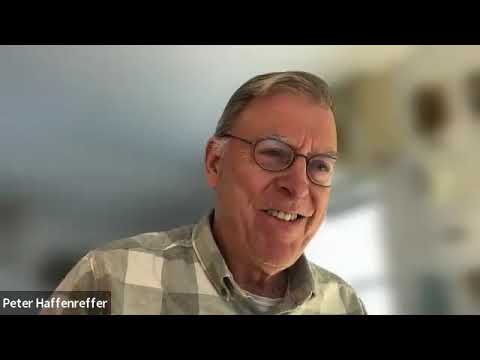
The group repeatedly returned to process: several participants urged that overlaps among chapters be handled by coordinating chapter leads so topics aren’t redundantly developed. Peter Hafenreffer (chapter 7 lead) said his approach will be to finalize high‑level items with the full work group and then convene a small sub work group to "really nail down the specifics." Members agreed the sub work groups should produce near‑final ("99% done") drafts for review by the full work group.
Administrative points raised during the item included: surveys already completed (three surveys were cited), a contact list of roughly 600 residents who have received plan materials, and the planning department’s role in receiving the finished chapter. Scheduling constraints and Zoom availability were also discussed; members settled on June 6 as the next meeting date (pending town Zoom scheduling).
Votes at a glance - Motion to approve the agenda: moved by Leslie Forbes; seconded by Michael Maynard; approved by voice vote (unanimous). - Motion to approve minutes of the February meeting: final vote recorded as yes from Leslie Forbes, Peter Hafenreffer, JP Hernandez, Michael Maynard, Lars Soderbergh and Joseph Topham; Kitty Parkman abstained; outcome approved. - Motion to adjourn: moved by Michael Maynard; seconded by Peter Hafenreffer; approved by voice vote (details not specified).
The work group closed the item by asking chapter leads to coordinate overlaps, for Peter Hafenreffer to organize the chapter‑7 sub work group, and for Mandel to incorporate comments and circulate a simplified draft. Members agreed sub work groups should aim to deliver near‑final drafts so the full work group can efficiently respond before the planning department submission. The meeting was recorded and will be available on the town’s YouTube channel.