Get Full Government Meeting Transcripts, Videos, & Alerts Forever!
Get email alerts on the Civic Engagement topic
No spam. Unsubscribe anytime.
Bloomington Leadership Program alumni describe civic learning and recruitment for future cohorts
Summary
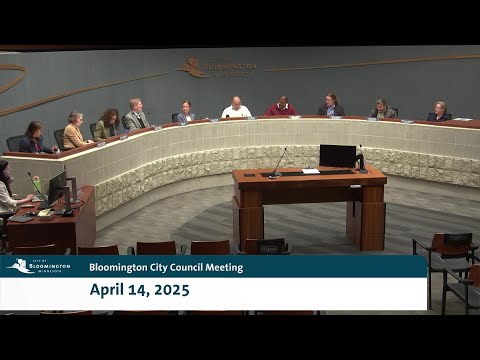
Graduates of the 2025 Bloomington Leadership Program presented a recap to the city council, describing a 10‑session curriculum for 20 residents that ran February 6–March 27 and aimed to build civic knowledge, leadership skills and community engagement.
Graduates of the 2025 Bloomington Leadership Program told the council the program helped broaden participants’ understanding of city government, encouraged civic engagement and created networks the alumni plan to use to recruit future cohorts.
Program alumni Mariah Gran, Rachel Sands and Alex Blanco described the 20‑person cohort, which met for 10 sessions from Feb. 6 through March 27 (two Saturday mornings and evening sessions on Thursdays from 5:30–8:30 p.m.), and said the curriculum included city services, boards and commissions, planning and zoning, public safety, parks and recreation, and a mock city‑council exercise. The alumni said the program emphasized experiential learning with presentations by city staff, facility tours and facilitated exercises; participants reported that sessions on zoning, restorative justice processes and boards and commissions were particularly informative.
Alumni speakers described practical outcomes: multiple participants said they plan to apply for boards or commissions, to serve as ambassadors for the program in their neighborhoods and to encourage friends and neighbors to participate in future cohorts. City council members commended the graduates and staff — Nancy and Jackie were singled out for organizing the curriculum — and said the program is an effective pathway for recruiting volunteers and future civic leaders.
Councilors asked participants whether any preconceived ideas changed during the program; alumni described being surprised about the amount of opportunity for public input in city processes, a deeper appreciation for zoning’s role in community design, and learning about restorative courts. Council members encouraged alumni to promote future cohorts and noted the program’s role in community leadership development.