Get Full Government Meeting Transcripts, Videos, & Alerts Forever!
Get email alerts on the Energy Solar topic
No spam. Unsubscribe anytime.
Developers present answers on proposed Titus solar project; company offers to cover county legal costs up to $20,000
Summary
Representatives for Titus LCV LLC provided written answers and spoke with the Young County Commissioners Court about a proposed solar project that could encompass thousands of acres in Young County.
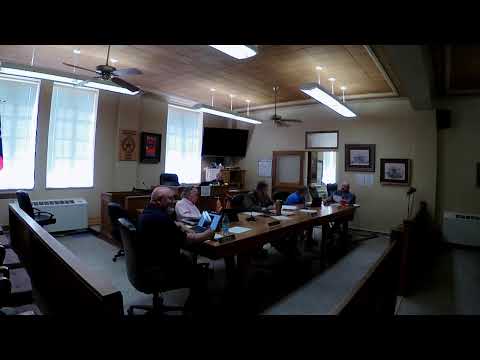
Representatives for Titus LCV LLC provided written answers and spoke with the Young County Commissioners Court Tuesday about a proposed utility-scale solar farm that would occupy thousands of acres in the county.
Commissioners and several residents raised questions about federal funding, phased development, landowner protections, environmental review and potential impacts on neighboring property values. In written responses read to the court, the company said there is no federal approval or grant funding specifically for development of renewable projects, but that solar projects are eligible for the federal investment tax credit and eligibility is determined on a case-by-case basis.
The company confirmed it currently holds roughly 2,200 acres under lease in the area and said its acreage target for the project ranges from about 2,500 to 4,000 acres depending on transmission provider negotiations. Titus representatives said they intend the project to be developed in a single phase.
On compensation for neighboring property owners, Titus said there are no plans for direct payments for any decline in nearby property values. The company said it invests in buffers and aesthetic measures (distance from property lines, visual screening and landscaping) to reduce impacts, but that property valuation is an objective, case-by-case matter.
During discussion about legal and financial protections, the county’s point person reported that the company initially offered to sponsor up to $10,000 in county legal costs; after follow-up the company increased that offer and “is prepared to sponsor the county’s reasonable legal expenses up to a cap of $20,000,” according to court discussion. Commissioners said they intend to consider retaining outside counsel (the judge mentioned the prospect of retaining advice from Allison Bass of the Lisonbee Bass firm) to evaluate tax abatement and reinvestment-zone agreements and other contract terms; no firm retention decision or vote was recorded at the meeting.
Residents urged more detail on the developer’s experience and track record. One resident said Titus LCV LLC’s Texas registration dates to 2023 and asked whether the company has completed any solar projects; speakers said many solar and wind projects are developed and later sold to investor purchasers, and that some developers operate in packaging/resale models. Commissioners noted they and county staff are reaching out to counterparts in other counties for background checks and practical experience with leases, bonds and road agreements.
Questions also focused on decommissioning protections and bonds. Speakers said typical lease and development agreements include a bond or other financial guarantee to ensure restoration if a project goes south; the court was told that bond language is often written to protect landowners and that county-imposed bonding beyond private landowner contracts is not typical. The court and several residents urged clarity about which roads would be used for construction and whether county road agreements would be required.
Several residents recommended the county consider longer-term planning, including formation of a regional planning body (a “Chapter 391” subregional planning commission) to coordinate other local governments and stakeholders around major development proposals. Commissioners and the judge said they will continue to gather information, consult outside counsel if needed and require the developer to provide additional documentation before any formal county action on tax abatements or reinvestment-zone designations.
No vote was taken during the item; commissioners did record acceptance of the company’s offered cap on sponsorship of legal expenses as a negotiation point and discussed next steps.