Get Full Government Meeting Transcripts, Videos, & Alerts Forever!
Get email alerts on the Urban Agriculture topic
No spam. Unsubscribe anytime.
Springfield officials weigh tax changes and an RFP to help Wellspring Harvest greenhouse in Indian Orchard
Summary
City councilors, city staff and Wellspring Harvest leaders discussed options to reduce the greenhouse's tax burden and secure land so the worker‑owned business can expand. Staff recommended pursuing an RFP on city‑owned land as the most viable near‑term path; state statutory change or a home‑rule petition remain longer‑term options.
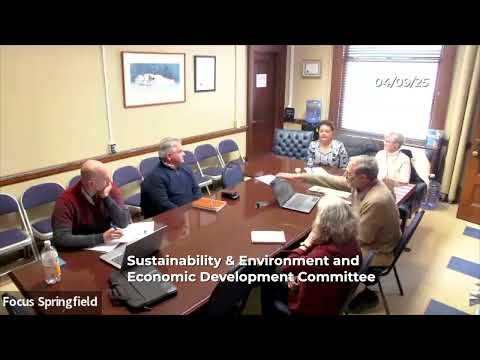
SPRINGFIELD — Councilor Zeta Govan convened a joint meeting of the Echo Development Committee and the Environmental Sustainability Committee to discuss ways to improve the financial viability of Wellspring Harvest, a worker‑owned greenhouse in Indian Orchard, and whether zoning or tax tools could help the operation expand.
The discussion focused on three options: a zoning overlay, a state tax provision known as Chapter 61A that can reduce property taxes for qualifying agricultural land, and a home‑rule petition or other state legislation to change the acreage threshold that currently defines a “farm.” City staff also proposed issuing a request for proposals (RFP) for part of a 17‑acre city‑owned site adjacent to Wellspring as a nearer‑term route to give the greenhouse access to enough contiguous acreage to qualify for existing tax treatment.
Why it matters: Wellspring Harvest operates on a Brownfield site in Indian Orchard, sells produce to regional customers and institutions, and says it provides local jobs and food access. Officials said the property’s tax burden and limited acreage are principal barriers to Wellspring’s planned expansion and to attracting similar urban agriculture businesses.
City and Wellspring figures and priorities Fred Rose, representing Wellspring Harvest, told the committees that the greenhouse employs seven people and “last year, we sold $378,000 worth of produce,” serving local schools, hospitals and other buyers. Rose said Wellspring wants to expand and reinvest savings into growth and local programs but that the current tax burden makes that difficult.
Betsy Johnson of Wellspring Harvest framed the tax issue around Chapter 61A. “61A . . . recognizes that basically no farm in this state would be viable if it had to pay taxes based on either being residential or commercial,” she said, noting that the statute ties certain agricultural tax treatments to acreage thresholds that are hard to meet in dense urban settings.
Patrick Reed Hall, the city manager, cautioned that existing tools are limited. “Buildings are still taxed as well at their full and fair cash value,” he said, noting that 61A applies to land value and that the city must assess properties at full and fair cash value for tax classification purposes. Hall gave a current annual tax figure for the Wellspring parcel as about $20,500 for fiscal 2025; Wellspring representatives earlier estimated roughly $18,600 per year (different calculations were discussed during the meeting).
Options discussed - Overlay district: Presenters reviewed examples from other cities where overlay or incentive zones support urban agriculture. Several officials and planners said a zoning overlay could enable or protect urban‑agricultural uses but would not, by itself, reduce the property’s assessed tax liability in Springfield.
- Chapter 61A and state legislation: Johnson and others described pending legislative proposals that would allow smaller parcels in urban areas to qualify for reduced agricultural tax rates (a graduated approach based on city size or urban designation). Committee members noted the state process can take years: one speaker said a constitutional amendment would require two consecutive legislative sessions and additional steps, making it “at least 5 years away.” The group also discussed pursuing a home‑rule petition as a more targeted option to change how the city’s urban farms are taxed, but staff said that path has legal and timing uncertainties.
- Using city land / RFP: Tim Sheehan, representing city planning/development staff, recommended a more immediate, practical route: carving off a portion of the city’s adjacent 17‑acre parcel and issuing an RFP specifically for urban‑agriculture use so Wellspring or another qualified operator could obtain the contiguous acreage needed to meet existing 61A acreage thresholds. “We could clearly . . . put a portion of it out under an RFP dedicated for this type of business . . . and ultimately get you to the 5 acres that you would need to qualify,” Sheehan said.
Constraints and clarifications Speakers stressed legal and technical constraints. City staff said the state and constitution limit the ways a municipality can change assessments, and that many reductions would require statutory change or narrow exemptions. Staff also noted the city is conducting environmental remediation on parts of the 17‑acre site; remediation status and whether portions are buildable will affect any RFP and timetable.
Wellspring representatives and several councilors noted operational details that affect qualification and expansion: the greenhouse currently uses hydroponics and water beds because underlying ground remains contaminated, the site was once the Chapman Valve plant and was remediated to an extent, and Wellspring’s structure has an assessed value discussed at roughly $400,000 (figures discussed in the meeting). Councilors asked Wellspring to prepare a concise economic‑impact summary showing current employment, sales, and projected staff and production growth if the site gained five or more acres.
Next steps and outcome There were no formal votes at the meeting. Participants agreed on immediate follow‑ups: city staff will explore carving a buildable portion of the 17‑acre parcel and preparing an RFP for urban‑agricultural use; Wellspring will compile an economic‑impact summary and research the specific eligibility questions for Chapter 61A (including whether hydroponic operations and buildings can qualify and how “actively used” acreage is counted); and city staff will continue to consult state contacts about legislative options in parallel. Councilor Zeta Govan said the committees would reconvene in a few weeks to review progress.
No formal action was taken to change taxes or to award city land at the meeting; the RFP approach and legislative options were discussed as possible pathways to reduce Wellspring’s tax burden and support expansion.