Get Full Government Meeting Transcripts, Videos, & Alerts Forever!
Get email alerts on the Homeschool Bill Hb2827 topic
No spam. Unsubscribe anytime.
Lee County committee votes to send resolution opposing House Bill 2827 to executive committee after lengthy discussion
Summary
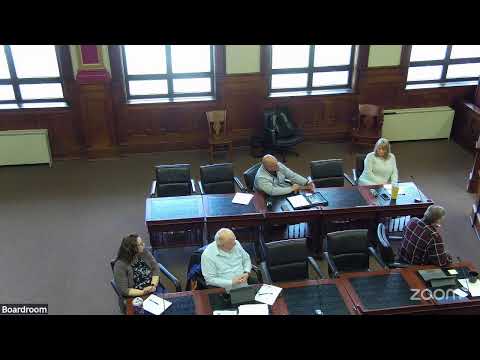
A Lee County committee voted to forward a resolution opposing House Bill 2827 (the proposed homeschool bill) to the county executive committee after members heard testimony from a homeschooling county board member and the regional education office about administrative and funding concerns.
A Lee County committee moved a resolution opposing House Bill 2827 to the county executive committee for inclusion on the April county board agenda after an extended discussion about the bill’s administrative and financial impact on county offices.
The motion to send the resolution to the executive committee was made by Ally Huss and seconded by Dean Friel; the committee carried the motion by voice vote.
The resolution, introduced during new business, was described by Ally Huss, a county board member and a homeschooling parent, as potentially vague and burdensome. “The legislation is vague as to where additional funding would be coming from for the ROE and the superintendents and principals,” Huss said, arguing the bill would create new administrative duties that could fall to county staff. “Parents have a right to be the primary caregiver, educator, and provider for the children inside the state,” she added.
Chris Tennyson of the regional office of education told the committee staff from his office had reviewed the bill and concluded it would likely produce an unfunded mandate. “If this were to go through, my office would have to hire at least 1 full time person, but probably 2 in order to have the capacity to do these check ins and do what the bill would require,” Tennyson said, estimating one full-time hire would cost the office about $45,000 and saying no additional state funding had been identified in hearings or sponsor materials.
Tennyson and Huss also questioned operational details the bill would require, saying the measure does not specify who would review an education portfolio, what qualifications the reviewer would need, what standards would be used, where records would be held or how reports from private citizens should be handled. Tennyson said the regional office already accepts a one-page notice when a family declares they will homeschool, and that existing truancy and child-welfare mechanisms could address safety concerns without the additional requirements proposed in HB 2827.
Committee chair Jack Skrengstead opened the floor for public comment and invited representatives to explain practical impacts on county operations. Huss told the committee she had followed the bill’s hearings and remained unconvinced of the bill’s stated rationales: “I have listened to absolutely every single hearing on this bill, and I still cannot understand what the actual goal of this homeschool bill is,” she said, adding that census and school-enrollment data could better identify children not enrolled in public schools.
Committee members voted to forward the resolution to the executive committee so the full county board may consider formal opposition. No final county-board action was taken at this meeting.
The resolution will be considered by the executive committee before possible placement on the county board agenda in April.