Get Full Government Meeting Transcripts, Videos, & Alerts Forever!
Get email alerts on the Sign Code topic
No spam. Unsubscribe anytime.
Loxahatchee Groves committee begins overhaul of sign code, pushes structural approach over content rules
Summary
Town staff and the ULDC Review Committee discussed attorney drafts to replace the current sign rules with a structure-based code, reviewed 64 pages of on‑site photos, and flagged temporary signs, farm signage, amortization and proactive enforcement as priorities.
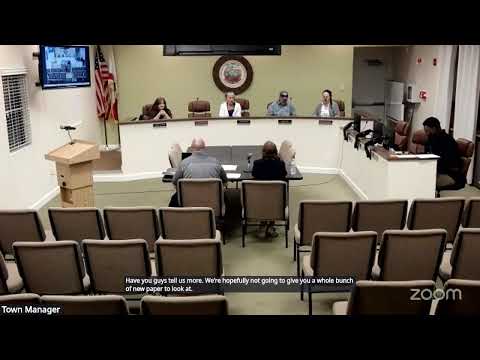
At a meeting of the Unified Land Development Code Review Committee of the Town of Loxahatchee Groves, staff presented attorney drafts and a photo packet and asked the committee to focus first on sign rules in Ag-Residential (AR) areas rather than commercial corridors.
The committee heard that town attorneys provided two draft approaches: a June marked-up amendment that edits the existing code, and an April draft that would repeal the prior text and introduce a new code. Project coordinator Jeff Kirch said the goal is to move away from content-based regulations — which are vulnerable to legal challenge — toward structural definitions such as “freestanding sign,” “window sign” and “wall sign.” Kirch said, “We’re gonna get away from a content based sign code to a structurally based sign code.” Community Standards Director Karen Gardner Young added that sign regulation is legally sensitive: “Signs are very legal. If somebody’s gonna sue, then chances are this is a good place they’re gonna sue.”
Why it matters: changes could make long-standing signs nonconforming, affect farm and agritourism wayfinding, and change how temporary signage and political signs are treated. Staff repeatedly flagged enforcement design and amortization schedules — how long an existing, nonconforming sign may remain — as central policy choices. Kirch and Gardner Young urged the committee to consider whether to grandfather older signs, require maintenance or trigger replacements when signs fall into disrepair.
Committee review and field evidence: staff delivered a packet that included the two attorney drafts, the town comprehensive plan materials, a matrix comparing current rules, and a 64‑page photo walk that staff took around town. Kirch walked the committee through the photos (shopping centers, gas stations, farms, nurseries, public shopping plazas and agritourism sites) to show the variety of existing signs and common issues: monument signs set away from driveways, snipe/temporary signs attached to other fixtures, heavy window coverage, feather flags, A-frames, changeable-copy drive‑through signs, and mobile/vehicle signs. Staff noted many features are in AR zoning, which complicates regulation because property sizes range from quarter-acre lots to multi‑acre farms.
Key discussion points and options raised - Definitions and approach: adopt structural definitions (freestanding, wall, roof, window, canopy) and prohibit roof signs, while treating temporary items (political, garage sale, grand opening) as a single temporary-sign category. - Temporary signs: time limits, notification or simple permit for grand openings, and an operational proposal for routine pickup (e.g., monthly removal schedule) to reduce litter and right‑of‑way clutter. Staff did not set fixed time limits in the meeting; the committee was asked to provide preferences. - Farm/agritourism signage: staff reported the town takes a liberal interpretation of the Florida farm-sign exemption (name of farm allowed) but asked the committee whether to formalize that local interpretation. Staff read a portion of the statutory farm-sign definition when discussing the issue. - Master sign plans and multi-tenant sites: staff recommended continuing to use master sign plans for multi-tenant developments to ensure consistency, allowing flexibility in materials and color where appropriate for a rural community identity. - Enforcement: staff recommended moving from complaint-driven enforcement to proactive inspections after a code rewrite to prevent persistent noncompliance and preserve town branding. Amortization schedules (shorter for window stickers, longer for large monument signs) will be discussed later.
Homework and next steps: staff asked the committee to prioritize review of signs in AR zoning (farm, nursery, residential enterprises) before moving to commercial corridors. The committee was asked to drive the town routes shown in the photo packet and mark what feels appropriate for: sign type, size, location (setback/driveway proximity), and allowable temporary-sign frequency. Staff suggested holding more frequent follow-ups while the committee completes this phase.
Quotes in this article are drawn from staff presentations and committee discussion and are attributed to the speakers who made them.