Get Full Government Meeting Transcripts, Videos, & Alerts Forever!
Get email alerts on the School Meals topic
No spam. Unsubscribe anytime.
Boston Public Schools outlines menu changes, local procurement losses and plans to reduce meal waste
Summary
Boston Public Schools officials told the Boston City Council Committee on Ways and Means on April 14 that the district serves tens of thousands of meals daily, is expanding culturally specific menu options and is working toward greater in-house food production after a recent federal funding change.
Boston Public Schools officials told the Boston City Council Committee on Ways and Means on April 14 that the district serves tens of thousands of meals daily, is expanding culturally specific menu options and is working toward greater in-house food production after a recent federal funding change.
The district said food and nutrition services (FNS) currently offers breakfast, lunch and an after-school meal free to all students, and provides summer meals for people under age 18. Staff said the department also runs student-facing programs to collect menu feedback and to source culturally representative foods from local producers.
Why it matters: School meals are a daily touchpoint for most BPS students and affect nutrition, school participation and local food economies. The district framed menu changes and procurement decisions as efforts to keep meals appealing while balancing newly constrained resources.
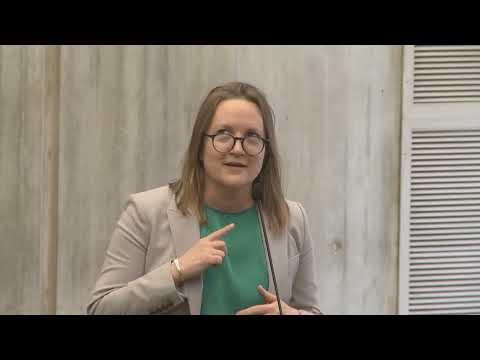
BPS staff described several steps to increase student voice and cultural relevance. "We have our chef team goes out to our schools every week and does a chef in the dining room event where they interact with students, taste test new items, and also get their feedback," said Annalise (food services chef/manager). The district also holds two "global food choice" days each year when students vote on options to be served systemwide.
Tiana, director of Food and Nutrition Services, told the committee: "We currently are offering breakfast and lunch and an after school meal that's free to all students." Staff also described a pilot of nondairy beverage options and menu items sourced from Asian American producers to mark Asian American and Pacific Islander Heritage Month.
Budget and procurement changes: Officials said a planned federal grant for local food purchases did not arrive, costing an expected $250,000–$350,000. The panel described menu and procurement adjustments intended to preserve relationships with local producers despite the loss. Staff said they currently purchase about 16% of food locally and are working toward a 20% target.
"Because it's been so important to us to support our local producers and they have literally scaled up and built their businesses around serving Boston students, we knew that we had to figure out how we could maintain those relationships, even without the additional funds," a food services official told the committee.
Waste, scale and production plans: District staff said they are cooking on-site at a growing number of schools (reported as 105 sites with a goal of all 108 school kitchens by year-end) and that expanding in-house production will give the district more control over ordering and portioning. Officials said that, while participants first cited a 46,000 meals-per-day figure, the total is roughly 50,000 meals daily when breakfast, lunch and dinner across sites are added; the committee heard both figures during the hearing.
Staff acknowledged they have not yet completed district-wide food-waste studies but said reducing waste is a future operational priority once on-site cooking is fully ramped. The district also described share-basket programs to redistribute unopened or extra packaged items and said central office staff check share-basket usage during site visits.
Other supports and partnerships: Committee members and staff discussed Katie's Closet — a school-based pantry program present in roughly 50–60 schools — and community food hubs that distribute millions of meals annually. City Fresh remains a contracted vendor while the district builds its central kitchen capacity; BPS officials said the central kitchen build-out will be incremental and contingent on construction funding.
What comes next: Officials said the district will continue to report operational changes to the council and plan to phase in additional in-house production and central-kitchen capacity when funding and construction allow.