Get Full Government Meeting Transcripts, Videos, & Alerts Forever!
Get email alerts on the Hazard Mitigation Plan topic
No spam. Unsubscribe anytime.
Kalispell council postpones adoption of Western Montana Hazard Mitigation Plan for work session review
Summary
Council members divided over adopting the multi‑county Western Montana Hazard Mitigation Plan. Staff and the plan’s lead said the plan is a "living document" and enables grant eligibility; opponents sought a work session to resolve data errors and local concerns. A motion to postpone the item passed 5–4.
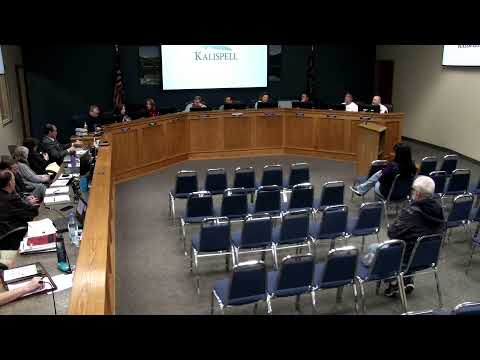
City of Kalispell council members voted on April 7 to postpone action on the Western Montana Region Hazard Mitigation Plan so the council can review the document in a work session and resolve local questions and data issues.
Juanita Nelson, Emergency Management Planner with the Office of Emergency Services, summarized the plan’s multi‑year regional process and timeline and said the plan has federal and state review status that makes jurisdictions eligible for mitigation grants. “The nice thing about this plan is that it is a living document, and we are required to do annual reviews of this plan,” Nelson told council, noting the plan was developed beginning in 2022 and received FEMA approved‑pending‑adoption status in February 2025.
Some council members said the document contains outdated or unclear references that need local correction before the city adopts it. Councilor Hunter identified a mapped reference he could not locate and asked why Missoula and Gallatin counties were not included in certain tables; Nelson replied they had opted to hire separate contractors and did not participate in the regional effort. Councilor Dowd repeatedly urged postponement so council members could digest the large document and said he was concerned about broad language regarding federal agency authority; he moved to postpone.
Councilor Graham had initially moved to adopt the plan and the motion to adopt was on the floor, but the council ultimately voted to postpone. The procedural motion to postpone passed on a roll call vote 5–4 (ayes: Hunter, Gabriel, Graham, Dowd, Mayor Johnson; nos: Dahlmann, Fisher, Natalie, Carlson). Councilors said a postponement would allow a planned work session in late May or early June to surface necessary edits and clarify whether amendments would require reapproval by other participating jurisdictions.
Nelson told council that because the plan is a required foundation for many mitigation grants, adoption would enable the city to apply for federal funding in the current grant cycle. Staff said they will coordinate a work session to allow council members to review the plan in detail and to highlight sections that are out of date; Nelson said annual reviews and records of change can be used to keep the plan current.
No adoption vote was recorded on April 7. The council’s direction was limited to scheduling the additional review; if the council later adopts the plan, that action would restore the city’s formal participation and preserve grant eligibility for mitigation funding.
Key outstanding questions the council asked staff to address at the work session included whether specific road segments are city or county responsibility, the degree of FEMA or state oversight implied by some language, and what projects within the plan the city might seek grant funding for.