
Norwalk officials say early voting doubled election costs; city approves transfer to cover shortfall
Get AI-powered insights, summaries, and transcripts
Subscribe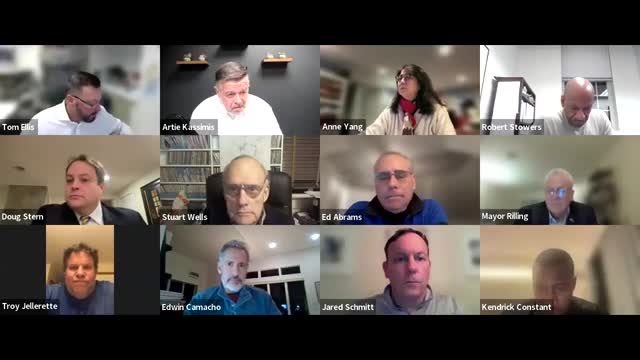
Summary
Norwalkregistrar of voters Stuart Wells told the Board of Estimate and Taxation that the new 14-day early voting requirements and high turnout roughly doubled election costs in 2024. The board approved a transfer of approximately $241,000 from contingency to cover actualized expenses for the registraroffice.
Stuart Wells, Norwalk registrar of voters, told the Board of Estimate and Taxation on Jan. 6 that the city spent roughly twice what it would have for a single-day election after the state-required 14 days of early voting in the 2024 presidential cycle.
Wells said the combination of more staffing days, part-time hires, overtime and processing requirements created the bulk of the overrun. "Elections are gonna cost about twice as much because in a 1 day of 1 day of voting at 1 polling place is about the same as 1 day of early voting at City Hall," Wells said. He added, "The early voting was incredibly successful and popular" and that the city had "the greatest, highest turnout overall in the state for early voting."
The board approved a transfer from contingency to the registrar of voters to cover the shortfall. Tom (staff member) explained the transfers were requested to cover actual ledger overruns. Board members questioned the sustainability of the new costs and whether the state would offset municipal expenses tied to the early-voting mandate. "Whenever legislators are approached, there's no great indication in that direction," Wells said, describing limited and likely temporary state reimbursements that together amounted to roughly $34,000 for the recent elections.
Board members also pressed operational points: whether ballots could be fed directly into tabulators to reduce processing time and staff costs, and whether the envelope-based early-voting procedure posed privacy concerns. Wells said using tabulators directly would save staff time and money but that statutory and procedural requirements currently require envelopes; he and others said legislative change is being pursued but not yet enacted. "We'd much rather have them put them in the tabulators because that perception of privacy is just as important as the actual privacy," Wells said.
Board members asked for and received a rough magnitude for the share of ballots cast early: Wells said "40%" of ballots came in during early voting in the presidential cycle and that with absentee ballots added, roughly half of ballots may be processed before Election Day in future cycles.
Votes at a glance
- Approval of transfers (bulk): approved. Included among transfers was the registrar of voters contingency request of approximately $241,000 to cover the 2024 early voting and related election costs. The board approved the full package in a single roll call; no detailed roll-call tally for the registrar line was recorded in the transcript.
Context: Norwalk officials described early voting as popular and operationally intensive. The registrar urged legislative changes that would allow ballots to be placed directly into tabulators to reduce labor and envelope-processing costs. Wells said equipment improvements (new tabulators with lockable covers) and future procedural changes would speed reporting and lower overtime and part-time staffing costs.
Ending
Board members said they will continue to press state legislators to consider funding or procedural changes and asked the registrar to provide ongoing costing data. The approved transfer will be processed through the city system and reflected in the ledger after administrative processing.