Get Full Government Meeting Transcripts, Videos, & Alerts Forever!
Get email alerts on the Housing Development topic
No spam. Unsubscribe anytime.
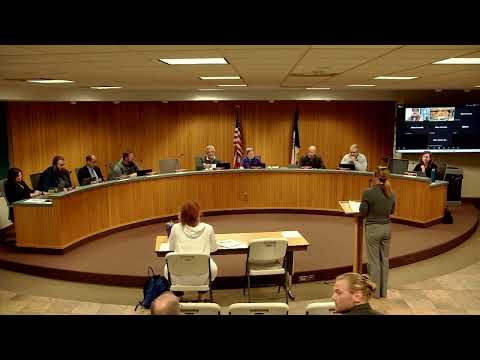
City approves development agreement, authorizes up-to-$560,000 TIF rebate for High Point East
Summary
The Decorah City Council voted to approve a development agreement with High Point East LLC and to adopt related urban renewal measures that authorize tax-increment financing (TIF) rebates to cover eligible public-infrastructure costs up to the not-to-exceed amount discussed by council.
The Decorah City Council voted to approve a development agreement with High Point East LLC and to adopt related urban renewal measures that authorize tax-increment financing (TIF) rebates to cover eligible public-infrastructure costs up to the not-to-exceed amount discussed by council.
Council discussion centered on the amount of city participation — described in the packet as a rebate not to exceed $560,000 to cover costs such as water, sewer, stormwater, streets and lighting — and the precedent the rebate might set for future greenfield development. Developer Mike Kelly told the council the subdivision has been contemplated for five to six years and would include 16 total lots in two phases, with the first phase providing eight lots and a second phase providing the remaining eight; he said two of the lots could be developed as multifamily units.
The city’s staff presentation said the proposed TIF rebate would be paid from incremental property-tax revenue generated by the new development and would be limited by the actual taxable value created; staff also explained state law requirements tied to urban renewal plans, including a required low- and moderate-income (LMI) set‑aside tied to market-rate housing projects.
Councilmember discussion was extensive. Several members said Decorah needs more housing but expressed concern about the per-unit subsidy implied by the proposed cap; one councilmember calculated a possible subsidy on the order of $40,000 per unit under some build-out assumptions and urged careful consideration of precedent and long-term fiscal impacts. Staff and other council members replied the $560,000 figure is a not-to-exceed estimate based on infrastructure cost estimates and that actual rebate payments depend on the timing and assessed value of houses built; staff also noted the rebate structure shifts upfront construction risk to the developer because rebates are paid only after new property taxes are generated.
City staff said the developer and city negotiated the not-to-exceed figure based on estimated construction costs for roads and utilities and that the developer would not receive rebate payments if houses were not built or did not generate sufficient increment. Staff also described the calculation assumptions used in projection models: an assumed average assessed valuation per unit and modest annual valuation growth; they cautioned that the developer is unlikely to receive the full not-to-exceed amount unless all units are built and immediately reach those assumed values.
After the discussion the council voted to approve the development agreement and the associated urban renewal ordinance readings connected to the High Point East project. The motion carried.
Votes at a glance: council moved by Chisel and seconded by Olsen; roll-call votes were recorded and the motion passed.
Why it matters: the sale of rebate-eligible infrastructure costs to developers is a common tool cities use to encourage development by closing a gap between construction costs and current market demand. Council members indicated they want a clearer, consistent per-unit policy for future projects so prospective developers know what city participation they can expect.
What’s next: staff will finalize the development agreement documents and the urban renewal plan procedures noted in the meeting packet; the developer indicated planning and subdivision review remain to be completed before lots are plat-ready.