Get Full Government Meeting Transcripts, Videos, & Alerts Forever!
Get email alerts on the Water Sewer Budget topic
No spam. Unsubscribe anytime.
Fall River staff propose FY2026 water and sewer rate increases as residents urge a break
Summary
City utilities leaders presented proposed FY2026 enterprise budgets that would raise the water user rate to $4.58 per CCF and the sewer user rate to $8.51 per CCF; residents who spoke during the committee meeting urged the council not to approve further increases and questioned budgeting for chemicals not currently in use.
City utilities staff presented proposed fiscal 2026 enterprise budgets for the water and sewer divisions and said the plans rely on rate increases while several residents urged the council to reject any new hikes.
The water division’s proposed budget of $16,859,529 is supported by a $4.58 per CCF volumetric rate and a $14 quarterly base meter fee for a 5/8-inch meter, the presentation said. The sewer division’s proposed budget is $32,991,128, and the recommended sewer user rate would rise to $8.51 per CCF; the stormwater fee would remain $50 per quarter per equivalent residential unit.
City utilities administrator Paul Furlan and the department’s presenter summarized how fixed costs — debt service, electricity, treatment chemicals and other non-discretionary outlays — limit how much of the budget can be covered by volumetric charges. “Revenue is kind of the reverse of that,” the presenter said in the hearing when explaining the mix of fixed and volumetric charges in utility finance.
The department showed how the proposed increases would affect different customer groups. For an average household (about 13.25 CCF per quarter) the combined water and sewer bill would rise by roughly $39.22 per quarter under the proposed FY2026 rates; higher-volume commercial and industrial customers would see larger increases.
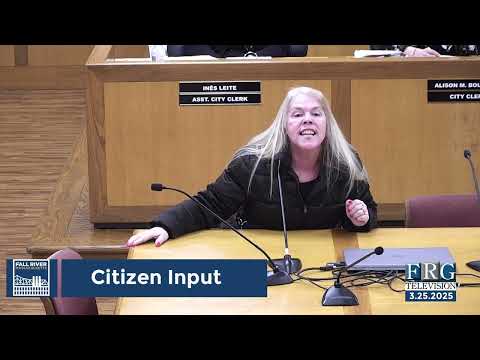
Several residents who signed up for public comment told the committee that utility bills and property taxes have become unaffordable. Kelly Buchanan spoke during public comment and asked the council not to approve more increases, saying rate and tax hikes are straining households. Sarah Cavallo, a homeowner, said the city’s recent large water increase remains visible in household bills and repeatedly called for relief.
Committee members pressed staff on the budget assumptions, the use of one-time funds in prior years, and the department’s reserve targets. The presenter said the FY2025 budget relied in part on retained earnings and that this year’s proposed budget minimizes use of one-time revenue sources. He highlighted long‑term capital needs tied to the city’s combined‑sewer‑overflow (CSO) program and stormwater infrastructure, which are partially supported by the stormwater fee.
Councilors asked the department for comparative analyses at the ordinance committee hearing, including a model showing how much the volumetric rate would have to rise if the stormwater fee were eliminated. Councilors also asked for a line‑item trend review of actuals to identify potential savings to reduce rate pressure.
The water department confirmed it has budgeted for fluoride treatment but does not currently add fluoride at the treatment plant because the product consistency used previously is no longer available and existing feed equipment is incompatible. “We currently are not adding fluoride,” the water department director said, and added the Board of Health had indicated a desire to continue fluoridation if the equipment is upgraded.
The committee did not take a final vote on rates at the meeting; the proposed budgets will proceed to the ordinance committee for rate ordinance drafting and public hearings.
The department also said it has retained a consultant to perform a performance audit of the water and sewer operations; the consultant is gathering records and has begun work on the engagement.
Ending: Staff will present more detailed rate ordinance language and supplemental analyses at upcoming ordinance‑committee hearings, and councilors asked the administration for additional documentation on retained earnings, the fluoride capital estimate, and the performance‑audit timetable.