Get Full Government Meeting Transcripts, Videos, & Alerts Forever!
Get email alerts on the Pretrial Release Bail topic
No spam. Unsubscribe anytime.
Candidates emphasize careful bail decisions and court efficiency amid statewide backlog concerns
Summary
At the New Richmond forum, candidates discussed pretrial release, recent statutory changes, and strategies to reduce felony backlogs, including greater use of diversion, clearer scheduling and remote appearances.
Candidates at a New Richmond forum framed pretrial-release and case-backlog issues as matters of public safety and court management, urging cautious use of cash bail in high‑risk cases while expanding alternatives and improving courtroom efficiency.
James "Jamie" Johnson described bail law as a "totality of the circumstances" inquiry and pointed to Chapter 969 as the statutory framework he said governs bail decisions. "You take into account whether the defendant had a prior conviction for a violent crime, the probability the defendant will... fail to appear in court," Johnson said.
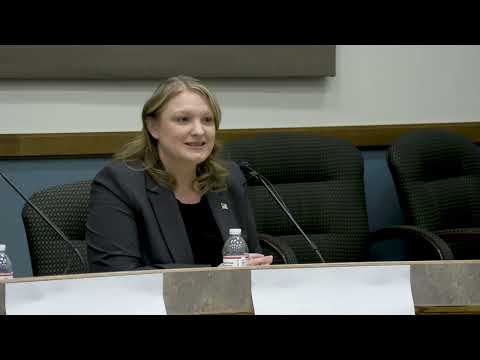
Heather Amos noted recent legislative changes in 2023 that she said gave judges greater discretion to consider prior convictions and the seriousness of charges when setting bail. "I think the legislature recently, passed a law in 2023 that helped this issue," she said, adding that Justice Support Services can monitor some released defendants.
Brian Smithstead described how cash bail can sometimes be the only practical tool to ensure appearance for people who have repeatedly missed court and warned that releasing people with no conditions can lead to costly extraditions. "When we recommend cash bail on someone, it's because it's necessary," he said, describing cases where defendants who skip court later must be located out of state.
On case backlog, all candidates urged better scheduling, enforcement of timelines and broader use of remote appearances to keep calendars moving. Candidates said COVID-era adaptations such as Zoom appearances helped maintain operations, while public defender staffing shortages and witnesses who do not appear remain bottlenecks. Jamie emphasized setting clear timelines and holding attorneys accountable; Brian and other candidates said remote appearances and making use of specialized dockets (treatment court, diversion) reduce pressure on crowded calendars.
None of the candidates proposed specific legislative reforms at the forum; they described operational steps judges can take and noted that some fixes (public defender staffing, new inpatient treatment beds) require county or state action.