Get Full Government Meeting Transcripts, Videos, & Alerts Forever!
Get email alerts on the Booster Club Mou topic
No spam. Unsubscribe anytime.
Booster club, school board discuss MOU, fundraising practices and transparency
Summary
Board members and Laker Athletic Booster Club representatives met to clarify a recently drafted MOU, fundraising splits and plans to hire a coordinator; participants emphasized transparency and agreed to improve communication with schools and the community.
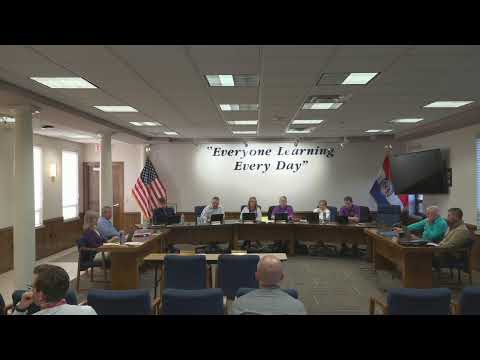
Representatives of the Laker Athletic Booster Club met with the Camdenton R-III Board of Education during a special session to explain how the club operates, respond to community questions about a recently drafted memorandum of understanding and describe fundraising results.
Board members said rumors and questions had circulated after the district approved an MOU in December and asked the booster club to explain its financial practices. Booster Club representatives described changes since the district shifted away from an outside vendor that previously kept a large share of card-program revenue. They said that, under the new local arrangement, the club retains a portion of certain fundraising proceeds to cover program costs and to build capacity to support larger capital requests (for example turf, scoreboards and uniforms) when schools request that help.
Booster Club members described recent results: they said the amount collected and passed through to the high school had grown—citing roughly $52,700 the district had previously passed to the club and about $63,000 given back to schools in January (figures described by participants as approximate). Club representatives said the group aims to return most funds to students and schools and showed examples of projects the club supported, including a video scoreboard and a large uniform purchase the club described as a one-time refresh for varsity programs.
Club leaders said they are considering hiring a part-time paid coordinator to sustain and grow fundraising programs; the club told the board it had discussed paying a percentage of revenue to a coordinator and had provisionally settled on 15 percent of revenue generated by that person, but said no contract had been signed. Board members expressed concern about the idea's appearance in the community and sought clarity; booster representatives said the arrangement would be community-based, that they had not executed any agreement and that the club has donated money and time to the district as well.
Both groups emphasized the need for clearer, regular communication. Booster Club members urged more liaison opportunities between coaches, administrators and the club; board members suggested an annual meeting or joint lunch to improve transparency and recommended posting an annual report or list of projects funded so community members can see where fundraising dollars were used. Board members also suggested linking booster information more visibly from the district website and encouraging the club to publish accomplishments on its social channels.
Participants agreed to continue conversations, invite district representatives to booster meetings and work on clearer public reporting of how sponsorship and card-program proceeds are used. No policy change or formal contract was finalized at the meeting.