Get Full Government Meeting Transcripts, Videos, & Alerts Forever!
Get email alerts on the Comprehensive Plan topic
No spam. Unsubscribe anytime.
Auburn committee adopts outreach plan, agrees to three subcommittees for comprehensive plan update
Summary
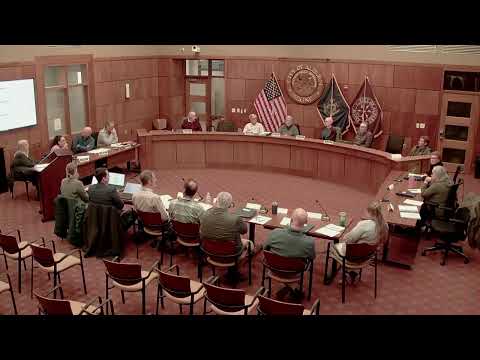
Auburn’s Comprehensive Plan Committee on Thursday reviewed a detailed 18‑month schedule and community engagement strategy from consultants at BerryDunn and agreed to organize three subcommittees to help review inventory and analysis materials.
Auburn’s Comprehensive Plan Committee on Thursday reviewed a detailed 18‑month schedule and community engagement strategy from consultants at BerryDunn and agreed to organize three subcommittees to help review inventory and analysis materials.
The consultants outlined a phased timeline that includes inventory and community visioning through August, development of policies and an action plan from August through March, and final plan development through June of next year, followed by the 30‑day public hearing period required before the plan goes to City Council.
Why it matters: The schedule and outreach approach set when and how the public will be asked to weigh in on the city’s future land use map, policies and actions. Consultants emphasized a mix of digital and in‑person methods designed to reach a wide cross section of residents, businesses and institutions before the committee drafts recommendations for City Council.
At the meeting, the consultant described the timeline and deliverables and said the inventory and analysis package will be provided for committee review in mid‑May. The consultant said the “final plan development…will run through the creation of that plan through June of next year,” and noted the committee and staff will have multiple review windows before that milestone.
On public engagement, the consultants introduced a draft Social Pinpoint website as the project’s central digital hub. “Social Pinpoint is a digital engagement platform,” the consultant said. The platform will host an interactive map, short surveys, a vision board for sticky‑note comments, and subscription options for email updates. Social Pinpoint will be linked from the city’s website and promoted via printed flyers, QR codes and social media.
The consultant explained moderation options for the site: “there’s 2 moderation options. We can either do a pre moderation, so everything that's posted is reviewed before it goes live on the website,” and an automated filter plus post‑moderation process is available.
Committee members pressed for clarity on sources and access to background data. The Mayor asked, “what's the method, for us to make known potential data sources or information that should go into the inventory,” and the committee discussed using Eric and David as staff contacts to collect and route documents to the consultants. David said staff “could share that list of what has been requested” so committee members can see which documents consultants already have.
Members also discussed reaching specific audiences. The consultant described techniques to engage non‑English speakers, residents without internet access, students and older adults, including “meeting in a box” packets for community groups, focus groups, school‑based sessions and tabling at events such as Lobster Fest. The committee set outreach goals including broad early input and more targeted, specific feedback later in the process; one committee member noted a target to engage “somewhere around a thousand people.”
Committee structure and next steps: Consultants proposed three or four subcommittee groupings to review inventory chapters. After discussion about summer attendance and workload, members agreed to start with three subcommittees and revisit that decision if needed. The subcommittees are intended to review draft inventory sections, identify gaps and return consolidated feedback to the full committee as consultants refine the materials.
Data and mapping: The consultants said they will produce both a PDF inventory and interactive ArcGIS story maps that let users zoom into spatial layers; consultants said they will include layers where public, shareable data exists and will coordinate with city GIS staff on what can be published. Committee members raised interest in granular layers — sidewalks, sewer, natural resources — and the consultants said they will include available layers deemed appropriate for public release.
Staffing note: City staff told the committee they have completed several interviews for the open long‑range planner position and “hope to make an offer shortly.”
Votes and formal actions: The committee approved the prior meeting’s minutes with a motion and second and recorded the adoption as unanimous. Members also moved, seconded and approved adjournment at the end of the meeting. The committee set its next meeting for Thursday, April 24.
What’s next: Consultants will finalize the engagement materials and draft the first community survey and printable outreach items for committee review. The inventory and analysis deliverable is expected in mid‑May, after which the three subcommittees and the full committee will begin structured review and public engagement activities.