Belton ISD reviews impact of proposed state funding changes while planning $5M in phase‑1 cuts
Loading...
Summary
At a March 24 workshop, Belton ISD leaders briefed the board on pending Texas education legislation — including a likely $220 basic allotment increase — and presented budget projections showing that even with those gains the district still faces multimillion‑dollar shortfalls and will need reductions.
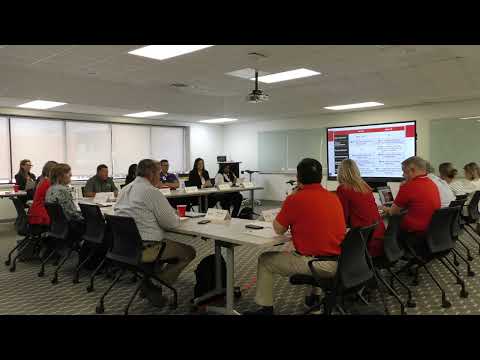
BELTON, Texas — Belton ISD trustees at a March 24 workshop heard a legislative update and a detailed preview of the district’s 2025–26 budget outlook, including possible service‑model changes that administrators say are necessary even if the Legislature increases school funding.
The board was presented with the latest on House Bill 2 (the main education package), companion Senate bills and potential allotment changes, and with budget projections prepared by district finance staff showing scenarios with and without the commonly cited $220 basic allotment increase. Trustees were told that the district would still face a significant deficit without reductions.
“This update is very specific to legislation that has to, financial impact,” Christine (district staff) said during the legislative briefing, noting the presentation focused on bills most likely to affect Belton ISD’s revenue. Melissa (district finance staff) later walked trustees through a set of revenue and expenditure runs for 2025–26.
Nut graf: Why this matters
Belton ISD’s budget plans depend heavily on how the Texas Legislature resolves competing House and Senate proposals. Administrators said the known piece — a roughly $220 increase to the basic allotment in the House package — would help, but would not eliminate a multi‑million‑dollar gap. The district is preparing reductions now because the timing and final form of state funding remain uncertain.
Most important details
- Legislative picture: Staff summarized that House Bill 2 is the vehicle in the House for a large education package; items discussed include a roughly $220 per‑student increase in the basic allotment, a requirement that 40% of any basic‑allotment gain be directed to teacher compensation, expansion or easier access to the Teacher Incentive Allotment, an increased safety allotment (to $20 per student and $30,000 per campus in the Senate proposal), and a move toward an "intensity of services" model for special education funding. Christine said the House and Senate are aligned on some items and divergent on others and that final language and funding runs are not expected until later in the session.
- District baseline and near‑term numbers: Melissa said the district adopted the current‑year budget with an $8,100,000 deficit. Administrators are using a 92% ADA assumption for planning and a demographer’s low enrollment projection of 13,584; the team is projecting ADA at 12,004.57 for planning. The district included a $4,000,000 vacancy factor in current running numbers.
- Impact of the $220 basic allotment example: Using the district’s preliminary runs, a $220 basic allotment increase would generate roughly $3,900,000 in additional revenue for Belton ISD; 40% of that gain—about $1,600,000—would be required for pay increases under the current House proposal, which district staff said would equate to about a 1% across‑the‑board pay increase by their calculations. Even with the $220 increase and with the district’s phase‑1 reductions, the district’s run still showed a remaining deficit in the low‑millions.
- Phase 1 and possible Phase 2 reductions: The district has identified about $5,000,000 in Phase‑1 reductions (including a combined reduction in campus/department budgets and lower travel). Staff reported they are roughly $2,800,000 toward a surplus list from staffing alignment, and they expect some adjustments to energy, substitute, summer‑school and program costs: energy conservation was estimated at roughly $125,000 (a conservative 5% reduction target), reduced substitute costs for in‑house professional learning about $101,000, and summer school alignments around $180,000. Program evaluation items such as the Schoology contract are comparatively small (quoted at $48,000–$50,000) and not likely to change the overall picture dramatically.
- Service‑model changes under consideration: Administrators described service redesigns that would produce savings and change how services are delivered. Examples included restructuring some high‑school athletic coaching assignments (reducing assistant coach FTEs at schools with lower participation and shifting responsibilities where feasible), options for library‑services staffing that preserve open libraries while sharing staff across campuses (one Phase‑2 model would reduce four library positions but keep libraries open), and ongoing efforts to align nursing staffing to recommended LVN/RN guidelines through attrition. Officials emphasized that some restructuring steps will proceed whether or not Phase‑2 is enacted because they reflect long‑term staffing alignment priorities.
- Outsourcing considerations: The district is evaluating proposals for custodial and transportation services. Administrators said the custodial procurement package closes the first week of April and transportation procurement closes early April; if outsourcing is recommended, board consideration could appear as soon as the April board meeting. Staff described potential employee impacts that appear in other districts’ outsourcing transitions (for example, differences in TRS and Social Security participation for employees) and said proposals will be evaluated for employee outcomes as well as district savings.
- Safety and special education funding: Staff said the Senate’s safety allotment language (an increase to $20 per student and to $30,000 per campus) would reduce local costs for campus security but not fully cover armed security costs. On special education, staff noted both chambers are discussing an intensity‑of‑services funding model in response to a prior legislative study that found special education underfunding statewide; the district said the special‑education tiers/formulas were not yet finalized and could be phased into the formula in year two of the biennium, making year‑one effects uncertain.
Board discussion and next steps
Board members asked timing and run‑generation questions; staff said the House will likely want funding runs before voting HB2 out of committee and that the district expects more precise runs before a final House vote. Superintendent‑level staff said they would delay a final decision on Phase‑2 reductions until the end of March to allow two additional weeks to see any runs; if no legislative relief materializes the district said it would proceed with further reductions and consider Phase‑3 changes for 2026–27.
No formal board action or votes were taken in the workshop. The budget assumptions discussed at the workshop are scheduled as an action item at the regular board meeting later the same evening.