Get email alerts on the Short Term Rentals topic
No spam. Unsubscribe anytime.
Pinellas County adopts short‑term rental rules, creates registration and enforcement program
Summary
Pinellas County commissioners voted unanimously to adopt a short‑term rental ordinance and fee schedule that creates a county‑run registration and enforcement program, sets a 10‑person occupancy limit and retains quiet hours from 10 p.m. to 9 a.m.
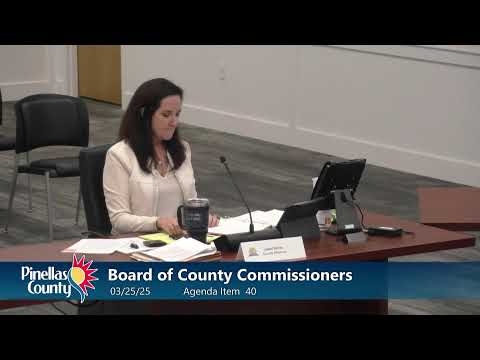
Pinellas County commissioners voted unanimously Tuesday to adopt an ordinance and fee schedule creating a county‑wide short‑term rental registration and enforcement program.
The ordinance sets a 10‑person maximum occupancy for rentals, retains quiet hours from 10 p.m. to 9 a.m., requires a certificate of use, updates a bedroom definition to match state and building code language, and adds a process for reporting registered sex offenders to law enforcement. The implementing fee schedule funds a dedicated short‑term rental administrator, technology for registration and advertising monitoring, and a 24/7 hotline.
County director Kevin McAndrew, director of building and development review services, said the program will roll out in stages, with the registration website and outreach campaign launching immediately and the certificate‑of‑use requirement activated March 31. “This is a total reset for short term rentals in Pinellas County,” McAndrew said, adding the county will monitor the program and return to the board with adjustments if needed.
Why it matters: Residents who live beside short‑term rentals have repeatedly told the commission that noise, late‑night parties and parked cars on narrow streets degrade neighborhood life. The ordinance is intended to put every short‑term rental on a county registry, create easy reporting and give enforcement staff tools to pursue bad actors.
Key items adopted - Occupancy: maximum 10 people per rental; prior leases in effect as of March 25 are vested and allowed to remain until their termination. - Quiet hours: 10 p.m.–9 a.m.; the county said it will update the countywide noise code separately and align enforcement language. - Enforcement and costs: a fee schedule adopted with the ordinance funds staffing, technology and a hotline intended to make the program self‑sustaining.
Public comment at the hearing was strongly split. Residents described repeated late‑night disturbance and said existing rules are unenforced; some urged the county to adopt “plainly audible” or similar noise standards that allow videos and neighbor testimony to be used as evidence without a decibel meter reading. Short‑term rental owners and managers warned the board against over‑broad rules that would have a chilling effect on lawful rentals and urged the county to fix enforcement gaps rather than restrict rental frequency or duration.
Christian Kroeger, a resident who organized complaints from neighbors, called for stronger immediate enforcement and a path to license revocation for owners who repeatedly host disruptive events. “If a property has multiple suspensions, I recommend revocation,” Kroeger said. Residents emphasized rapid response — they want enforcement officers on site while events are happening rather than hours later.
County staff said the ordinance intentionally separates policy from operational enforcement steps: the ordinance creates the certificate and the legal framework, while code enforcement, the sheriff’s office and the county attorney will execute case‑by‑case responses. McAndrew said county staff will deploy education, social media and a hotline as the registry opens and that additional legal work on noise standards is underway. “When that’s brought back, we want to make sure there’s no conflict between the short term rental ordinance and the noise ordinance,” McAndrew said.
The vote and next steps Motion: Adopt the short‑term rental ordinance and associated fee schedule, with county attorney and administrator authorized to add a short cross‑reference noting that commercial events on residential properties require separate land‑use approvals. Motion by Commissioner John Nowicki; second by Commissioner Gerald Eggers. Outcome: Passed unanimously. The county will launch the registration website immediately, begin outreach and start accepting certificate‑of‑use applications March 31, with a phased compliance deadline by zip code over the spring and summer.
What remains unresolved: residents at the hearing pressed the board to adopt a noise standard that allows neighbor videos and plain‑audible reporting to trigger citations. County staff said it will research comparable Florida ordinances and return with recommended text (staff estimates June–July). Residents also asked the county to consider stricter paths to suspension and revocation; the county attorney favored pursuing injunctions in severe cases and noted a variety of remedies — special magistrate fines, civil injunctions and court contempt orders — are available and have different legal burdens.
The ordinance does not regulate how often or how long an owner can rent a home; state law limits local control over duration and frequency. Commissioners and staff said the new registration, monitoring and enforcement program is intended to capture data and allow the county to target problem properties and refine its rules in follow‑up actions.
Ending: The new program puts more short‑term rentals on the county’s radar and ties enforcement costs to program fees. Residents and owners said they will watch how quickly the county moves from registration to on‑street enforcement and court remedies in problem cases.
AI generated
The text on this page is AI generated. Summaries, highlights, analysis, and video transcripts are all produced from the original source material.
AI can make mistakes, so if you spot one, and we will fix it for everyone.
Note: the source content is unaltered by us. Any content source we link to, be it a video, an audio recording, or a document, is presented exactly as its publisher released it. That publisher is usually a government body, sometimes an individual official or another organisation.