Get Full Government Meeting Transcripts, Videos, & Alerts Forever!
Get email alerts on the Homelessness And Housing Programs topic
No spam. Unsubscribe anytime.
Las Cruces providers outline shelter, voucher and development programs to Alamogordo commissioners
Summary
Representatives from Mesilla Valley Community of Hope and the City of Las Cruces described a campus-based shelter model, temporary encampment management and a mix of HUD, local and state funding used to expand permanent and supportive housing.
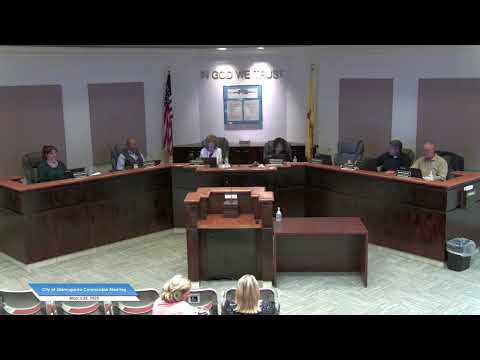
Representatives from Mesilla Valley Community of Hope and the City of Las Cruces told the Alamogordo City Commission on March 25 that a campus model combining daytime services, a supervised temporary encampment and housing navigation has helped their community connect people experiencing homelessness to housing options.
Nicole Martinez, executive director of Mesilla Valley Community of Hope in Las Cruces, described Camp Hope, a rezoned planned-unit-development behind the agency’s campus that can temporarily shelter up to about 50 people. Martinez said Camp Hope sheltered 256 people in the last year and that the average length of stay in fiscal 2023–24 was about 73 days. She said the Community of Hope operates outreach teams, a day shelter, case management and housing navigation tied to vouchers from HUD and veteran-specific programs.
Natalie Green, housing administrator for the City of Las Cruces, told commissioners the city uses a mix of federal entitlement funds (Community Development Block Grant and HOME), state and local sources, tax-credit projects and general obligation bond proceeds to finance construction and supportive services. Green said the city’s annual entitlement allocation is roughly $1.5 million total (about $1.0 million in CDBG and $500,000 in HOME) and that recent state and legislative funding will expand capacity, including permanent supportive units adjacent to the Community of Hope campus.
Both presenters emphasized partnerships: Martinez described Camp Hope’s resident-led camp governance, on-campus services including behavioral health and VA partnerships, and year-round programs such as day-labor and SOAR (Social Security disability application assistance). Green described partnerships with Habitat for Humanity, Tierra del Sol and the housing authority; recent Low Income Housing Tax Credit projects; and incentives cities can use — for example density bonuses, fee waivers and accessory-dwelling-unit allowances — to increase affordable units.
Commissioners asked about outcomes and funding. Martinez said Community of Hope’s annual operating budget is about $6 million and that her organization employs about 42 people; she said housing exits are constrained by local housing availability. Green said the city has leveraged GO bond and mortgage finance authority resources to build hundreds of affordable units and is pursuing a mix of permanent supportive housing, workforce housing and homeownership lots with down-payment assistance.
The presentations were offered as examples and resources for Alamogordo; Martinez said she regularly consults with other communities and invited local staff to request templates and technical materials. The commission did not take formal action on the presentations.