Citizen Portal

House subcommittee advances pilot to expand hyperbaric oxygen therapy access for veterans after amendments

2768476 · March 26, 2025

Get AI-powered insights, summaries, and transcripts

Subscribe
AI-Generated Content: All content on this page was generated by AI to highlight key points from the meeting. For complete details and context, we recommend watching the full video. so we can fix them.

Summary

The House Veterans' Affairs subcommittee voted to forward HR 13 36, which would create a pilot to provide hyperbaric oxygen therapy (HBOT) to veterans with traumatic brain injury (TBI) and post-traumatic stress disorder (PTSD), after approving two safety and study amendments and rejecting a separate literature-review amendment.

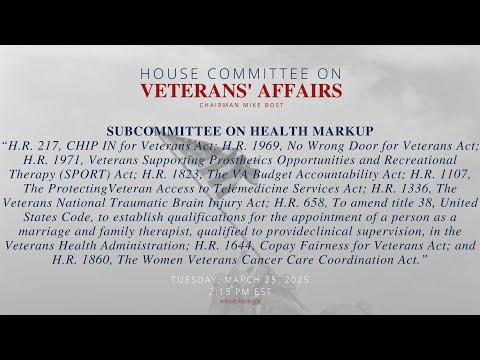
Representative Murphy introduced HR 13 36, the Veterans National Traumatic Brain Injury Act, and the subcommittee moved the bill to the full committee as amended.

The bill would require the Department of Veterans Affairs to establish a pilot program granting veterans access to hyperbaric oxygen therapy in the community. Representative Murphy described HBOT as a potential option for veterans with TBI and PTSD and said, “we do this today, 17 to 30 veterans every day to suicide.”

The panel debated scientific support and safeguards. Representative Morrison offered an amendment requiring the VA to conduct a full literature review on HBOT’s clinical effectiveness before proceeding; that amendment was rejected in a recorded vote (5 ayes, 7 noes). Representative Phyllis McCormick’s amendment, which directs the Government Accountability Office to update its 2015 report on HBOT for PTSD and TBI within one year of enactment, was agreed to. Ranking Member Brownlee’s amendment requiring HBOT providers participating in VA programs to be accredited by the Joint Commission, the Undersea Hyperbaric Medical Society, or another relevant accrediting body also passed and was described in the hearing as a safety safeguard following a recent fatality at a non-VA hyperbaric facility.

Members voiced sharply different views on the underlying evidence. Representative Murphy and several supporters said clinical studies and meta-analyses show benefit and urged action, while physicians on the panel cautioned that randomized controlled-trial evidence is limited and warned against diverting resources from established, evidence-based VA care.

After the amendments were adopted, Representative Van Orden moved to forward HR 13 36 as amended to the full committee; the motion was agreed to and the subcommittee favorably forwarded the bill.

The record shows the subcommittee debated both clinical evidence and patient-safety requirements, adopted oversight and accreditation provisions, and voted to advance the bill to the full committee for further consideration.